
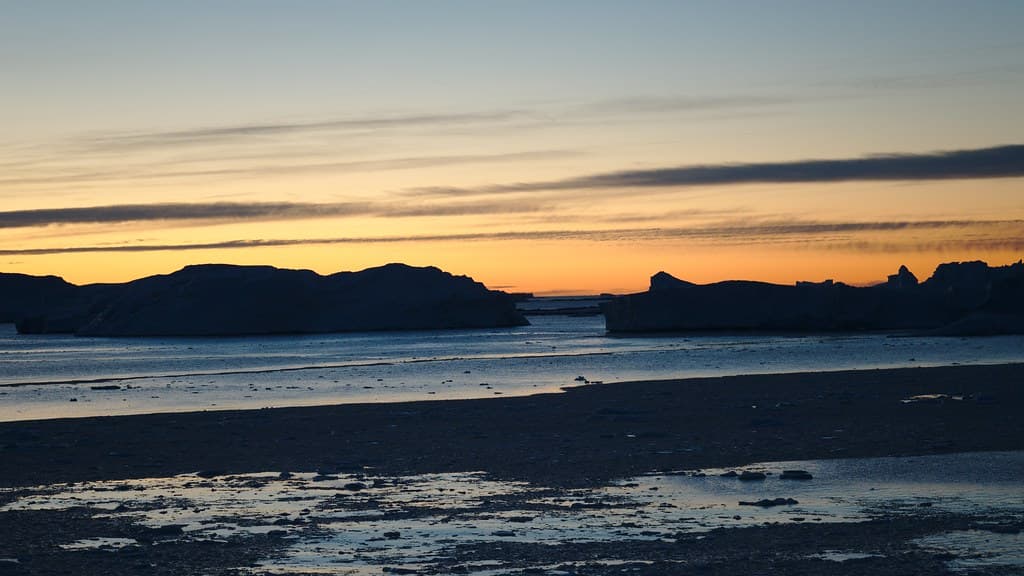
The pebble beach at Base San Martín stretches along Marguerite Bay's western shore, a study in monochrome punctuated by the crimson buildings of Argentina's year-round research station. Your boots crunch over smooth cobbles—metamorphic rock ground fine by glaciers, then tumbled by winter storms into egg-shaped ovals that shift and clatter with each Southern Ocean swell. The air tastes metallic and clean, carrying the ammonia tang of nearby penguin colonies and the iodine breath of kelp beds exposed at low tide.
“One of the few accessible west Antarctic shorelines where active research infrastructure meets pristine expedition-era coastline.”
 Credit: Pexels
Aerial view of a serene lake and forested beach in San Carlos de Bariloche, Argentina.
This is no leisurely beach visit. You arrive by expedition vessel, transferring via inflatable Zodiac through brash ice and kelp forests, timing your landing between swells. The station, established in 1951, perches on the rocky headland above—a working scientific base where glaciologists and biologists conduct research in one of Earth's harshest environments. Elephant seals haul out on the upper beach, their bulk leaving deep impressions in the stones, while Antarctic terns dive for krill in the shallows.
The landscape shifts hourly. Morning fog might shroud the mountains across Barry Island; by afternoon, cathedral light breaks through to illuminate tabular icebergs grounded in the bay. You watch Weddell seals surface in leads between ice floes, their whiskers beaded with seawater. The base coastline exists at the threshold between human presence and absolute wilderness—a place where expeditions are measured not in hours but in weather windows, and the beach itself becomes a front-row seat to Antarctica's raw, unfiltered power.


