Counting the waves…
Counting the waves…
A refined fusion of water purity, environmental stability, and communal vibrancy for Murrell River Beach.
View MethodologyAnalyzed via live sensors and environmental data.
Wave height, wind, and atmospheric stability.
Live footfall and crowd balance metrics.
Community reviews and curated sentiment.
“North of Stanley, where the Murrell River empties into the harbor, you'll find a crescent of pebbled shore wrapped in the kind of stillness only the Falklands can deliver. Oystercatchers work the tideline while kelp…”
Limited recent visitor reports — live OBI telemetry is your best guide for current conditions.
You reach Murrell River Beach by following the coast road until Stanley's painted-metal houses shrink behind you and the landscape opens to rust-colored moorland and white-sand patches tucked between stone. The river mouth creates a natural harbor within a harbor, its brackish water pooling at low tide into glassy channels where you can watch starfish cling to submerged boulders and small crabs scuttle beneath floating ribbons of bull kelp.
The beach itself is more gravel than sand, smoothed by centuries of tidal give-and-take, bordered by dense stands of tussock grass that bow and straighten in the South Atlantic breeze. Families from Stanley arrive with thermoses and windbreakers, content to wander the tideline collecting blue mussel shells and watching upland geese graze the slopes above. The water stays cold year-round—eight degrees Celsius even in January—but children in gumboots splash through the shallows while their parents scan for Commerson's dolphins beyond the breakwater.
 Credit: Unsplash
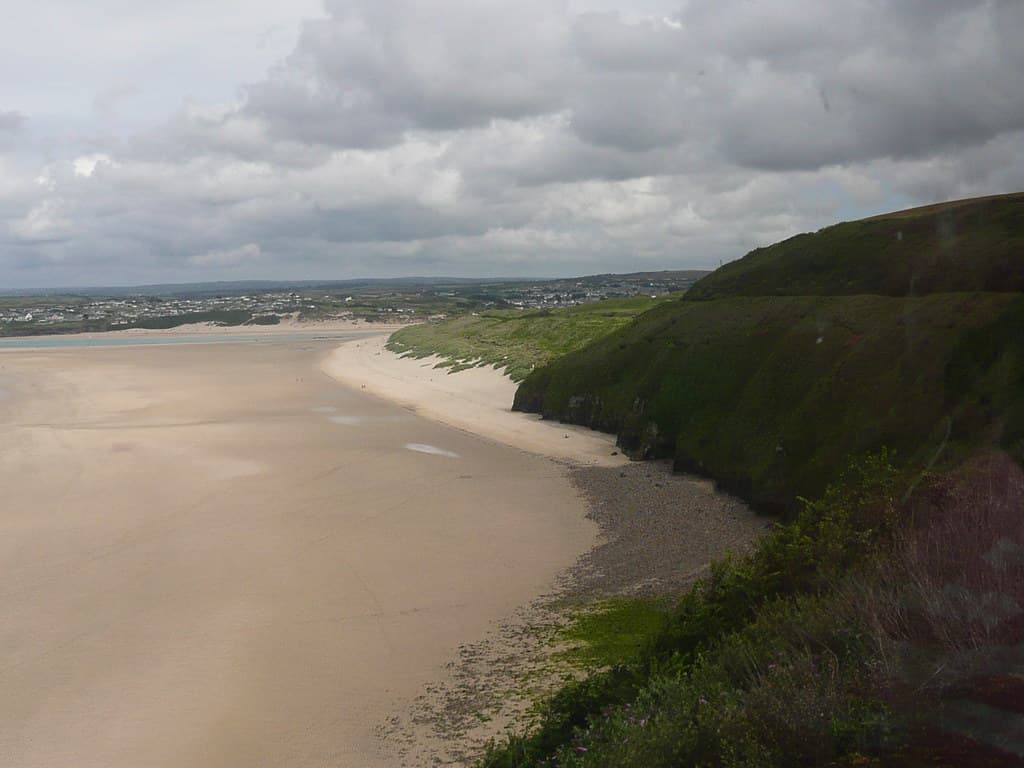
a sandy beach with a body of water in the background
 Credit: Unsplash
sea waves crashing on shore during daytime
Starfish cling to dark boulders
Follow sheep tracks through tussock
Kelp geese patrol rocky outcrops
Prime Visitation
Best Weather | Less Crowds
Where it is
Murrell River Beach
Stanley, Antártida e Islas del Atlántico Sur, Argentina
-51.644700°, -57.932100°
Weather
Loading…
Swell
—
Temp
Warm · Restorative
UV Index
Moderate
Wind
—
Tidal State
Last known
Max Sunlight
—
Ideal Shade
—
Jan - Dec (Peak)
Mar - Nov (Off-season)
Best Weather | Less Crowds
Select a category to load nearby places.
Unlock restaurants, luxury stays and curated maritime experiences within 2km
Swimming at Murrell River Beach is generally calm due to its sheltered river-mouth location, but water temperatures in the Falkland Islands remain cold year-round, typically between 3-9°C. Hypothermia is a real risk without proper wetsuit protection. The beach's sheltered position reduces wave action, making it safer for wading than open-ocean beaches. Always check local conditions before entering the water, be aware of currents near the river outlet, and inform someone of your plans. Most visitors prefer walking and wildlife watching to swimming.
The best time to visit Murrell River Beach is during the Falklands' summer months from November to March, when temperatures are mildest (averaging 8-15°C) and daylight hours are longest. This period offers the best weather conditions with less wind and more sunshine, though weather remains changeable. These months also align with the wildlife breeding season, enhancing scenic value. Early summer (November-December) tends to be less crowded than peak tourist season in January-February. Always prepare for sudden weather changes regardless of season.
Murrell River Beach is located north of Stanley and accessible by road, approximately a short drive from the capital. You can rent a 4WD vehicle in Stanley, as many Falklands roads are unpaved tracks requiring suitable vehicles. Alternatively, arrange a tour through local operators who know the routes well. Walking from Stanley is possible for the adventurous, taking several hours along coastal paths. Always inform your accommodation of travel plans and carry navigation tools, as signage is minimal and weather can deteriorate quickly in this remote location.
Murrell River Beach has no on-site facilities, so visitors must be self-sufficient. Stanley, the nearest town, offers several guesthouses, hotels, and B&Bs, plus restaurants, cafes, and grocery stores for provisions. Most visitors base themselves in Stanley and make day trips to the beach. Pack food, water, and warm beverages for your visit, as there are no vendors or amenities at the beach itself. Stanley is compact and walkable, with most services within the town center, making it an ideal base for exploring nearby beaches.
Murrell River Beach stands out for its sheltered river-mouth setting, creating calmer conditions than the typically windswept Falklands coastline. Its proximity to Stanley makes it one of the most accessible hidden beaches for travelers without extensive tour arrangements. The combination of river and ocean ecosystems attracts diverse birdlife and offers varied coastal scenery. The beach provides a family-friendly alternative to more exposed locations, with opportunities for gentle walks and wildlife observation in a quiet, less-visited environment that still offers authentic Falklands coastal character.
Photos