Counting the waves…
Counting the waves…

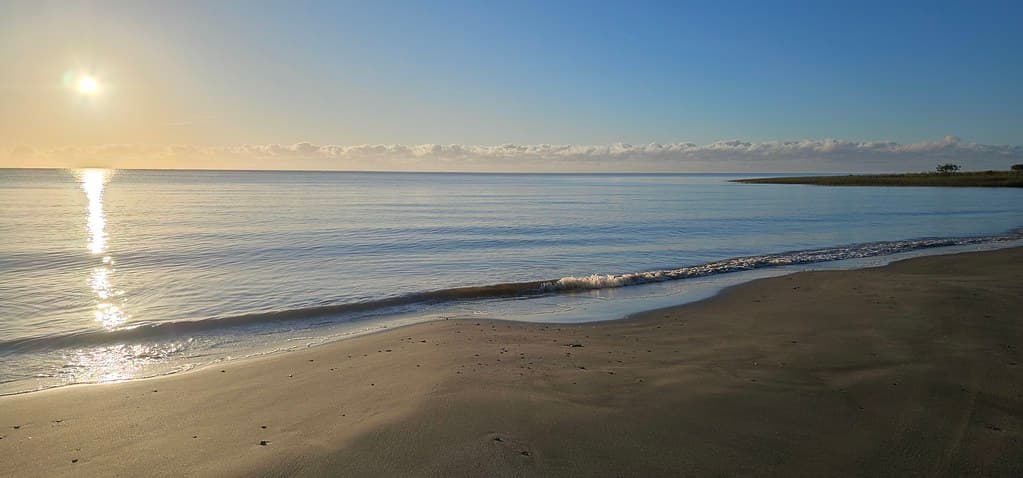
The road to Playa El Destino frays at the edges of Buenos Aires province, dissolving into rutted earth that cuts through Parque Costero del Sur's tussock prairie. You park where the grass ends and the beach begins—no gate, no attendant, just the sudden expanse of Samborombón Bay stretching toward Uruguay. The sand here is coarse and grey, littered with driftwood bleached bone-white and the occasional crab shell. This is not a beach for swimming laps. The water is brackish, tea-brown from river sediment, and so shallow you can walk a hundred meters out before it reaches your waist. What it lacks in Caribbean clarity it repays in solitude. Flocks of white-faced whistling ducks skim the surface at dawn. The horizon bends uninterrupted, and the only footprints are yours and those of the occasional dog. You come here to feel small against something endless. Pack a thermos of mate, a wool blanket against the perpetual wind, and binoculars if you're inclined—the coastal grasslands harbor more than two hundred bird species. As the afternoon light slants low, the mudflats glow pewter. There are no beach clubs, no vendors hawking empanadas. Just the whisper of cordgrass and the knowledge that you've found a pocket of the pampas the crowds have forgotten.
Places, rentals, tours and events within walking and driving distance of Playa El Destino.
Photos
Playa El Destino offers calm, shallow waters typical of Samborombón Bay, making it relatively safe for swimming and wading. However, there are no lifeguards or emergency services at this remote location, so exercise caution and never swim alone. The bay's tidal patterns create significant water level changes throughout the day. Water clarity is limited due to natural sediment. Families appreciate the gentle conditions, but supervision of children is essential. The beach's proximity to Parque Costero del Sur means pristine natural conditions but also complete absence of safety infrastructure.
The optimal visiting period is spring (October-November) and autumn (March-April) when weather is pleasant and wildlife activity in nearby Parque Costero del Sur is high. Summer months offer warmer temperatures for swimming but bring humidity and occasional crowds on weekends. Weekdays guarantee solitude. Plan your visit around mid-to-high tide for better water access. Early morning is excellent for birdwatching and nature observation, while late afternoon offers beautiful light for photography. Winter (June-August) is too cold for swimming but can be peaceful for nature walks and exploration.
Playa El Destino is located in Punta Indio municipality, near Parque Costero del Sur, approximately 180-200 kilometers from Buenos Aires. Drive south via Route 11 through coastal communities, following signs toward Punta Indio and the coastal park. A personal vehicle is necessary as public transport doesn't reach this remote area. Some access roads may be unpaved, particularly final approaches to the beach. GPS navigation is helpful, but ask locally for current road conditions and specific directions to El Destino, as signage is limited in this protected natural area.
Playa El Destino has no commercial facilities due to its location near a protected natural area. Bring all food, water, and supplies you'll need. Basic accommodation and dining options exist in the small town of Punta Indio, several kilometers away, including guesthouses and simple restaurants. Verónica, another nearby community, offers additional services. Many visitors treat this as a day trip from Buenos Aires or La Plata, where full hotel and restaurant facilities are available. The remote, undeveloped nature of the area is part of its appeal for nature-focused travellers.
Playa El Destino's proximity to Parque Costero del Sur makes it exceptional for nature-oriented visitors. The beach serves as a gateway to one of Buenos Aires Province's most important coastal wetland reserves, home to diverse bird species, native vegetation, and unique ecosystems. Unlike developed beaches, this area emphasizes environmental conservation and natural beauty over tourism infrastructure. Visitors can combine beach time with nature trails, birdwatching, and exploration of coastal forests and marshlands. The absence of crowds and commercial development creates an authentic wilderness coastal experience rarely found near major cities.