Counting the waves…
Counting the waves…

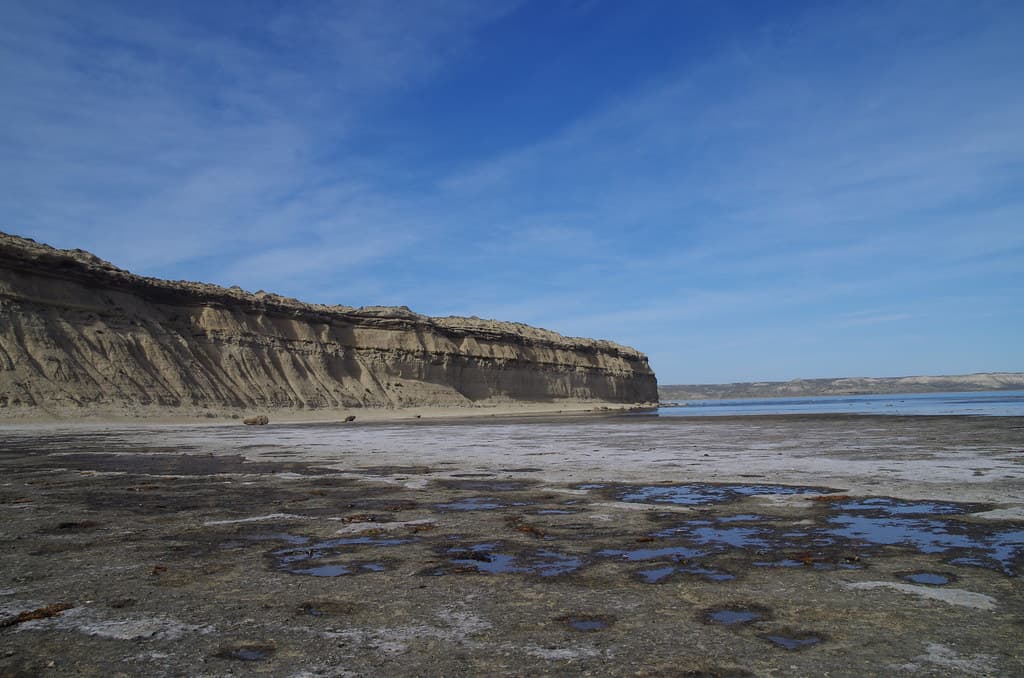
Seventeen kilometers north of Puerto Pirámides, this scalloped crescent of tawny sand faces the sheltered Golfo Nuevo, where southern right whales come to nurse their young between June and December. You'll pull off Provincial Route 2 onto gravel, walk past wind-sculpted shrubs, and find yourself on a beach empty enough that every whale spout becomes an event. The water is calm but cold—12°C even in summer—and the real draw is standing at the tide line while mothers and calves loll in the shallows, sometimes five meters from shore, so close the mist from their blowholes drifts landward on the breeze. The beach itself runs for several kilometers, backed by low ochre cliffs and tufts of coirón grass that shiver in the relentless wind. There are no vendors, no umbrellas, no lifeguards—just you, the whales, and the occasional guanaco grazing the headlands. Families spread blankets in the dunes; photographers crouch with telephoto lenses; children collect dried kelp and empty sea-snail shells. Come at low tide when the whales venture closest, and bring layers—the Patagonian wind doesn't negotiate. You won't swim here, but you will kneel in the sand, saltwater soaking your shoes, transfixed by the oldest, quietest conversation the ocean knows.
Places, rentals, tours and events within walking and driving distance of Playa El Doradillo Península Valdés.
Photos
Swimming at Playa El Doradillo is possible but requires caution. The sandy beach offers easier water entry than pebble beaches, but waters remain cold year-round. Currents and tides can vary, and no lifeguard services are available at this quiet Gulf-facing location. The beach's calmer gulf setting generally provides more sheltered conditions than ocean-facing shores. Always assess conditions before entering the water, swim during calm weather, and stay alert to changing tides. Families should supervise children closely. The beach is better suited for wading and beach play than extended swimming.
The optimal visiting periods are during good weather months (October-March) when temperatures are warmest, and off-peak times when crowds are minimal. Spring (October-November) and autumn (March-April) offer pleasant conditions with fewer visitors. Summer provides the warmest beach weather but expect persistent Patagonian winds. The beach's quiet character means it rarely feels crowded even during peak season. Early mornings often bring calmer winds. If combining your visit with Península Valdés wildlife viewing, coordinate timing with whale season (June-December) or other seasonal wildlife events in the broader region.
Playa El Doradillo is located along the western coastal system of Península Valdés, accessible from Puerto Pirámides. You'll need a vehicle to reach the beach via coastal access roads. From Puerto Pirámides, follow routes toward the Gulf-facing coast. Road conditions vary, so check locally about current access and whether 4x4 capability is needed. The beach's position within the peninsula's interior requires navigation through wildlife reserve areas where entrance fees may apply. Seek specific directions from accommodations or tourist information in Puerto Pirámides before setting out to ensure you find the correct beach access point.
Playa El Doradillo has no on-site facilities, so visitors must bring all necessary supplies including water, food, sun protection, and shade. The nearest services are in Puerto Pirámides, where you'll find hotels, hostels, restaurants, and shops. Puerto Madryn offers more extensive accommodation and dining options but requires a longer drive. Some peninsula estancias provide lodging and meals within the broader area. Pack everything needed for your beach visit, including provisions for meals if spending several hours. Always carry out all trash to preserve the beach's natural character and protect local wildlife.
Playa El Doradillo distinguishes itself through its quiet Gulf-facing position and sandy composition, which is less common than pebble beaches in the region. The beach's location within Península Valdés's western coastal system offers scenic views and a sense of wilderness remoteness. The natural, undeveloped character appeals to visitors seeking authentic Patagonian coastal experiences away from more touristed areas. The sandy shore makes it more family-friendly for beach activities. The tranquil setting provides opportunities for wildlife observation, particularly seabirds, while enjoying the dramatic coastal landscape that characterizes this UNESCO World Heritage region.