Counting the waves…
Counting the waves…
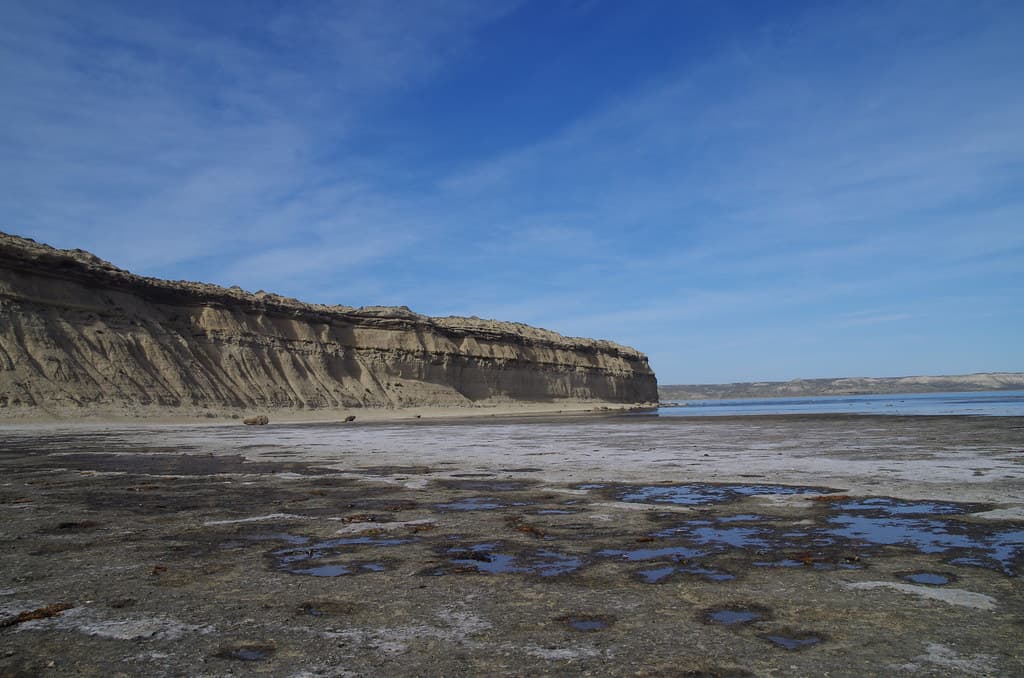
The road from Puerto Pirámides narrows to gravel, then to a faint track that deposits you at Playa Larralde—a beach that refuses to pander. No umbrellas, no vendors, no lifeguard towers. Just a thousand shades of gray pebble beneath your feet and the Patagonian wind rearranging your hair. The stones range from marble-sized to fist-wide, each one buffed smooth by centuries of tide. You'll spread your towel directly on them, feeling their sun-warmed curves through the fabric, listening to the surf rattle them like distant maracas. Between July and December, southern right whales congregate in Golfo Nuevo, and from this low-density shore you'll watch mothers teaching calves to breach without a tour boat's diesel exhaust in your nostrils. Guanacos pick their way down the red-striped cliffs behind you, curious but cautious. The water runs cold year-round—thirteen degrees Celsius in winter, barely eighteen in summer—but on windless January afternoons, locals wade in for quick, gasping dips that leave skin tingling. Bring everything: water, shade, provisions. The nearest services sit four kilometers back in Puerto Pirámides, a village that exists primarily as a whale-watching port. That isolation ensures you'll have long stretches of shoreline entirely to yourself, the kind of solitude where you notice individual waves, count cormorant formations, lose entire afternoons to the rhythm of stone against stone.
Places, rentals, tours and events within walking and driving distance of Playa Larralde.
Photos
Swimming conditions at Playa Larralde vary with tides and weather. The pebble beach can make entry uncomfortable, and Golfo Nuevo waters are typically cool year-round. Strong currents may occur, particularly during windy conditions common in Patagonia. Always check local conditions before entering the water. The beach's remote nature means no lifeguard services are available, so exercise caution and never swim alone. The calmer conditions usually occur during morning hours when winds are lighter.
The optimal period for visiting Playa Larralde is during the shoulder seasons of spring (October-November) and autumn (March-April) when crowds are minimal. Summer months (December-February) offer the warmest weather but can be windy. The beach's quiet character makes it ideal for those seeking solitude throughout the year. Winter visits are possible but cold, with strong Patagonian winds. Wildlife viewing in Península Valdés peaks during specific seasons, so coordinate your beach visit with regional attractions.
Playa Larralde is accessible from Puerto Pirámides, the only village within Península Valdés. You'll need a vehicle, preferably with good clearance, as coastal roads can be rough. From Puerto Pirámides town center, follow coastal access routes toward the Golfo Nuevo shoreline. The beach's hidden nature means signage may be limited. Check with local accommodations or tour operators for specific directions. Renting a car in Puerto Madryn and driving to the peninsula is the most practical approach for independent travelers.
Puerto Pirámides, the nearest settlement, offers various accommodation options including hotels, hostels, and campgrounds. Restaurants and cafes in town serve Argentine cuisine with emphasis on seafood and lamb. No facilities exist directly at Playa Larralde, so bring water, snacks, and sun protection. Most visitors stay in Puerto Pirámides or Puerto Madryn and make day trips to the beach. Book accommodations in advance during peak whale-watching season (June-December) when tourism demand increases significantly in the region.
Playa Larralde stands out for its low visitor density and authentic Patagonian coastal atmosphere. The pebble composition creates distinctive textures and colors along the shoreline. Its position on Golfo Nuevo offers different perspectives of the peninsula's dramatic landscape compared to more accessible beaches. The beach provides excellent opportunities for quiet contemplation, sunbathing, and coastal walks without tourist crowds. Beachcombers often find interesting shells and stones. The secluded setting appeals to photographers and nature lovers seeking undisturbed Patagonian coastal scenery.