Counting the waves…
Counting the waves…
A refined fusion of water purity, environmental stability, and communal vibrancy for Playa Médanos de Bahía Creek.
View MethodologyAnalyzed via live sensors and environmental data.
Wave height, wind, and atmospheric stability.
Live footfall and crowd balance metrics.
Community reviews and curated sentiment.
“You'll park beside the scrubland where Camino de la Costa dissolves into sand, then walk through rolling dunes sculpted by Patagonian wind. The beach runs wide and empty, backed by blonde hills that shift shape with…”
Limited recent visitor reports — live OBI telemetry is your best guide for current conditions.
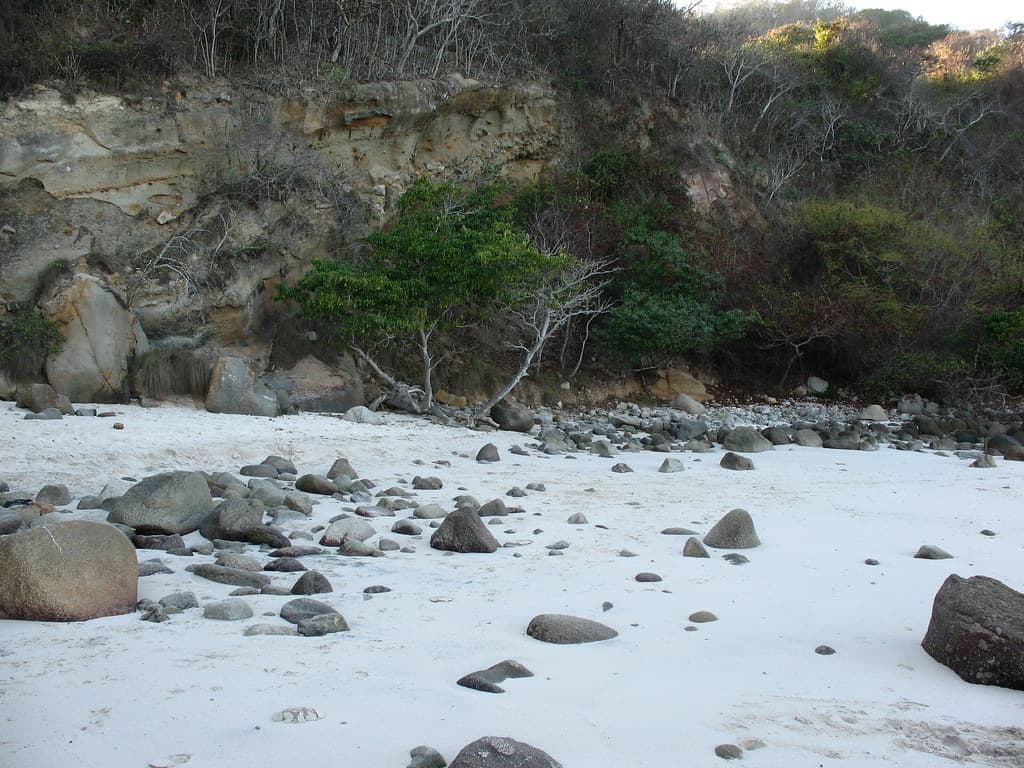
The approach to Playa Médanos de Bahía Creek feels more like navigation than arrival—dirt tracks branch off the coastal route, leading through thickets of thorny brush until the land suddenly opens onto a sweep of sand dunes. These aren't the manicured, fenced-off dunes of tourist brochures; they're living landforms, their crests sharp-edged one week and slumped the next, marram grass clinging to their flanks in defiant tufts. You leave your shoes in the car because the sand here infiltrates everything.
The beach itself stretches in both directions with almost no interruption—no lifeguard stand, no rental umbrellas, no family claiming territory with a pop-up canopy. Just you, the birds working the tideline, and the relentless Patagonian wind that turns your towel into a sail if you don't anchor it with driftwood. The water stays bracing even in summer, the kind of cold that makes you gasp and laugh simultaneously. Shells collect in windrows along the high-tide mark, mixed with kelp ribbons and the occasional vertebra from something that once swam offshore.
 Credit: Unsplash
A sandy beach with palm trees along the shore under a clear blue sky
 Credit: Unsplash
people on beach during daytime
Shelter in hollows from wind
Track ridgelines toward La Lobería
Golden hour on sculpted sand
Prime Visitation
Less Crowds
Where it is
Playa Médanos de Bahía Creek
Bahía Creek, Río Negro, Argentina
-41.247400°, -63.300700°
Weather
Loading…
Swell
—
Temp
Warm · Restorative
UV Index
Moderate
Wind
—
Tidal State
Last known
Max Sunlight
—
Ideal Shade
—
Jan - Dec (Peak)
Mar - Nov (Off-season)
Historical data suggests peak visibility and stable sea temperatures occur during the prime visitation window.
Select a category to load nearby places.
Unlock restaurants, luxury stays and curated maritime experiences within 2km
Swimming conditions depend on weather and tides, as this natural beach lacks lifeguard services. The sandy nature generally means a gradual entry, though currents and undertows can occur along open Patagonian coast. Water temperatures are cold year-round, typical of the Atlantic at this latitude. The remote setting requires self-reliance and good judgment about conditions. Always swim with others, avoid going too deep, and be aware of changing tides and weather that can affect safety.
Visit during summer (December-February) for the warmest temperatures, though the beach remains uncrowded year-round. The sandy, dune-backed landscape is beautiful in any season, with dramatic light for photography. Wind is common, so check forecasts; calmer days are more comfortable for beach activities. Off-season visits offer maximum solitude and raw natural beauty. Late afternoon provides excellent opportunities for sunbathing when available and capturing the interplay of dunes, beach, and ocean light.
Access is via the Camino de la Costa, requiring a private vehicle as public transportation doesn't serve this remote area. Bahía Creek is your reference point along the coastal road. Some sections may be unpaved; check road conditions before traveling and ensure your vehicle is prepared for coastal routes. GPS coordinates help navigate to this lesser-known beach. Allow sufficient time for the journey and carry extra fuel, as services are sparse along remote coastal roads.
This hidden beach has no on-site facilities, restaurants, or lodging. Bahía Creek itself is a small coastal area with minimal infrastructure. Visitors must bring all necessary supplies including food, water, sun protection, and emergency provisions. The nearest accommodations and dining are in larger towns along the coast, such as Las Grutas or San Antonio Oeste. Plan this as a self-sufficient day trip. Always pack out all trash to preserve the natural environment.
The defining feature is the dune-backed landscape that gives the beach its name, creating strong natural character distinct from flat coastal areas. These médanos (dunes) provide scenic beauty and wind protection, while offering exploration opportunities. The area around Bahía Creek combines sandy beach with Patagonian coastal ecology. Its hidden, undeveloped nature appeals to travelers seeking pristine landscapes without crowds. The beach exemplifies the raw, windswept beauty characteristic of Argentina's less-traveled southern Atlantic coast.
Photos