Counting the waves…
Counting the waves…

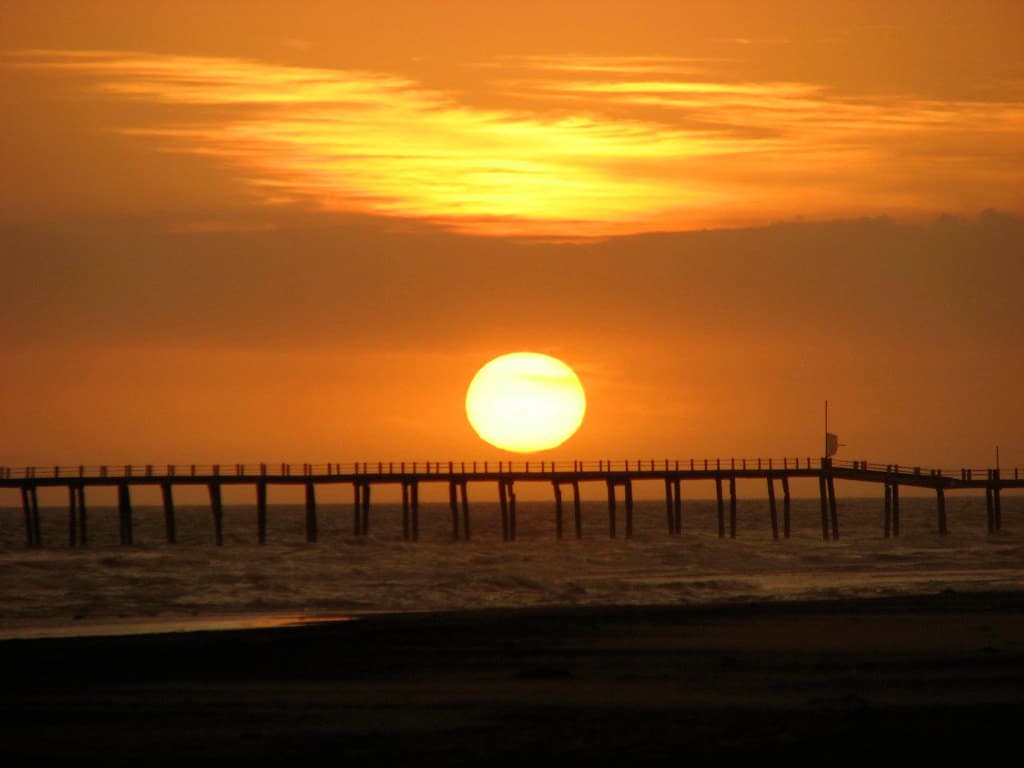
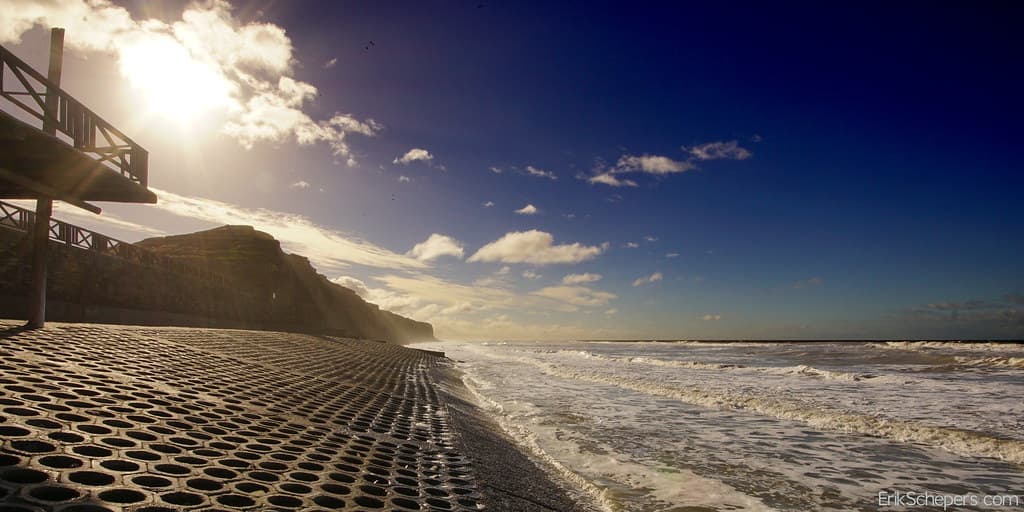
You descend wooden stairs anchored into the cliff face, switchbacking past layers of sedimentary rock striped in rust and clay. The beach below curves in a generous arc, its charcoal sand flecked with shell fragments that crunch underfoot. Behind you, the escarpment shelters the strand from inland winds, creating pockets of still air where you can feel the sun's full weight on your shoulders. Families claim spaces near the base of the stairs, where the sand is firmest and shade appears by late afternoon. The tide pools left in depressions between rocks hold tiny crabs and periwinkles, and children crouch to watch them scuttle. You can hear sea lions from the nearby rookery at La Lobería—their barks carry on the offshore breeze, mixing with the rhythmic percussion of waves. The cliffs change personality with the light. Morning bathes them in rose and apricot; by midday they bleach to pale yellow; sunset turns them the color of burnt sienna. You'll want to time your visit for the golden hour, when photographers line the upper lookout and the whole coastline seems to catch fire. Bring a jacket—once the sun drops, the Patagonian wind reasserts itself, sweeping down the Camino de la Costa with the smell of salt and dry grass.
Places, rentals, tours and events within walking and driving distance of Playa Bonita.
Photos
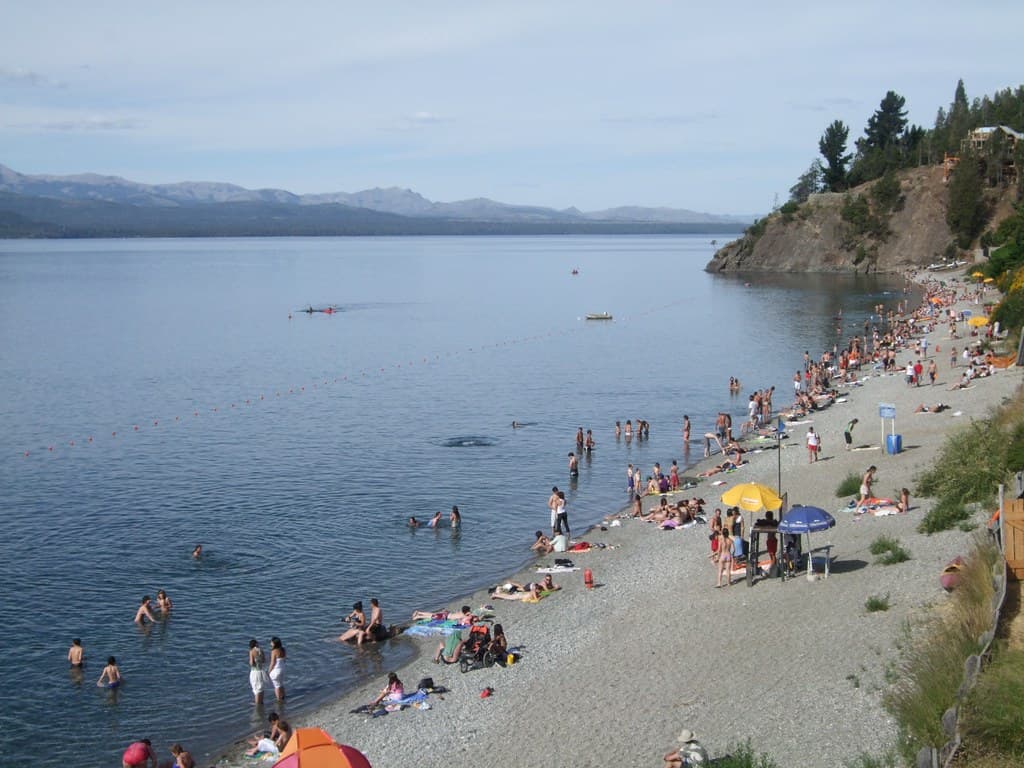
Swimming at Playa Bonita requires caution due to the cliff-backed setting and Atlantic Ocean conditions. Water temperatures are cold year-round, and currents can be strong and unpredictable. The beach may have seasonal lifeguard services during summer months (December-February), but verify locally. Rocky areas near the cliffs can create hazards, so swim only in designated sandy sections. Families should supervise children closely and stay in shallow areas. The scenic cliffs are wonderful for viewing but maintain safe distances from edges. Many visitors enjoy the beach for sunbathing, walks, and photography rather than intensive swimming.
Playa Bonita is most popular during Argentine summer (December-February) when weather is warmest and beach activities are most comfortable, though Patagonian winds persist. The beach sees fewer crowds than major resorts despite its recognition along the Camino de la Costa. Spring (October-November) and autumn (March-April) offer pleasant conditions with minimal crowds and excellent photography light on the dramatic cliffs. Winter (June-August) brings cold, windy conditions but spectacular storm-watching opportunities. The cliff scenery is photogenic year-round. Visit during weekdays for even greater solitude, or summer weekends to experience local beach culture.
Playa Bonita is accessible by car along the Camino de la Costa, the scenic coastal road in Río Negro province. From the town of El Cóndor, follow coastal routes toward the beach, which is well-marked as one of the area's recognized destinations. The road conditions are generally good, suitable for standard vehicles. El Cóndor itself is approximately 30 kilometers south of Viedma, the provincial capital, accessible via Route 1. During summer, local transportation or tour operators may offer services to popular beaches. GPS or maps showing the Camino de la Costa route are helpful for navigation.
El Cóndor, the nearest town to Playa Bonita, offers various accommodation options including hotels, hostels, cabañas (cabins), and campgrounds, with more choices during summer season. The town has restaurants specializing in seafood, pizzerias, cafés, and small grocery stores. For greater variety, Viedma (30 km north) provides full urban amenities including numerous hotels, restaurants, supermarkets, and services. Along the beach, you may find seasonal food kiosks or mobile vendors during peak summer months. For day trips, pack snacks and water. Accommodation books quickly in January-February, so reserve ahead for summer visits.
Playa Bonita earns its name ("Beautiful Beach") and recognition through its dramatic cliff-backed setting that creates stunning photographic opportunities and natural beauty along the Camino de la Costa. The combination of golden cliffs, sandy stretches, and Atlantic waves makes it one of the most visually striking beaches in Río Negro province. The beach represents the classic Patagonian coastal landscape: rugged, scenic, and relatively unspoiled. Its accessibility via the coastal road combined with natural beauty attracts photographers, nature lovers, and families seeking authentic beach experiences beyond conventional resorts. The sunset views from the cliffs are particularly memorable.