Counting the waves…
Counting the waves…
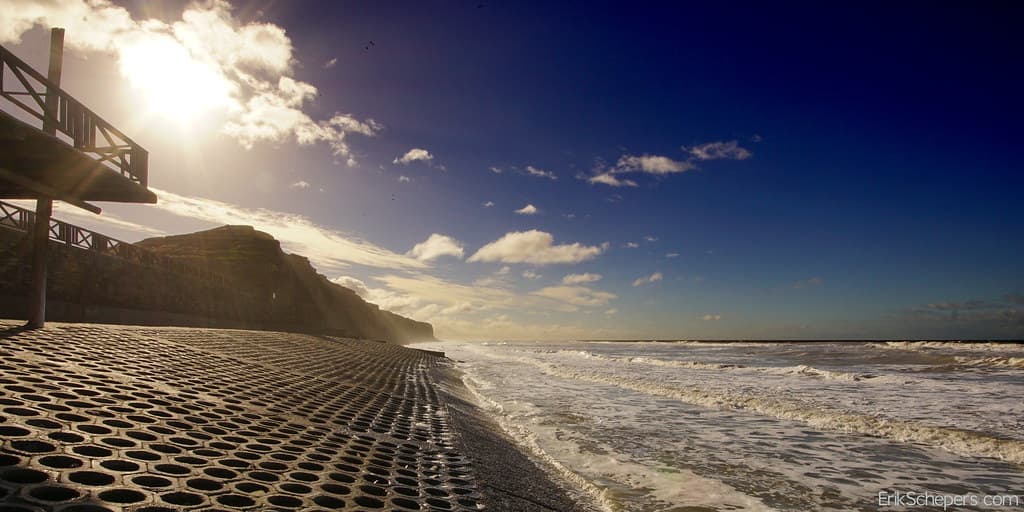
The Camino de la Costa ribbons south from El Cóndor, hugging bluffs and dunes that drop toward the Atlantic in rumpled folds of ochre and sage. Playa de los Cangrejales announces itself quietly—no signage, no parking lot, just a natural break in the scrub where you can pull off and walk down to a beach named for the tiny crabs that populate its tidal margins. The sand here carries a reddish tint, fine and cool underfoot, and the water arrives in gentle, methodical swells that spread thin across broad flats at low tide. Families arrive mid-morning with mate thermoses and folding chairs, claiming patches of sand near the dunes where the wind loses some of its bite. Children wade knee-deep, netting crabs and poking at stranded jellyfish, while parents scan the horizon for the dorsal arcs of southern right whales that cruise offshore during migration months. The beach stretches wide and empty in both directions, bordered by low cliffs striped with sediment layers that tell stories older than any human claim to this coast. You won't find beach clubs or vendors here—bring what you need, pack out what you carry in, and time your visit around the tides. When the water pulls back, it reveals a temporary landscape of pools and channels where shore birds pick their way across glistening sand, and the true character of this overlooked stretch reveals itself in small, patient details.
Places, rentals, tours and events within walking and driving distance of Playa de los Cangrejales.
Photos
This calm, tidal beach area generally offers safer conditions for families compared to more exposed coastal sections, particularly during settled weather and favourable tides. The calmer waters make it more suitable for children's play and gentle wading. However, always supervise children closely as lifeguard services may not be present at this low-profile location. Check tides and weather before visiting, as conditions change throughout the day. The beach's quieter nature means fewer people around if assistance were needed, so parental vigilance remains essential for safe family outings.
The beach attracts fewer crowds year-round, making almost any time suitable for peaceful visits. Summer months (December-February) provide warmest swimming conditions and longest daylight for family beach days. Spring and autumn offer comfortable temperatures with even greater solitude, perfect for beachcombing and nature observation. The tidal nature means consulting tide schedules helps maximize beach access and exploration opportunities. Early mornings typically offer calmest conditions before afternoon winds develop. Being less known than El Cóndor's main beach, you'll enjoy tranquillity regardless of when you visit.
Located along the coastal road near El Cóndor, the beach is accessed via the Camino de la Costa route. From El Cóndor town centre, follow directions toward La Lobería, watching for beach access points along the way. The name "Cangrejales" (crab areas) may appear on local signs or maps. A personal vehicle is necessary as public transport doesn't serve these specific beach sectors. Ask locals in El Cóndor for precise directions, as they're familiar with named beach sections. The proximity to town makes it more accessible than other remote coastal spots.
Being close to El Cóndor provides significant advantages for services compared to more remote beaches along the coast. El Cóndor town offers various restaurants serving fresh seafood and Argentine cuisine, grocery stores for supplies, and accommodation ranging from camping to hotels and vacation rentals. While the beach itself lacks facilities, its proximity to town (typically just minutes by car) makes provisioning easy. You can still pack beach supplies for day visits, but returning to town for meals and amenities is convenient and quick.
The name "Los Cangrejales" translates to "the crab areas," suggesting historical or ongoing presence of crabs in this tidal zone. Such names often indicate productive tidal flats where marine life including crabs inhabit the intertidal zone, offering beachcombing and nature observation opportunities. The beach's calm, tidal character creates habitat for various coastal creatures, making it educational for families. Being missed by generic tourism datasets means it retains local character rather than commercial development. Visitors appreciate discovering named beaches that local residents know but tourist guides often overlook.