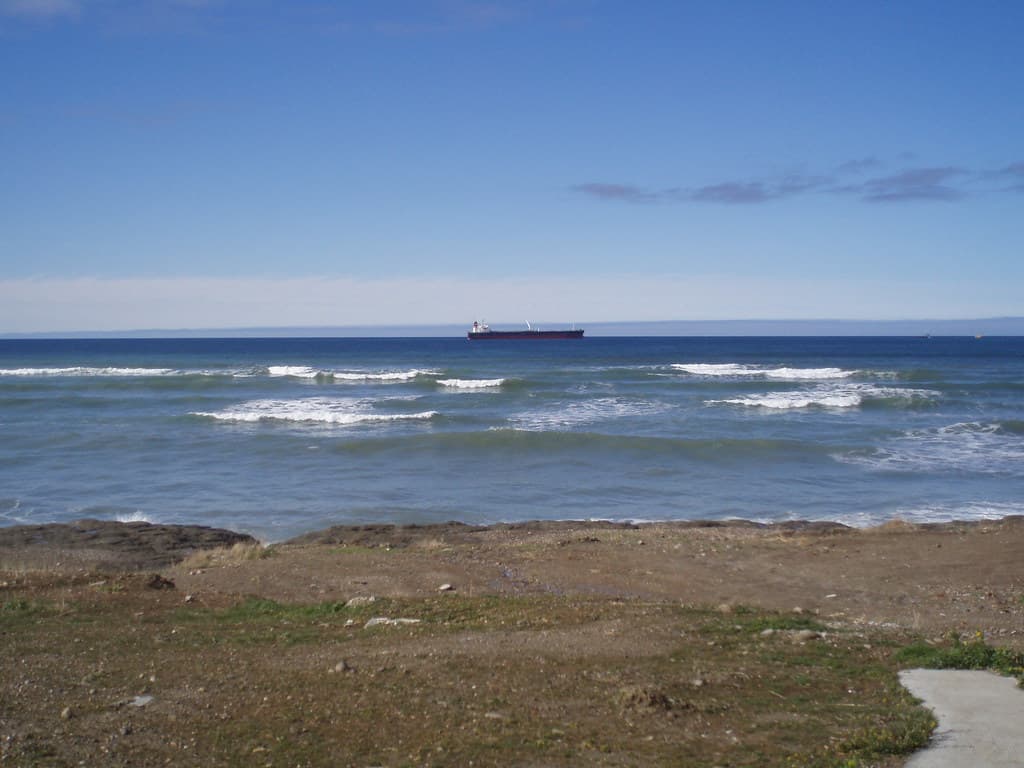
Counting the waves…
Counting the waves…
The wide avenue parallels the shore, offering unobstructed sightlines to where water meets sky in a smudged horizon line. You'll pass monuments to the oil workers who built this town, bronze figures facing the wind with the same stoic determination as the living residents walking their dogs. The paved costanera makes beach access democratic—strollers, wheelchairs, and bicycles all navigate easily. Weekend afternoons bring food trucks and portable grills, the smoke carrying the scent of sizzling meat across the waterfront. Families claim benches and low walls, unpacking homemade tortas fritas and filling mate gourds from thermoses. The beach itself lies just steps away, a pebbled expanse where the bold wade in and the cautious simply dip their toes, testing water that remains bracingly cold. As afternoon slides toward evening, the quality of light shifts. The industrial port to the south becomes a silhouette, all hard angles softening in the golden hour. Teenagers gather in loose groups, their Spanish rapid and punctuated with laughter. The costanera captures Caleta Olivia's social rhythm—not leisurely, not hurried, simply constant, like the waves that have shaped these stones for millennia.
Places, rentals, tours and events within walking and driving distance of Playa Costanera Caleta Olivia.
Photos
Playa Costanera Caleta Olivia is an urban beach where swimming is possible but challenging due to cold South Atlantic waters and typical Patagonian coastal conditions. As a developed waterfront area, it has better access and visibility than remote beaches, though dedicated lifeguard services may be limited or seasonal. The water remains cold throughout the year, and winds can be strong. Local families do use the beach, but primarily for walking and recreation rather than extended swimming. If entering the water, do so cautiously and be prepared for chilly temperatures even in summer.
Playa Costanera Caleta Olivia can be visited year-round, with different seasons offering distinct experiences. Summer months (December-February) provide the warmest weather and are popular with local families for coastal walks and recreation. Late afternoon and evening visits during summer offer beautiful sunset opportunities over the Gulf San Jorge. Spring and autumn see fewer visitors but still pleasant conditions for exploring the waterfront. Winter visits are possible for hardy travelers interested in dramatic seascapes and storm watching. The urban setting means facilities remain open regardless of season, unlike remote beaches.
Playa Costanera Caleta Olivia is easily accessible as it forms part of Caleta Olivia's central waterfront area. The beach is located directly along the town's coastal avenue (costanera), easily reached on foot from downtown accommodations or by short taxi ride. Caleta Olivia itself sits on Route 3, the main coastal highway through Patagonia, with regular bus services connecting to other Argentine cities. The town has a bus terminal with connections throughout Santa Cruz and Chubut provinces. Once in Caleta Olivia, the costanera is well-signposted and simple to navigate.
As Caleta Olivia's main waterfront area, Playa Costanera has good access to urban amenities. The town offers various accommodation options including budget hotels, hostels, and apartment rentals at reasonable rates compared to major tourist destinations. Restaurants, cafes, and shops are available throughout the town center, many within walking distance of the beach. The costanera itself typically has casual dining options and food vendors, especially during warmer months. Supermarkets and provisions stores allow self-catering. Being a working city rather than resort town, services cater to locals and passing travelers at affordable prices.
Playa Costanera Caleta Olivia serves as the main accessible beach for northern Santa Cruz province and represents an authentic Patagonian urban waterfront rather than a developed tourist beach. The costanera offers sunset views over the Gulf San Jorge and provides insight into local coastal life in an oil-industry city. The beach is located near the iconic Gorosito Monument, a landmark visible to travelers on Route 3. This combination of working-city atmosphere, budget-friendly services, and genuine local character makes it valuable for travelers seeking authentic experiences rather than resort amenities along Patagonia's coast.