Counting the waves…
Counting the waves…
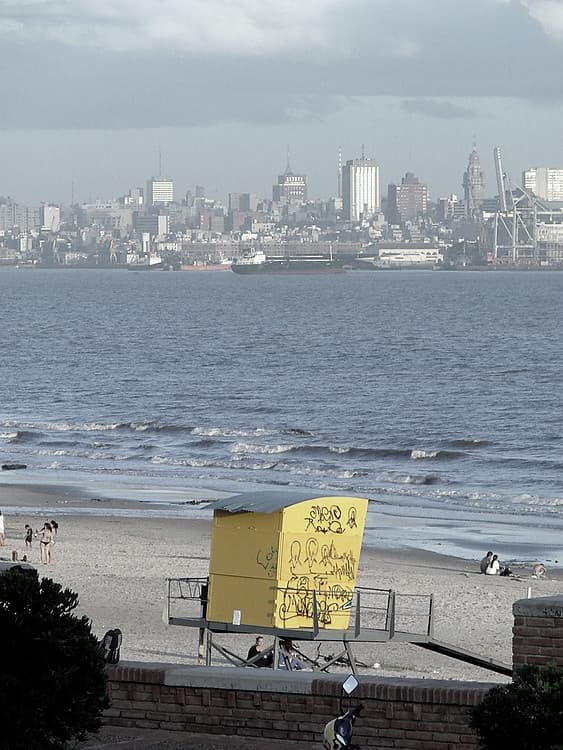
You leave Puerto Deseado's protected ría behind and drive rutted dirt roads that test your rental car's clearance, arriving at a bay where the only evidence of human presence is the faint track your tires just carved. The beach curves in a loose crescent, its surface composed entirely of smooth stones ranging from marble- to melon-sized, clacking against each other with every wave's advance and retreat. The sound becomes hypnotic—a constant rattle and hiss that mingles with wind strong enough to lean into. No facilities, no markers, no other visitors. You pick your way across the unstable pebbles toward the waterline, where foam the color of old cream surges between rocks. Cormorants dry their wings on offshore outcrops, and if you're patient and quiet, you might spot a pair of Commerson's dolphins surfacing beyond the break, their distinctive black-and-white markings visible even at distance. The water temperature hovers just above freezing year-round; this is a beach for watching, not swimming. The light here shifts with marine-layer clouds that roll in without warning, turning the sea from steel to pewter to something nearly black before breaking apart to reveal sudden, startling blue. You stay longer than planned, unable to shake the feeling that you've reached an edge of the world that doesn't perform for anyone, that remains entirely itself whether you're here to witness it or not.
Places, rentals, tours and events within walking and driving distance of Playa Bahía Concordia.
Photos
Swimming is not advisable at this remote pebble beach. The Atlantic waters here are very cold year-round, and the exposed location means strong currents and waves are common. The beach's pebble composition makes water entry uncomfortable, and there are absolutely no facilities, lifeguards, or safety services. The isolated location means help would be far away in an emergency. This beach is best enjoyed for its natural beauty, photography opportunities, and coastal walks rather than water activities. Visitors should be cautious near the water's edge and prepared for changeable weather conditions typical of southern Patagonia's Atlantic coast.
The beach is accessible throughout the year, though summer months (December-February) provide the most pleasant conditions with milder temperatures and extended daylight. These months are ideal for photography and coastal exploration. Sunset viewing can be spectacular during summer with late sunsets typical of high southern latitudes. Spring and autumn offer fewer visitors and dramatic lighting for photography, though conditions can be cooler and windier. Winter visits are possible but require preparation for cold, windy weather. Regardless of season, wind is common in coastal Patagonia, so appropriate clothing is essential for any visit to this exposed location.
Reaching this beach requires significant planning as it's located in a sparse, remote area south of Puerto Deseado beyond the main ría system. A vehicle is essential, preferably with 4WD capability as roads are likely unpaved and may be challenging. From Puerto Deseado, you'll travel south on coastal tracks; detailed maps or GPS are crucial as signage is minimal. Road conditions can vary seasonally, so local inquiry is recommended. The journey passes through largely uninhabited landscape. Inform someone of your travel plans, carry extra fuel, water, and emergency supplies when visiting this isolated coastal area. Travel time depends heavily on conditions.
No facilities exist at or near this remote beach. Puerto Deseado is the nearest town with services, located a considerable distance north. You must arrange all accommodation there, with options including hotels and hostels. Bring all food, water, and supplies for your beach visit, as this is completely undeveloped wilderness. Pack a substantial picnic and extra provisions. Puerto Deseado has restaurants and grocery stores for pre-trip provisioning. Treat this as a wilderness expedition requiring complete self-sufficiency. The remoteness is part of the appeal but demands proper preparation and respect for the isolated environment.
This beach represents one of the most remote and isolated coastal access points in the Puerto Deseado region, located beyond the main ría system in a truly sparse landscape. The isolation guarantees solitude and pristine natural conditions rarely found elsewhere. Its southern position offers unique perspectives of Patagonia's Atlantic coast with dramatic pebble beaches and coastal formations. Sunset views can be extraordinary given the unobstructed western horizon. For adventurous travelers and photographers seeking absolute wilderness and untouched coastal scenery, this beach delivers an authentic experience of Patagonia's wild, windswept Atlantic shoreline far from any human development or infrastructure.