
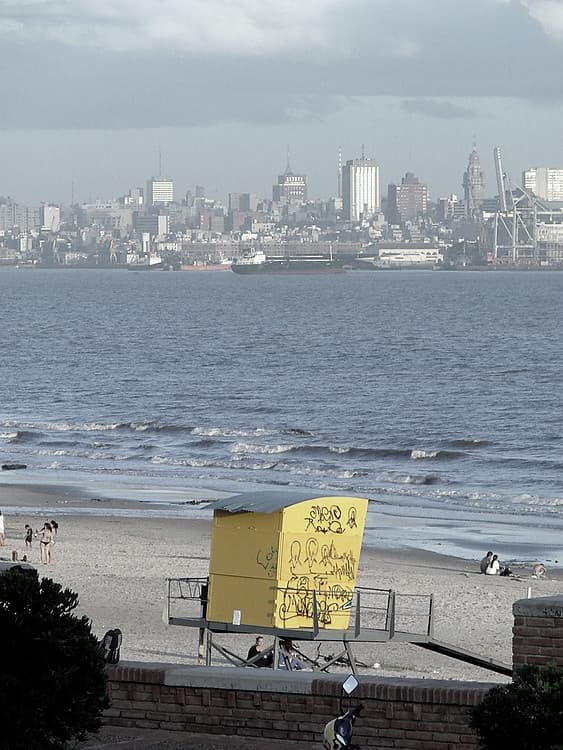
Counting the waves…
Counting the waves…

Bahía Uruguay bends away from the prevailing southwesterlies, its horseshoe shape intercepting wind and wave with equal efficiency. The result is a beach that feels almost benevolent by Patagonian standards—surf that laps rather than crashes, pebbles small enough to walk barefoot without grimacing, air calm enough for thermos cups to remain upright. Local families have claimed this cove for generations, recognizing shelter when they find it in a region where wind typically dictates all outdoor plans. The stones here tell migration stories. You'll find pebbles of granite, basalt, and sandstone, each carried from different geological provinces by ancient glaciers and modern currents. They click softly underfoot, a gentler version of the rattling chaos at exposed beaches. Tide pools form in depressions where larger rocks create natural aquariums, hosting crabs that scuttle sideways when shadows pass overhead. The water itself runs clearer here than along the open coast, its relative stillness allowing sediment to settle. Weekends bring pickup trucks parked above the beach, their beds loaded with coolers, folding chairs, and windbreaks optimistically deployed. Extended families spread across the cove, staking territorial claims marked by beach umbrellas and mate gourds. Children construct pebble towers that last until the tide creeps up to reclaim the beach. It's profoundly ordinary—precisely what makes it valuable along a coast where ordinary often feels impossible.
Places, rentals, tours and events within walking and driving distance of Playa Bahía Uruguay.
Photos
Swimming at Playa Bahía Uruguay requires caution due to cold Patagonian water temperatures year-round and potentially strong Atlantic currents. The beach is relatively remote with no lifeguard services, so swimmers assume personal responsibility for safety. The pebble beach composition can make entry and exit from water challenging. Check weather and tide conditions before visiting, as conditions can change rapidly along this exposed coastline. The beach is better suited for coastal walks and scenery appreciation than swimming activities.
Playa Bahía Uruguay can be visited year-round, though summer months (December through March) offer the most comfortable conditions with milder temperatures and longer daylight hours. The beach experiences fewer crowds throughout the year, making it ideal for those seeking solitude. Shoulder seasons (November and March-April) provide good weather with even fewer visitors. Winter months bring cold temperatures and strong Patagonian winds, though dramatic coastal scenery remains impressive. Consider visiting during clear weather days for the best photographic opportunities and coastal exploration.
Playa Bahía Uruguay is located south of Puerto Deseado and requires a vehicle to reach. From Puerto Deseado, take the coastal road heading south; exact distances and road conditions vary, so confirm directions locally. Roads may be unpaved gravel in sections, typical of rural Patagonian routes. A rental car or taxi is recommended, as public transportation to this beach is limited or unavailable. Check road conditions before departure, especially after rain. Ensure your vehicle has adequate fuel and supplies, as services are concentrated in Puerto Deseado town.
Playa Bahía Uruguay has no on-site facilities, food services, or accommodation. All visitor services are located in Puerto Deseado, approximately a drive away. The town offers hotels, hostels, restaurants, and grocery stores where you can purchase supplies. Plan to bring food, water, and any necessary supplies for a beach visit, as there are no vendors or facilities at the beach itself. Pack out all trash to preserve the natural environment. Consider packing a picnic if planning an extended visit to this remote location.
Playa Bahía Uruguay offers a low-density, undeveloped beach experience away from Puerto Deseado's more accessible locations. Its pebble composition and rugged coastal setting provide authentic Patagonian coastal scenery without crowds. The beach appeals to those seeking solitude, photography opportunities, and connection with nature in a less-visited area. The relatively hidden character means you may have stretches of coastline largely to yourself. It's ideal for beachcombing, coastal walks, and experiencing the raw beauty of Argentina's Atlantic Patagonian coast in a peaceful setting.