
You see the namesake formation from half a kilometer away: a weathered mass of limestone rising twenty meters above the darker substrate, its chalky surface carved into a thousand small caves and overhangs by wind and salt spray. The contrast is jarring—most of Monte León's coast reads in shades of grey and rust, but here the white rock glows against the Atlantic sky like exposed bone.
“The visible geological unconformity between limestone and basalt creates a teachable moment in coastal formation processes.”
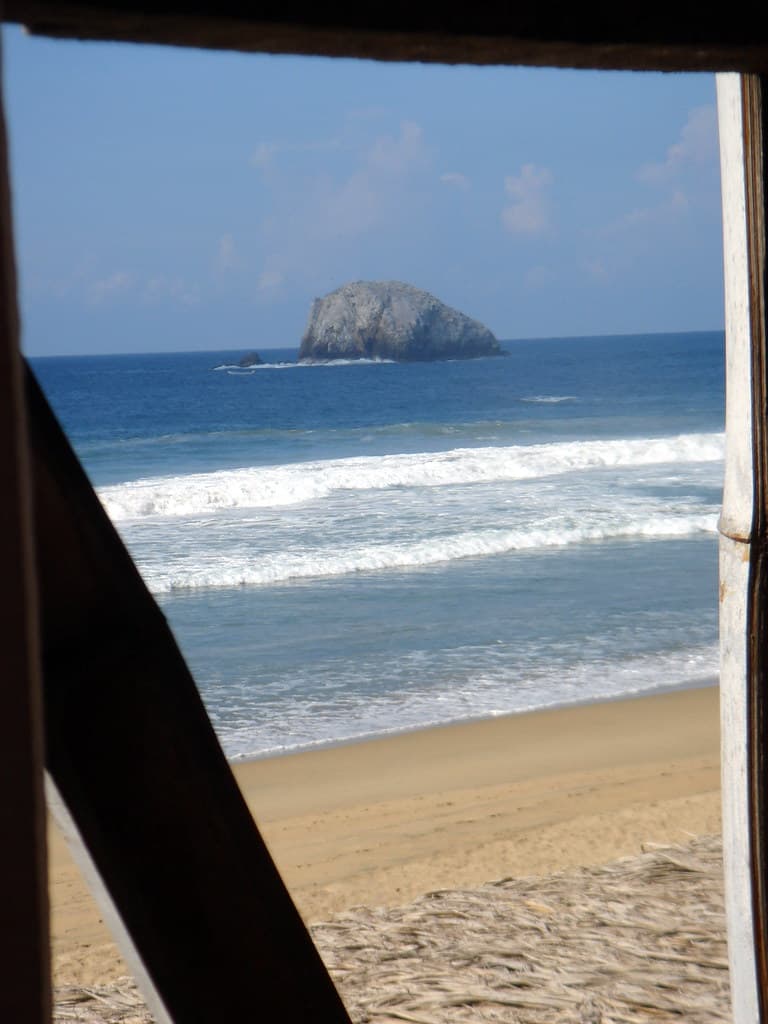 Credit: Flickr
Roca Blanca from a hammock
The beach itself is more platform than sand, a series of stepped basalt shelves that descend into the surf zone. Rockweed covers the lower levels, creating a slick carpet that requires careful navigation. Where the white rock has eroded, chunks of limestone litter the basalt, the two stone types lying side by side in a geology textbook illustration of unconformity. You run your hand across both: the basalt dense and fine-grained, volcanic glass frozen mid-flow; the limestone porous and friable, made of compressed seashells from an ocean that existed before the Andes rose.
Tide and weather have carved the white rock into forms that suggest intention—arches that frame the ocean, pillars that could be sculpture, caves that funnel wind into low moans. Photographers work the angles obsessively, chasing the light that makes the limestone incandescent against storm clouds. The rock is soft enough that you can see where previous visitors carved initials, though the park service actively discourages the practice and the elements erase most marks within a season.


