
Counting the waves…
Counting the waves…

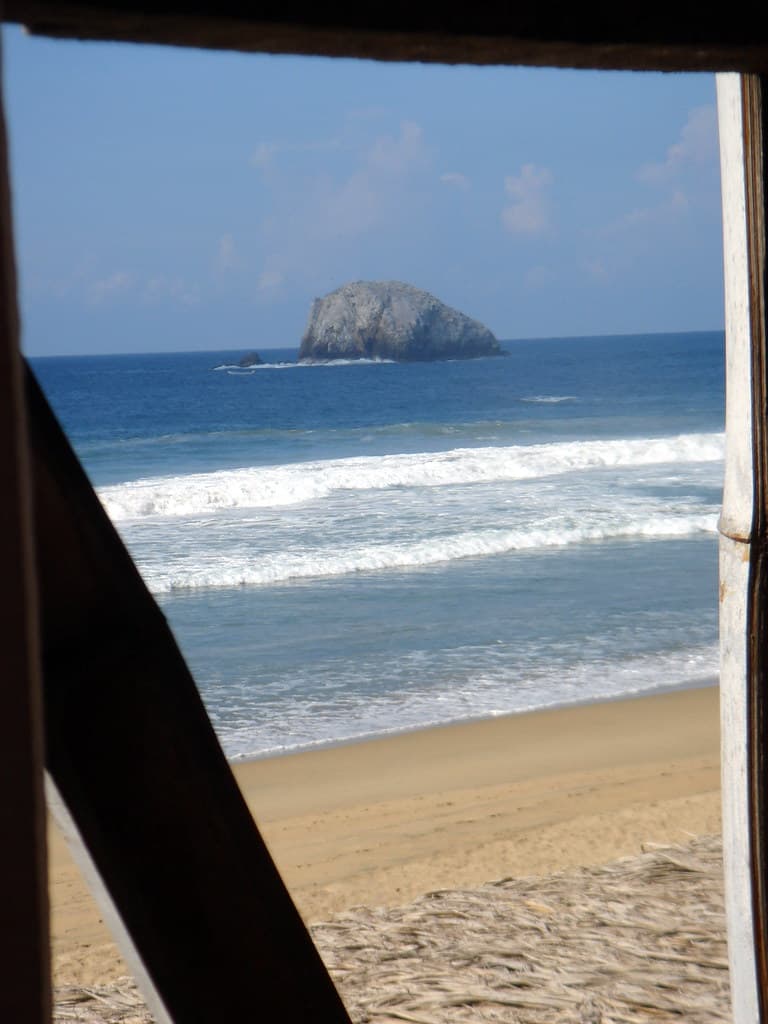
You see the namesake formation from half a kilometer away: a weathered mass of limestone rising twenty meters above the darker substrate, its chalky surface carved into a thousand small caves and overhangs by wind and salt spray. The contrast is jarring—most of Monte León's coast reads in shades of grey and rust, but here the white rock glows against the Atlantic sky like exposed bone. The beach itself is more platform than sand, a series of stepped basalt shelves that descend into the surf zone. Rockweed covers the lower levels, creating a slick carpet that requires careful navigation. Where the white rock has eroded, chunks of limestone litter the basalt, the two stone types lying side by side in a geology textbook illustration of unconformity. You run your hand across both: the basalt dense and fine-grained, volcanic glass frozen mid-flow; the limestone porous and friable, made of compressed seashells from an ocean that existed before the Andes rose. Tide and weather have carved the white rock into forms that suggest intention—arches that frame the ocean, pillars that could be sculpture, caves that funnel wind into low moans. Photographers work the angles obsessively, chasing the light that makes the limestone incandescent against storm clouds. The rock is soft enough that you can see where previous visitors carved initials, though the park service actively discourages the practice and the elements erase most marks within a season.
Places, rentals, tours and events within walking and driving distance of Playa Roca Blanca.
Photos
Swimming is not advisable at this rocky beach due to hazardous conditions including submerged rocks, strong currents, and consistently cold water temperatures typical of the Patagonian Atlantic coast. The rocky terrain creates unpredictable wave patterns and undertows. The beach's exposed position along the Monte León shoreline increases wind and wave intensity. With no lifeguards, limited cell service, and distant emergency facilities, water entry poses significant risks. The area is best enjoyed for coastal hiking, photography, and wildlife observation from shore. If wading, wear protective footwear and remain extremely cautious of tidal changes and wave surges.
Visit between November and March for the most favorable weather conditions and wildlife activity along this exposed coastline. Summer months provide the warmest temperatures and longest days for exploration and photography. The distinctive white rock formations are particularly photogenic during early morning or late afternoon when angled sunlight enhances textures and contrasts. Low tide periods reveal more of the rocky beach structure and any tide pools. Shoulder seasons offer fewer visitors and dramatic skies typical of Patagonia. Winter visits are possible for hardy travelers but expect severe cold, strong winds, and limited daylight for coastal exploration.
Playa Roca Blanca is accessed through Monte León National Park. Enter the park from Route 3 (the main coastal highway), following signs approximately 35 kilometers south of Comandante Luis Piedra Buena. After checking in at the visitor center, obtain directions to this specific beach area and current trail information. Access likely involves hiking along coastal paths over rocky and potentially uneven terrain. The exposed location means trails can be very windy. Bring detailed maps or GPS coordinates, as signage may be minimal in remote areas. Standard vehicles usually manage park roads, though conditions vary seasonally.
No commercial facilities operate within Monte León National Park. Visitors must bring all food, water, and supplies for their visit. The park maintains a free campground near the visitor center with basic amenities but no services. For accommodations with amenities, restaurants, and provisioning, the nearest town is Comandante Luis Piedra Buena, approximately 35 kilometers north. Puerto Santa Cruz, roughly 200 kilometers south, offers additional options. When visiting remote beaches like Playa Roca Blanca, pack sufficient food, warm beverages, and extra clothing layers, as Patagonian coastal weather is unpredictable and facilities are non-existent.
The beach's name references distinctive white rock formations that create striking visual contrasts against the darker surrounding geology and deep blue Atlantic waters. These pale geological features likely result from specific mineral compositions or fossil-rich sedimentary deposits, making the area geologically significant. The exposed shoreline position offers expansive ocean views and dramatic wave action against rocky outcrops, ideal for landscape photography. The area's relative remoteness within the national park ensures minimal human impact and authentic Patagonian wilderness character. Marine and bird life frequent the rocky zones, providing excellent wildlife observation opportunities in a protected natural setting.