Counting the waves…
Counting the waves…
A refined fusion of water purity, environmental stability, and communal vibrancy for Playa Río Grande.
View MethodologyAnalyzed via live sensors and environmental data.
Wave height, wind, and atmospheric stability.
Live footfall and crowd balance metrics.
Community reviews and curated sentiment.
“The city ends abruptly at a shore of rounded stones that rattle in the retreating waves. No promenade softens the transition—just chain-link fencing, scrub grass, and the Atlantic stretching gray-green to the eastern…”
Higher weekend density may affect water purity and crowd scores temporarily.
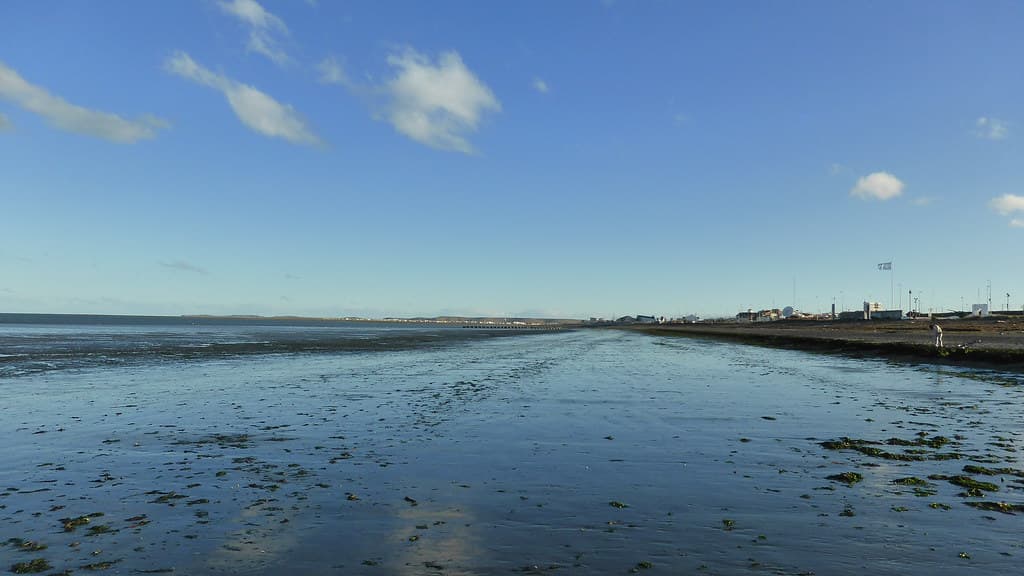
This isn't a beach designed for leisure; it's the raw edge where Argentina's largest Fuegian city confronts the South Atlantic. The shore consists of billions of pebbles—fist-sized, egg-sized, some as large as melons—worn smooth by centuries of wave action. They shift and groan underfoot, making walking a deliberate exercise. At high tide, the sea reaches a low concrete retaining wall tagged with fading graffiti; at low ebb, it retreats a hundred meters, exposing kelp-slick rocks and tidal pools where crabs scuttle between anemones.
The wind defines everything here. It pours off the inland plains without obstruction, carrying the scent of petroleum refineries and sheep estancias, strong enough to lean into. Locals come bundled in fleece and canvas, walking dogs or casting lines for pejerrey from the shore. The occasional container ship passes, bound for Punta Arenas or Rio de Janeiro, so distant it seems static against the water.
 Credit: Unsplash
palm trees blowing in the wind on a beach
 Credit: Unsplash
people on seashore near body of water
Miles of undeveloped Atlantic shore
Oil-town silhouettes against color
Pejerrey and corvina attempts
Prime Visitation
Anytime | Budget Travel
Where it is
Playa Río Grande
Río Grande, Tierra del Fuego, Argentina
-53.789600°, -67.699200°
Weather
Loading…
Swell
—
Temp
Warm · Restorative
UV Index
Moderate
Wind
—
Tidal State
Last known
Max Sunlight
—
Ideal Shade
—
Jan - Dec (Peak)
Mar - Nov (Off-season)
Anytime | Budget Travel
Select a category to load nearby places.
Unlock restaurants, luxury stays and curated maritime experiences within 2km
Playa Río Grande is generally safe for beach activities but not ideal for swimming due to very cold Atlantic waters, typically 4-8°C year-round. The pebble beach is suitable for walking, beachcombing, and family picnics. The urban location means help is readily available if needed. Strong winds are common and can create rough conditions. The beach is better suited for sunset viewing, photography, and short coastal walks rather than water sports. Families should supervise children closely near the water and dress warmly, as temperatures rarely exceed 15°C even in summer.
Playa Río Grande is accessible year-round thanks to its urban location and hardy local culture. Summer months (December-February) offer the warmest temperatures (8-14°C) and longest daylight, ideal for extended beach visits. However, this Atlantic coast experiences relatively consistent conditions throughout the year, making it viable for budget travelers in any season. Sunset viewing is spectacular during summer with late evening light. Winter visits offer solitude and dramatic storm-watching opportunities. Wind conditions vary but are generally strong, so windproof clothing is essential regardless of season.
Playa Río Grande is easily accessible as it's the main urban beach of Río Grande city. If you're in the city center, the beach is typically within walking or short taxi distance along the coastal avenue. Río Grande is connected by Route 3 to Ushuaia (approximately 200 km south) and the Chilean border to the north. Local buses serve the coastal area. The city has a small airport with flights from Buenos Aires and other Argentine cities. Once in town, the beachfront is straightforward to locate and requires no special transportation.
As Río Grande's main urban beach, Playa Río Grande has excellent access to city amenities. The town offers hotels, hostels, and guesthouses across various price ranges, many within blocks of the waterfront. Restaurants serve Patagonian lamb, king crab, and traditional Argentine cuisine, plus standard cafes and pizzerias. Supermarkets allow self-catering for budget travelers. The coastal promenade area may have food vendors during summer. Being a working city rather than a resort town, prices are generally reasonable and services cater to both tourists and locals.
Playa Río Grande represents the primary Atlantic coastal access point in northern Tierra del Fuego and serves as the main beach for the island's second-largest city. It offers a genuine local beach experience rather than a tourist-focused destination. The beach provides important context for understanding Tierra del Fuego's Atlantic coast, which differs dramatically from the Beagle Channel's southern shores. It's a practical stop for travelers crossing the island and offers authentic interaction with Fuegian daily life, combining scenic coastal views with real urban infrastructure and culture.
Photos