Counting the waves…
Counting the waves…

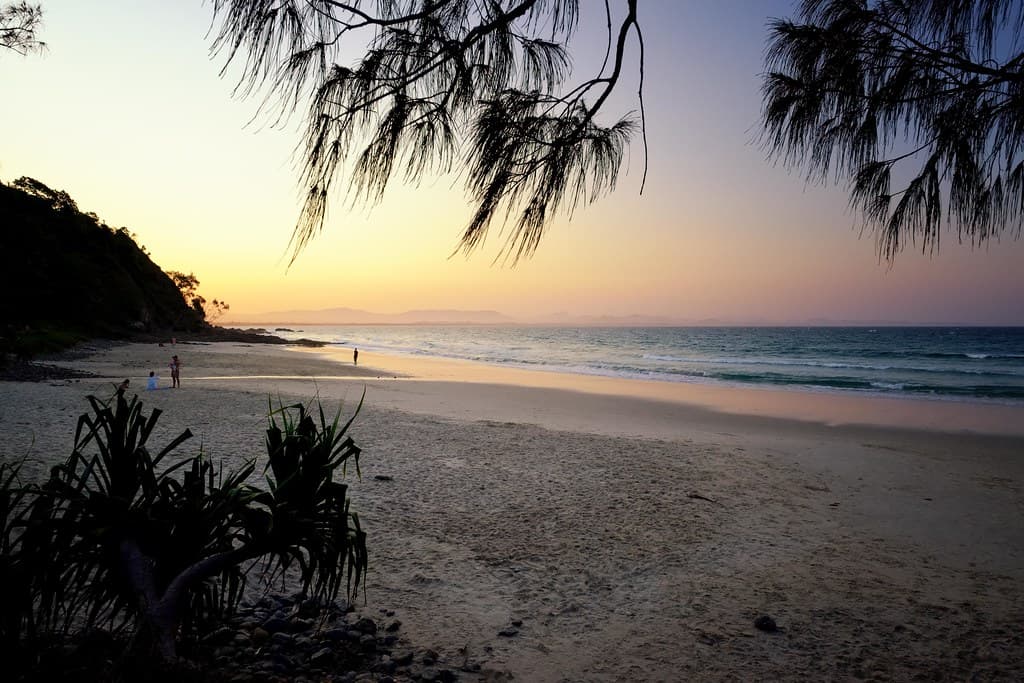
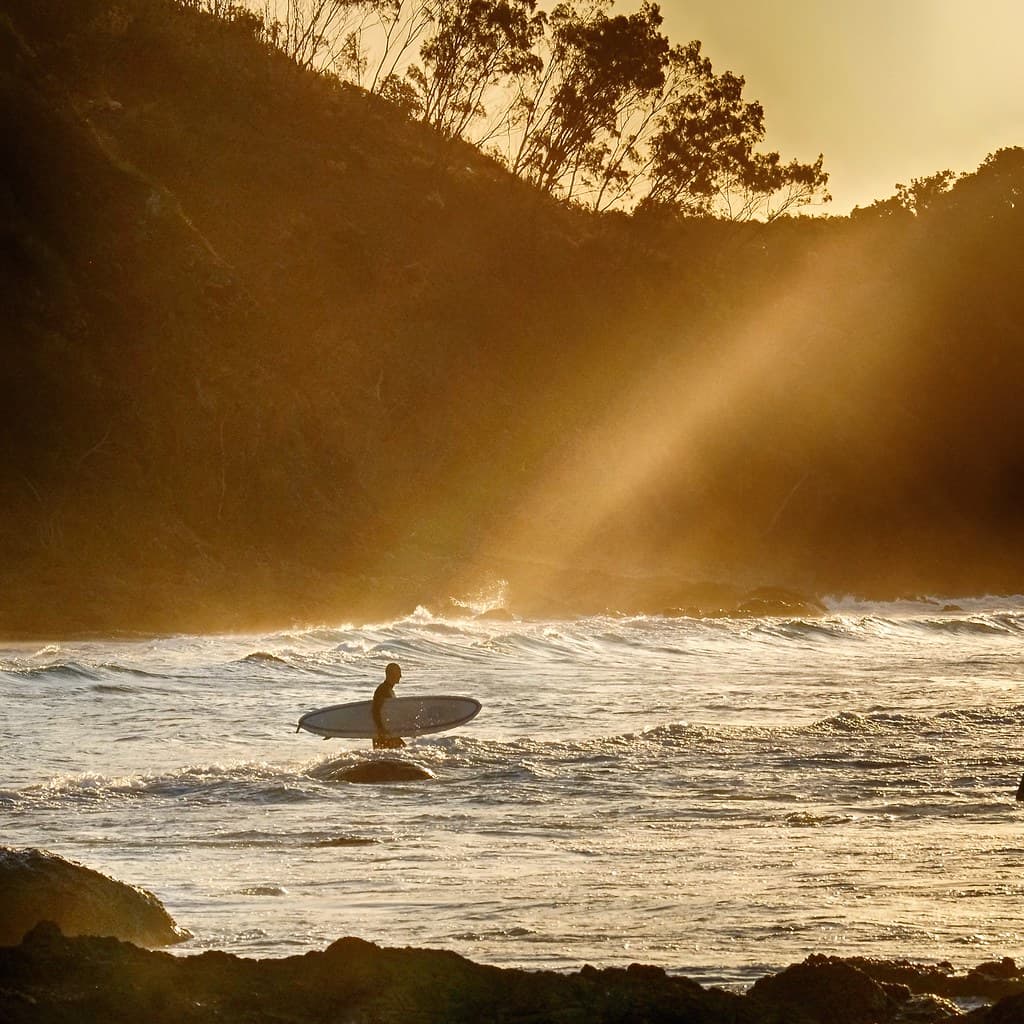
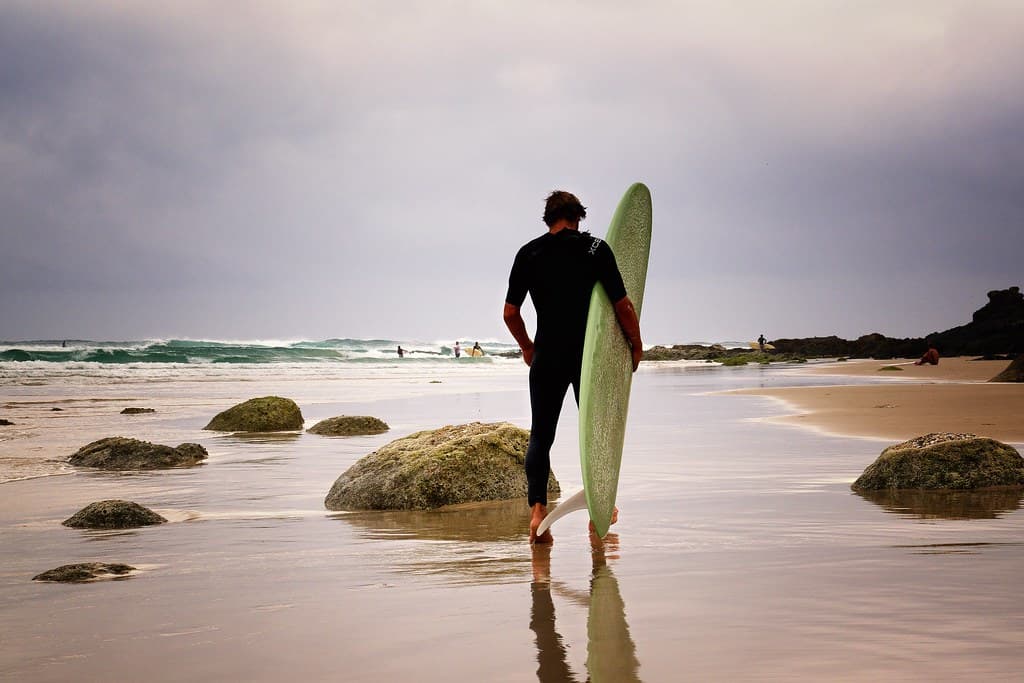
The curve of Wategos sits tucked into the base of Cape Byron like a secret kept in plain sight. You park above the grove of spotted gums and Norfolk pines, then descend to find sand the color of raw honey stretching between two rocky points. Locals arrive at dawn with longboards, reading the swell that wraps around Australia's easternmost point. By mid-morning, couples claim the southern end where pandanus roots anchor the dune edge and the sun warms tide pools into temporary baths. The water shifts from jade near shore to deeper indigo beyond the break. You can paddle out from the northern corner where basalt boulders create a natural channel, or simply wade in where the sand slopes gently and schools of dart fish scatter like thrown silver. Between sets, surfers bob and point toward humpbacks breaching offshore during winter months, their spouts visible against the lighthouse perched two hundred feet above. By afternoon, the beach belongs to sun-drunk swimmers and the occasional celebrity hiding behind oversized sunglasses—Byron's fame draws them, but Wategos' relative seclusion keeps them coming back. You walk the firm sand at low tide all the way to the rocks where anglers cast for tailor, the Cape's white tower watching over everything like a patient sentinel that's seen this same dance of wave and shore for a century.
Places, rentals, tours and events within walking and driving distance of Wategos Beach.
Photos
Wategos Beach is generally considered one of Byron Bay's safest swimming spots due to its protected cove location beneath Cape Byron. The headland shelters it from strong winds and large swells, creating calmer conditions than nearby beaches. However, always check daily conditions and swim between the red and yellow flags when lifeguards are on duty during peak season. Rips can still occur, particularly during higher tides and after storms. The beach's gentle slope makes it popular with families, but standard ocean safety precautions always apply.
Wategos Beach is beautiful year-round, though each season offers different experiences. Summer (December-February) brings warm water and peak crowds, ideal for swimming but requiring early arrival for parking. Autumn and spring offer pleasant temperatures, fewer visitors, and excellent conditions for both swimming and surfing. Winter (June-August) sees cooler water but stunning clear days, often less crowded. Early mornings are magical any season, offering sunrise views over the Pacific and potential dolphin sightings. The beach faces east, making mornings generally calmer than afternoons.
Wategos Beach is located at the eastern end of Byron Bay, approximately 3km from the town centre. Drive along Lighthouse Road and turn onto Wategos Beach Road; parking is available in a small beachfront car park that fills quickly, especially during summer and holidays. Arrive before 9am for the best chance of securing a spot. Alternatively, it's a scenic 20-minute walk from central Byron Bay along the coastal path, or you can cycle. Some visitors park in town and walk or bike to avoid parking challenges during busy periods.
Wategos Beach has limited on-site facilities but excellent nearby options. The Beach Byron Bay restaurant sits directly on the sand, offering upscale dining with ocean views. Public amenities include outdoor showers and a toilet block. There's no kiosk or surf shop at the beach itself. For accommodation, the exclusive Rae's on Wategos boutique hotel overlooks the beach, while numerous vacation rentals dot the surrounding hillside. Central Byron Bay, just a short walk or drive away, offers extensive dining, shopping, and accommodation options for all budgets.
Yes, Cape Byron Lighthouse sits dramatically on the headland directly above Wategos Beach, creating one of Australia's most iconic coastal scenes. The white lighthouse, built in 1901, is visible from the beach and makes a stunning backdrop for photos. You can walk from Wategos to the lighthouse via the Cape Byron Walking Track, a moderately steep 20-30 minute climb offering spectacular coastal views. The lighthouse marks Australia's most easterly point, and the area is excellent for whale watching during migration season (June-November). The walk is particularly beautiful at sunrise.