Counting the waves…
Counting the waves…
A refined fusion of water purity, environmental stability, and communal vibrancy for Gordons Bay.
View MethodologyAnalyzed via live sensors and environmental data.
Wave height, wind, and atmospheric stability.
Live footfall and crowd balance metrics.
Community reviews and curated sentiment.
“You'll smell eucalyptus on the clifftop before descending concrete stairs to a horseshoe inlet where Sydney's famous sandstone glows amber beneath your fins. Wobbegong sharks rest on the sandy floor; blue gropers patrol…”
Limited recent visitor reports — live OBI telemetry is your best guide for current conditions.
Gordons Bay hides in plain sight along the coastal walk, a thirty-meter crescent hemmed by rust-streaked cliffs and Norfolk pines. Most beachgoers trek straight past en route to Coogee's wide sand, never noticing the staircase that switchbacks down through coastal scrub. That oversight keeps this aquatic reserve blissfully quiet—you'll share the water with a handful of locals towing mesh bags for their daily lap swim and snorkelers floating face-down above the rocky reef.
The bay's geography creates a natural amphitheater: sandstone shelves drop in terraces from shin-deep shallows to six-meter depths where the sandy channel opens toward the Pacific. Leather jackets flicker through bull kelp. Eastern blue devils—vivid indigo fish the size of your hand—dart between boulders encrusted with cunjevoi. Winter brings Port Jackson sharks; summer afternoons see schools of yellowtail scad moving in synchronized silver clouds. The bottom stays visible year-round, filtered sunlight striping the sand in wavering bands.
 Credit: Unsplash
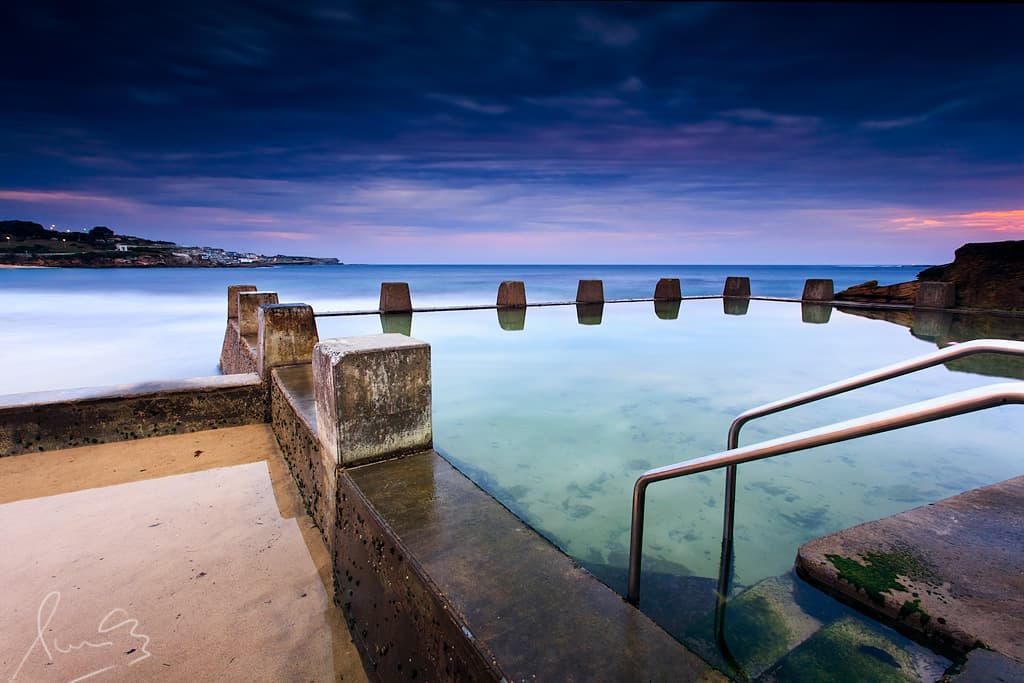
Coastal path leads to a sandy beach under cloudy sky
 Credit: Unsplash
a person flying a kite on a beach
Wobbegongs rest near southern rocks
Calm bay shields from swell
Blue gropers approach curious snorkelers
Where it is
Gordons Bay
Clovelly, New South Wales, Australia
-33.914800°, 151.268800°
Weather
Loading…
Swell
—
Temp
Warm · Restorative
UV Index
Moderate
Wind
—
Tidal State
Last known
Max Sunlight
—
Ideal Shade
—
Jan - Dec (Peak)
Mar - Nov (Off-season)
Historical data suggests peak visibility and stable sea temperatures occur during the prime visitation window.
Select a category to load nearby places.
Unlock restaurants, luxury stays and curated maritime experiences within 2km
Gordons Bay is generally safe for swimming and snorkeling due to its sheltered, rocky cove formation that provides natural protection from large waves. The bay features an underwater nature trail with markers, making it ideal for beginner snorkelers. However, conditions vary with swell and weather—always check for strong currents near the entrance and avoid visiting during southeasterly winds or large swells. The rocky entry requires care, and reef shoes are recommended. Lifeguards do not patrol this beach, so swim within your abilities and never snorkel alone.
Gordons Bay is accessible year-round, with each season offering different advantages. Summer (December-February) provides warmest water temperatures around 21-24°C, ideal for extended snorkeling. Autumn and spring offer excellent visibility with fewer crowds and pleasant weather. Winter snorkeling is possible with a wetsuit. For optimal conditions, visit on calm days with light winds—early mornings typically offer the clearest water and best marine life visibility. Avoid periods of strong southeasterly winds or after heavy rain, which can reduce water clarity significantly.
Gordons Bay is accessible via the coastal walk from either Clovelly Beach (10-minute walk north) or Coogee Beach (15-minute walk south). By car, limited street parking is available on Gordon Parade in Clovelly, though it fills quickly on weekends and holidays—arrive before 9am or consider public transport. Buses 339 and 314 from the city stop near Clovelly Road. Many visitors combine Gordons Bay with the scenic Bondi to Coogee coastal walk. There's no direct beach-level parking, so expect a short walk from any parking spot.
Gordons Bay itself has no facilities—no toilets, showers, or cafes directly at the cove. The nearest amenities are at Clovelly Beach (5-minute walk), which has toilets, showers, and the popular Seasalt café. Coogee Beach (15-minute walk) offers extensive dining options, supermarkets, and accommodations including hotels and holiday rentals. Bring your own snorkeling gear, water, and snacks, as there are no equipment rentals at Gordons Bay. Pack out all rubbish, as bins are limited. Most visitors stay in Coogee or Clovelly for convenient beach access.
Gordons Bay's underwater nature trail features diverse marine life including blue gropers, schools of yellowtail, cuttlefish, octopus, and various species of wrasse and leatherjackets. The rocky reef system supports sea urchins, anemones, and colorful sponges. Between May and November, you might spot migrating whales from the headland. The bay's six marked underwater plaques along the snorkel trail help identify key features and habitats. Water clarity varies, but on calm days, visibility can exceed 10 meters, offering excellent marine observation opportunities in this protected aquatic reserve.
Photos