Counting the waves…
Counting the waves…
A refined fusion of water purity, environmental stability, and communal vibrancy for Crescent Head Beach.
View MethodologyAnalyzed via live sensors and environmental data.
Wave height, wind, and atmospheric stability.
Live footfall and crowd balance metrics.
Community reviews and curated sentiment.
“You'll smell the salt and eucalyptus before you see the point break unfolding below. Crescent Head wraps around a gentle bay where longboarders cross-step toward the shore and pelicans skim the lineup. The town—two…”
Limited recent visitor reports — live OBI telemetry is your best guide for current conditions.
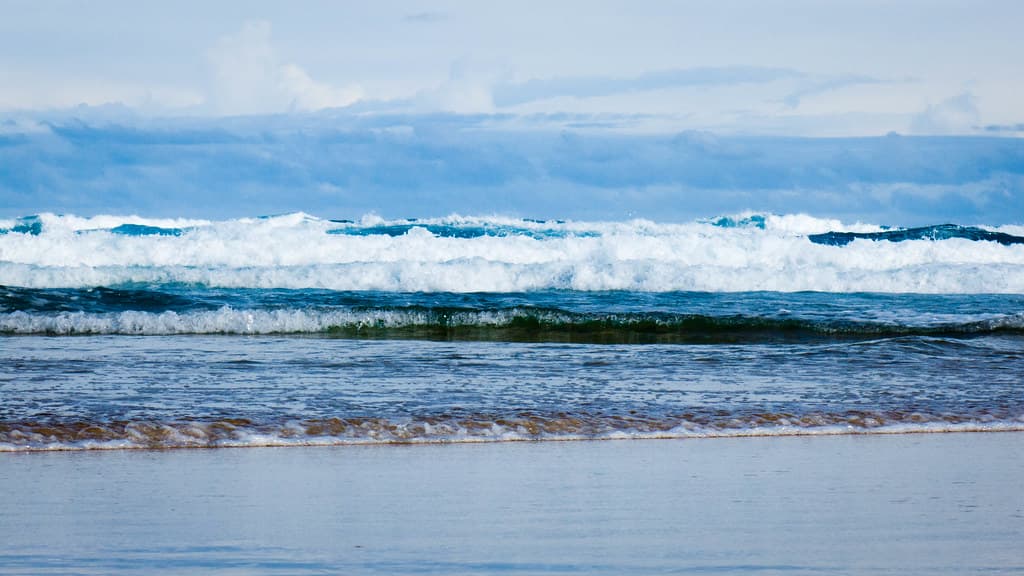
The wave at Crescent Head reveals itself in sections. From the grassy reserve atop the headland, you watch sets march in from the southeast, hitting the rocky point and reeling down the bay for three hundred meters on a good swell. Longboarders angle across glassy shoulders; groms practice cutbacks in the shorebreak. The Norfolk pines lean landward, shaped by decades of onshore wind, their silhouettes as iconic to Mid North Coast surfers as the break itself.
Beyond the point, the beach curves into a wide crescent of tawny sand. Families spread towels near the surf club; kite-surfers rig up when the nor'easter blows. The rockpools at the southern end fill with Neptune's necklace and striped periwinkles at low tide. You can walk the entire sweep in twenty minutes, passing driftwood sculpted smooth and the occasional beached bluebottle.
 Credit: Unsplash
Ride the Point
 Credit: Unsplash
Headland Lookout
Three-hundred-meter right-hand peel
Norfolk pines frame the bay
Patrolled beach near surf club
Where it is
Crescent Head Beach
Crescent Head, New South Wales, Australia
-31.188500°, 152.973700°
Weather
Loading…
Swell
—
Temp
Warm · Restorative
UV Index
Moderate
Wind
—
Tidal State
Last known
Max Sunlight
—
Ideal Shade
—
Jan - Dec (Peak)
Mar - Nov (Off-season)
Historical data suggests peak visibility and stable sea temperatures occur during the prime visitation window.
Select a category to load nearby places.
Unlock restaurants, luxury stays and curated maritime experiences within 2km
Crescent Head Beach offers varying swimming conditions depending on the location. The southern end near the point is generally calmer and more suitable for swimming, while the main beach can have stronger currents and is popular with surfers. The beach is patrolled by lifeguards during peak summer months (December-January) and school holidays. Always swim between the red and yellow flags when lifeguards are on duty, check conditions before entering the water, and be aware that surf can be powerful, particularly during winter swells.
Crescent Head Beach is a year-round destination with each season offering different appeal. Summer (December-February) brings warm weather, perfect for swimming and family beach days, with temperatures around 25-28°C. Autumn and spring offer pleasant conditions with fewer crowds. Winter (June-August) is ideal for experienced surfers when consistent swells arrive, though water temperatures drop to around 16-18°C. The shoulder seasons of March-May and September-November typically provide the best balance of good weather, manageable crowds, and decent surf conditions.
Crescent Head Beach is located approximately 40 minutes north of Port Macquarie via the Pacific Highway and Crescent Head Road. From Sydney, it's about a 4.5-hour drive north. Free parking is available along Pacific Street and at several beachfront car parks near the main beach and Killick Creek. During busy summer periods and holidays, parking can fill quickly, so arriving early is recommended. There's no direct public transport to Crescent Head, so a private vehicle is the most practical option for visitors.
Crescent Head offers a relaxed selection of cafes, takeaway shops, and a local pub within walking distance of the beach. You'll find several coffee shops, fish and chip shops, and casual dining options in the small town centre. For accommodation, choices include holiday parks, beachfront caravan parks, self-contained apartments, and beach houses available for rent. The nearby town of Kempsey (20 minutes away) offers additional supermarkets and services. During peak season, booking accommodation well in advance is strongly recommended.
Crescent Head is renowned for its exceptional right-hand point break, considered one of Australia's longest and most consistent waves. The break can produce rides of several hundred metres in ideal conditions, making it a favourite among longboarders and a National Surfing Reserve. The point provides reliable, quality waves year-round, with the best conditions typically occurring during easterly swells. The beach has a rich surfing heritage and attracts surfers from around the world, though it remains relatively uncrowded compared to more famous surf spots.
Photos