
Counting the waves…
Counting the waves…

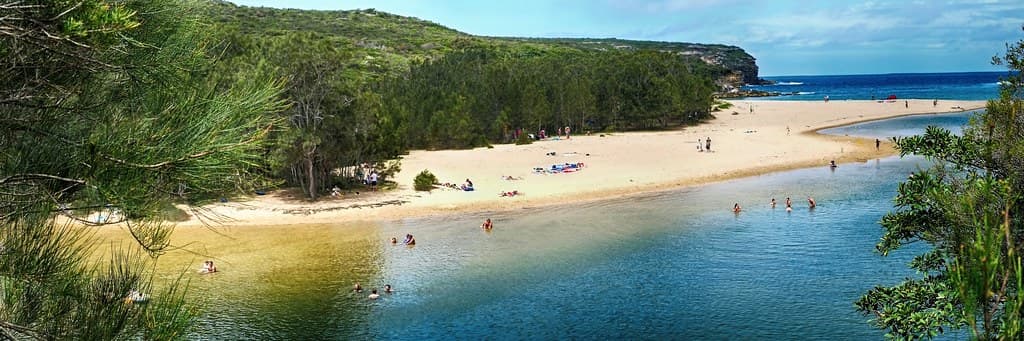
The boardwalk empties you onto sand that belongs to two worlds at once. On your left, Wattamolla Lagoon stretches inland, tea-colored and still, rimmed by eucalypts that drop their leaves onto the surface. On your right, swells break white against basalt shelves. Between them, children dig moats that breach at high tide, turning the sandbar into a temporary island. You'll hear the waterfall before you see it—a silver thread dropping fifteen meters down rust-streaked sandstone to a plunge pool where teenagers dare each other under the cascade. The lagoon warms by February, reaching temperatures the ocean never will, and kayakers paddle past picnickers sprawled on grassy flats under the Moreton Bay figs. Aboriginal middens dot the headlands; the Dharawal people summered here for thousands of years, and you can see why—protected anchorage, fresh water, rock platforms teeming with cunjevoi. By mid-afternoon, the carpark fills and families claim every shaded table, laying out thermoses and lamingtons. You'll want to arrive before ten or stay past four, when the light turns the cliffs ochre and the lagoon becomes a mirror. The track back climbs through coastal heath where banksias bloom rust-red in winter, and if you pause at the lookout, the entire crescent spreads below: sandbar, lagoon, breakers, headland, all nested inside sandstone arms.
Places, rentals, tours and events within walking and driving distance of Wattamolla Beach.
Photos
Wattamolla Beach is generally family-friendly, featuring a calm lagoon sheltered from ocean swells, making it safer for children than open beaches. The lagoon has shallow areas ideal for young swimmers. However, the beach area where the lagoon meets the ocean can have stronger currents and waves, requiring supervision. There are no lifeguards on duty, so adults must actively watch children at all times. Rock platforms can be slippery when wet. The protected lagoon environment makes it popular with families seeking calmer swimming conditions.
Wattamolla Beach is accessible year-round, with each season offering different experiences. Summer (December-February) is most popular for swimming but can be crowded on weekends and holidays. Autumn and spring provide pleasant weather with fewer visitors, ideal for picnicking and walking. Winter offers dramatic coastal scenery and whale watching opportunities (June-November), though water is too cold for most swimmers. Weekdays are generally quieter than weekends. Arrive early during peak season as parking fills quickly, especially on hot days and public holidays.
Wattamolla Beach is located within Royal National Park, approximately 40 kilometers south of Sydney. Access requires driving via the park entrance at Farnell Avenue (Waterfall) or Sir Bertram Stevens Drive (Bundeena). A vehicle entry fee applies to Royal National Park. There is a designated car park at Wattamolla with limited spaces that fill quickly on weekends and holidays. No public transport goes directly to the beach. The final approach involves a short walk from the parking area. Consider carpooling during busy periods due to parking constraints.
Wattamolla Beach has basic facilities including picnic tables, barbecue areas, and toilet blocks, but no cafes, kiosks, or food vendors. Visitors must bring their own food, drinks, and supplies. There are shaded picnic spots under trees near the lagoon. The nearest shops and restaurants are outside the park in surrounding suburbs like Bundeena or Waterfall. No accommodation exists at Wattamolla itself, though Royal National Park offers camping at designated campgrounds elsewhere. Plan to pack everything you need for a full day visit.
Wattamolla features a popular rock platform where many visitors jump into the lagoon, though this is done at your own risk and is not officially endorsed. The jump height varies depending on the location chosen. Always check water depth and look for submerged rocks before jumping, as conditions change. Never jump in unfamiliar areas or when water levels are low. Injuries can occur from improper technique or misjudging conditions. Swimming ability is essential, and children should never jump unsupervised. Exercise caution and common sense if attempting this activity.