Counting the waves…
Counting the waves…

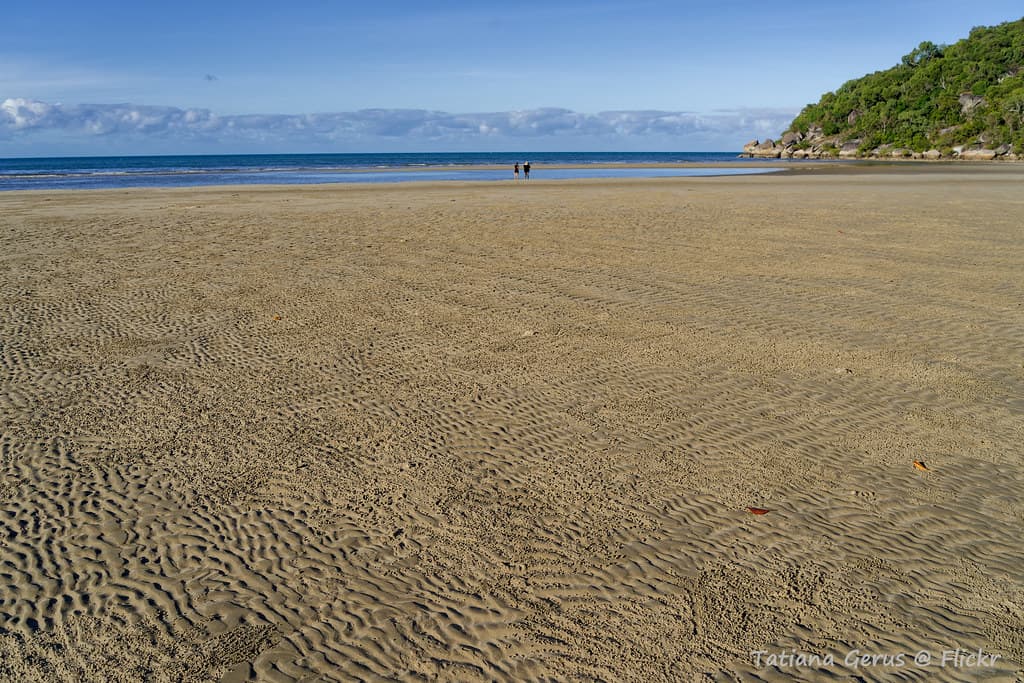
The four-kilometer walking track from Ayton cuts through Cedar Bay National Park, a tangle of lawyer vine and fan palms so thick the canopy filters sunlight into green gauze. You'll cross creeks on fallen logs, watch for pythons sunning on branches, and emerge onto a beach where your footprints might be the only ones pressed into sand the color of raw cashews. The bay curves gently, protected by rocky points that keep the Coral Sea mostly calm, though swells occasionally wrap around to create waist-high shore breaks. Bring everything—water, food, first aid—because there's nothing here except forest and ocean. No facilities, no phone signal, no rescue helicopter on standby. That's precisely the appeal for the handful who make the effort. You can snorkel the rocky margins where parrotfish graze on coral, or simply sit beneath she-oaks and watch frigatebirds ride thermals above the headland. The return hike demands you leave by mid-afternoon to avoid navigating roots and river crossings in darkness. Most visitors camp one night at the basic bush site behind the beach, falling asleep to waves and waking to kookaburras. It's Far North Queensland stripped to essentials: you, the forest, the reef, and the particular satisfaction of reaching places that resist easy arrival.
Places, rentals, tours and events within walking and driving distance of Cedar Bay Beach.
Photos
Swimming conditions at Cedar Bay Beach require caution. As a remote beach in tropical North Queensland, marine stingers (box jellyfish and irukandji) are present during stinger season (typically November to May). A stinger suit is strongly recommended year-round. Crocodiles inhabit the region, so never swim near creek mouths or in murky water. The beach is unpatrolled with no lifeguards, so swimmers are entirely responsible for their own safety. Check local conditions and tide times before entering the water.
Cedar Bay Beach can be visited year-round, though the dry season (May to October) offers the most comfortable conditions with lower humidity, minimal rainfall, and calmer seas. This period also falls outside peak stinger season, making swimming safer. The wet season (November to April) brings tropical downpours, high humidity, and rougher seas, plus increased marine stinger activity. However, the wet season showcases lush rainforest scenery. Road access may be affected during heavy rains in the wet season.
Cedar Bay Beach is extremely remote, accessible only by 4WD or boat. The road from Cooktown requires a high-clearance 4WD vehicle and involves creek crossings that become impassable during wet season. The journey takes several hours over rough terrain. Alternatively, visitors can charter a boat from Cooktown. There's no formal parking area—vehicles are left near the beach access point. Permits may be required as the beach is within Cedar Bay National Park. Check current access conditions with Queensland Parks and Wildlife before attempting the journey.
Cedar Bay Beach has absolutely no amenities, facilities, or services. There are no shops, restaurants, toilets, showers, or drinking water available. Visitors must be completely self-sufficient, bringing all food, water, camping equipment, and emergency supplies. Bush camping is permitted in Cedar Bay National Park with a permit, but facilities are non-existent. The nearest services, accommodation, and food options are in Cooktown, several hours away by 4WD. This is genuine wilderness requiring serious preparation and self-reliance.
Cedar Bay Beach offers exceptional solitude and pristine wilderness rarely found elsewhere. Unlike more accessible beaches, it remains virtually untouched due to its remote location within Cedar Bay National Park. The beach features stunning white sand backed by untouched tropical rainforest meeting the Coral Sea, creating dramatic scenery. Its isolation means you may have the entire beach to yourself. The area is also significant for its Aboriginal cultural heritage and diverse wildlife. This remoteness makes it ideal for visitors seeking genuine wilderness experiences away from crowds.