Counting the waves…
Counting the waves…

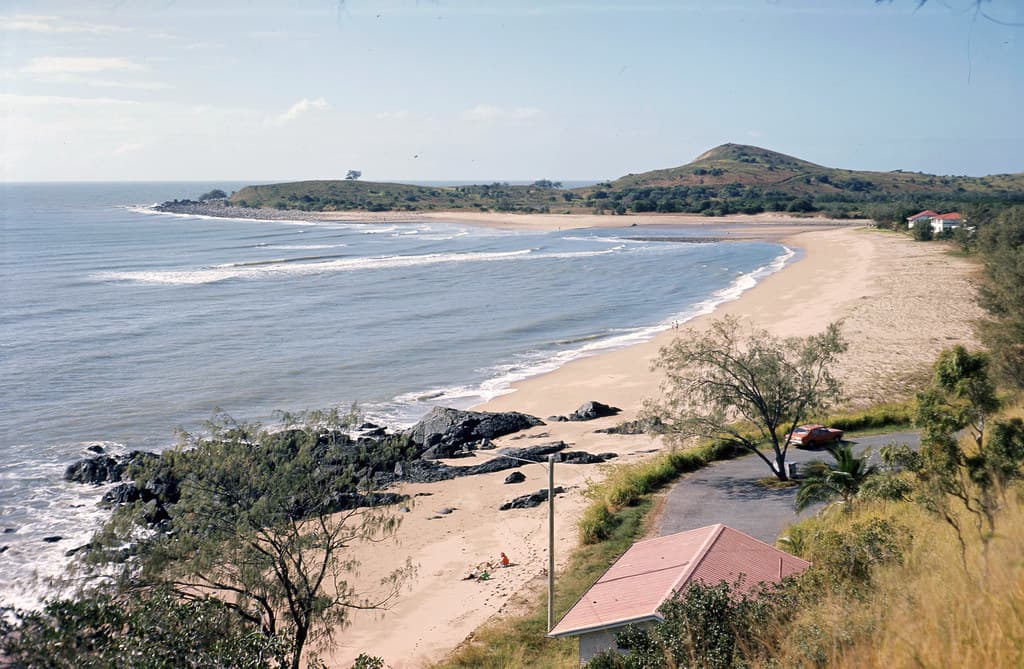
The approach tells you everything: Bourke Street winds uphill through residential Dolphin Heads until suddenly the bitumen ends at a carpark and the Coral Sea fills your windscreen. Below, the beach stretches in a gentle arc, its shore alternating between sheltered coves and boulder fields where waves detonate in white plumes. You'll walk the headland track first—it's why you came—threading between grass trees and pandanus while frigatebirds wheel overhead. The lookout platform cantilevered over the cliff delivers 180-degree theater: north to the sugar mill stacks of Mackay, south past Harbour Beach to the blue smudge of the Whitsundays. Locals bring thermoses at dawn; you'll understand why when the first light turns the water to hammered bronze. Down on the sand, the swimming is best at the southern end where a natural rock barrier tames the swell into a knee-deep lagoon. Tide charts dictate everything here. Low water reveals rockpools stippled with anemones and darting gobies; high tide sends waves against the seawall with enough force to rattle the picnic shelters. Pack reef shoes—the basalt doesn't forgive bare feet—and stay until the sun drops behind the headland, when the offshore breeze carries the scent of salt and eucalyptus back toward town.
Places, rentals, tours and events within walking and driving distance of Dolphin Heads Beach.
Photos
Dolphin Heads Beach is generally suitable for swimming, though conditions vary. The beach is patrolled seasonally, typically during peak holiday periods. Always swim between the flags when lifeguards are present. Be aware of currents, especially after storms or during high tide. The rocky headlands create some sheltered areas, but check conditions before entering the water. Stinger nets are not always present, so consider wearing protective clothing during stinger season (November to May). Local surf life saving clubs provide current safety information.
Dolphin Heads Beach is enjoyable year-round due to Queensland's subtropical climate. Winter months (June to August) offer comfortable temperatures around 20-24°C with lower humidity and minimal rainfall—ideal for beach walks and scenic lookout visits. Summer (December to February) brings warmer water and temperatures up to 30°C, perfect for swimming, though this coincides with stinger season and occasional afternoon storms. Autumn and spring provide excellent conditions with fewer crowds. Early mornings offer the best light for photography from the headland lookouts.
Dolphin Heads Beach is located approximately 15 minutes north of Mackay city centre. Follow the Bruce Highway north, then turn onto Dolphin Heads Road. Free parking is available at several locations including the main beach access points and near the headland lookouts. The area is accessible by car, with sealed roads leading to most beaches. Some street parking is available in residential areas. During peak holiday periods, arrive early to secure parking. The beach is not serviced by regular public transport, so a private vehicle is recommended.
Dolphin Heads is primarily a residential area with limited beachfront dining. A few cafes and takeaway options are available nearby, but most visitors head to nearby Mackay (15 minutes) for diverse restaurant choices. Accommodation includes holiday rentals, apartments, and houses available for short-term stays, many with ocean views. The Beach House Seaside Resort is a popular choice in the area. For full-service resorts and hotels, Mackay offers more options. Stock up on supplies in Mackay before arriving, as local shopping is limited.
The Dolphin Heads lookout offers panoramic coastal views stretching from Mackay Harbour to the northern beaches, making it one of the region's most photographed vantage points. The elevated headland provides opportunities to spot dolphins, turtles, and during winter months (June to October), migrating humpback whales. The lookout features walking tracks through coastal vegetation and rocky outcrops perfect for sunrise or sunset viewing. The headland's distinctive profile and sweeping ocean vistas make it a romantic spot for couples and a must-visit scenic attraction in northern Mackay.