Counting the waves…
Counting the waves…

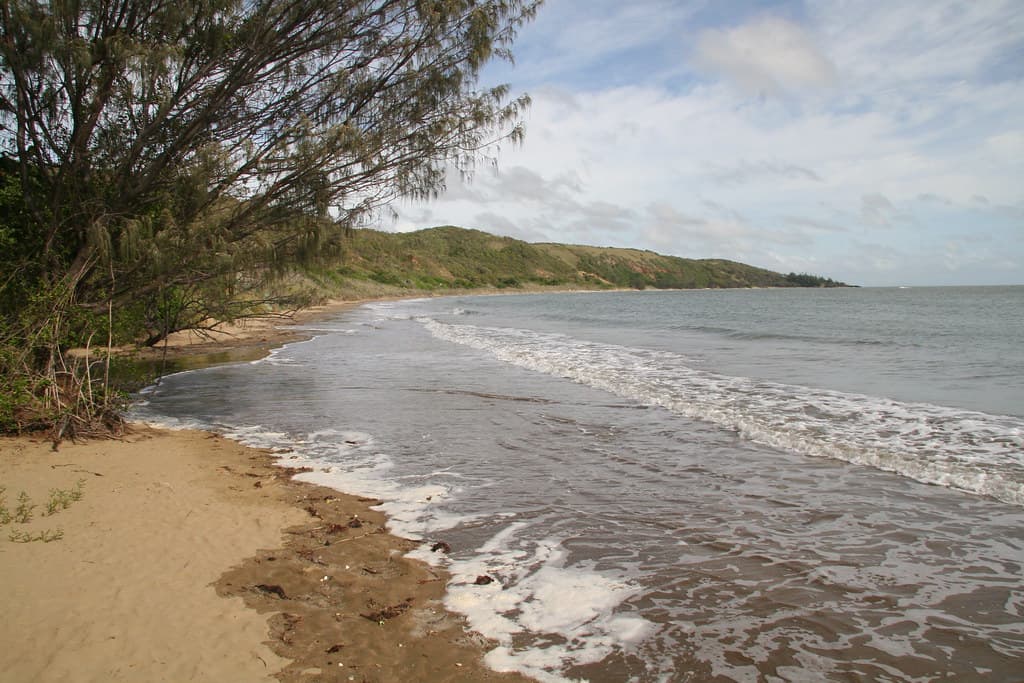
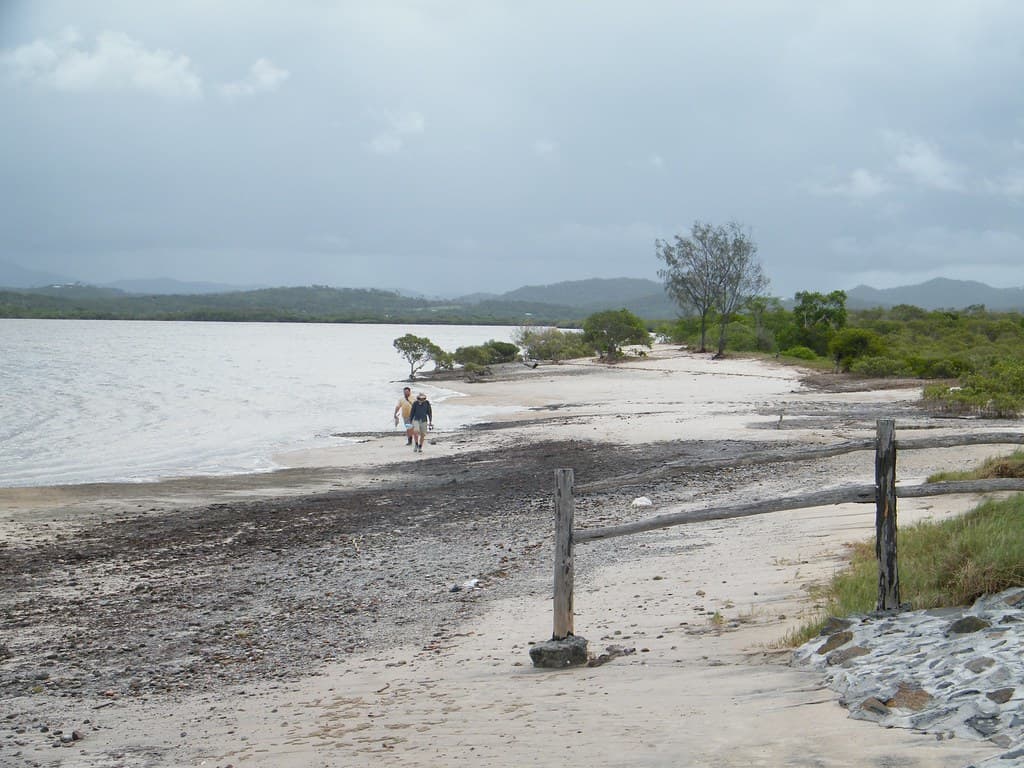
You'll drive right past Zilzie Beach if you're not paying attention—no billboards, no tour buses idling in oversized car parks. Just a narrow turn-off from the Scenic Highway, a handful of streetside spots beneath paperbarks, and a short timber boardwalk that deposits you onto sand so fine it squeaks beneath your thongs. The beach arcs gently northward, hemmed by low dunes and casuarina trees that rattle in the onshore breeze. Wade in and the water stays knee-deep for twenty paces, the seabed firm and free of the rocks that plague neighboring stretches. Children crouch to collect translucent moon shells while their parents float on their backs, eyes closed against the Queensland sun. By late afternoon the tide pulls back, exposing ribbed sandbars that gleam like bronze, and the light softens to honey. You won't find a café or a surf school here—Zilzie refuses to perform. Instead, you'll find retirees walking labradors at sunrise, a lone fisherman casting into the channel, and the kind of quiet that makes you realize how much noise you've been carrying. As the sun drops behind the ranges, the sky ignites in shades of apricot and rust, and the Keppels become dark cutouts against the glow. Pack what you need, leave what you don't, and let this little beach remind you why you came to the coast in the first place.
Places, rentals, tours and events within walking and driving distance of Zilzie Beach.
Photos
Zilzie Beach is generally safe for swimming due to its sheltered location and calm waters, making it particularly suitable for families with young children. The beach is protected from strong currents and large waves, though it's unpatrolled, so you should swim at your own risk. Check local conditions before entering the water, especially after storms or high tides. The shallow, gentle waters make it ideal for paddling and beginner swimmers. As with all Australian beaches, be aware of marine stingers during summer months (November-May) and consider wearing protective clothing.
Zilzie Beach can be enjoyed year-round, with Queensland's subtropical climate offering warm conditions most of the year. Summer (December-February) brings temperatures around 25-30°C but also marine stingers and occasional afternoon storms. Winter (June-August) offers mild, dry weather with temperatures around 20-23°C, perfect for beach walks and sunset viewing. Many locals consider the shoulder seasons of April-May and September-October ideal, with pleasant temperatures, lower humidity, and fewer crowds. The beach faces west, making it exceptional for sunset viewing regardless of season.
Zilzie Beach is located about 40 kilometers south of Yeppoon and 5 kilometers north of Emu Park along the Scenic Highway. From Rockhampton, it's approximately a 45-minute drive heading east. There's a small, free parking area directly adjacent to the beach off Zilzie Road, but spaces are limited as this is a small local beach. The beach is easy to miss if you're not specifically looking for it, so watch for the turn-off carefully. No public transport services the beach directly, so a private vehicle is necessary.
Zilzie Beach has minimal facilities, reflecting its status as a quiet local spot. There's basic amenities including public toilets and a small picnic area, but no cafes, kiosks, or restaurants directly at the beach. You'll need to bring your own food and drinks. For dining and accommodation options, head to nearby Emu Park (5 km south) which has several cafes, restaurants, and motels, or Yeppoon (40 km north) for more extensive choices. Pack a picnic to enjoy the peaceful setting and spectacular sunset views from the beach.
Zilzie Beach's appeal lies precisely in what it lacks: crowds, development, and tourist infrastructure. This small, sheltered beach offers an authentic local experience that larger tourist beaches can't match. The intimate setting is perfect for families seeking calm waters and privacy, while the western orientation provides some of the Capricorn Coast's most stunning sunset views. The beach remains relatively unknown to visitors, meaning you'll often have the sand largely to yourself. It's an ideal stop for travelers seeking tranquility and natural beauty without the commercialization of more popular beaches.