Counting the waves…
Counting the waves…
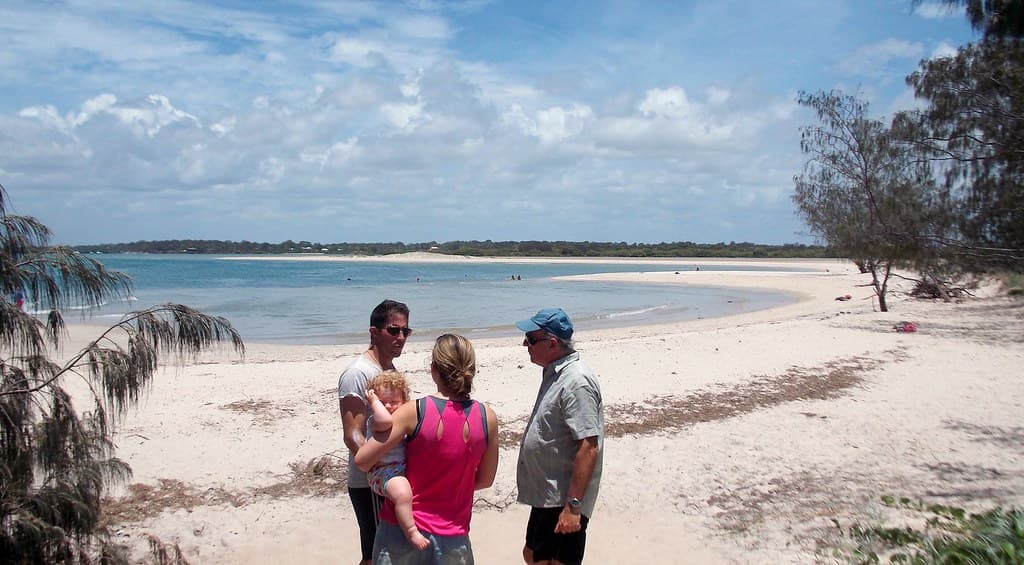
The first thing you notice isn't the sand—it's the rocks. Great slabs of them, weathered smooth by centuries of swells, divide Innes Park Beach into a series of intimate coves that shift character with every tide. You'll spend your morning hopping from one tidal shelf to the next, peering into pools where sergeant majors dart between urchins and soft coral fans sway in the surge. Bring reef shoes; the footing is uneven but the payoff is a shoreline that feels more like a natural aquarium than a postcard scene. Palmer Creek empties into the northern end, staining the shallows tea-brown after rain and drawing bream that locals cast for at dawn. The water here runs warmer than the southern beaches, protected by the curve of the coast, and the snorkeling is best along the rocky headland where the seafloor drops away in terraces of kelp and brain coral. You won't find rental kiosks or flagged swim zones—just a grassy reserve with picnic tables under she-oaks and a boat ramp where fishermen back trailers down at first light. By late afternoon, the rocks throw long shadows across the sand and the crowd—never more than a dozen families—packs up. Stay a bit longer. The tide pools glow amber in the slanting sun, and you'll have the entire sweep of coast to yourself, save for the occasional kite curling overhead and the rhythmic thump of waves reshaping stone.
Places, rentals, tours and events within walking and driving distance of Innes Park Beach.
Photos
Innes Park Beach is generally suitable for swimming, though conditions vary with tides and weather. The beach features a mix of sandy patches and rocky areas, so watch your footing when entering the water. There are no lifeguard patrols, so swim at your own risk and stay aware of currents. The rocky sections create calmer pools ideal for families with children during low tide. Always check local conditions before entering the water, avoid swimming alone, and be cautious around the rocky outcrops, especially during rougher seas or strong winds.
Innes Park Beach offers year-round appeal thanks to Queensland's subtropical climate. Summer (December-February) brings warm water temperatures perfect for swimming and snorkeling, though occasional storms can occur. Winter (June-August) features milder, drier weather with comfortable temperatures in the low 20s°C, ideal for beach walks and exploration. Shoulder seasons offer excellent conditions with fewer crowds. For snorkeling and rock pool exploration, visit during low tide when visibility is better. Early mornings provide the calmest conditions and best light for photography of the scenic coastal landscape.
Innes Park Beach is located approximately 15 kilometres south of Bundaberg in Queensland. From Bundaberg, drive south along the Bundaberg-Bargara Road toward Bargara, then follow signs to Innes Park. The beach is accessed via Innes Park Road and local streets. Street parking is available near beach access points, though spaces can be limited during peak periods. There's no formal car park directly at the beach, so arrive early on weekends and holidays. The area is best reached by private vehicle, as public transport options are limited in this residential coastal community.
Innes Park is a quiet residential area with limited commercial facilities directly at the beach. You'll find a small selection of holiday rentals and self-contained accommodation options popular with families seeking a peaceful coastal retreat. For restaurants, cafes, supermarkets, and more extensive services, head to nearby Bargara (approximately 5 kilometres north) or Bundaberg (15 kilometres). Pack your own food, drinks, and beach essentials, as there are no kiosks or vendors at the beach itself. The closest fuel and supplies are in Bargara or Bundaberg.
The rocky sections at Innes Park Beach create diverse marine habitats perfect for snorkeling and exploration, particularly near Palmer Creek. The rock platforms and outcrops form natural pools teeming with small fish, crabs, and other marine life during low tide. Bring snorkeling gear to explore the underwater rocky areas where you may spot colourful fish and sea creatures. The combination of rocks and sand creates interesting terrain not found at purely sandy beaches. Time your visit with low tide for the best rock pool discoveries and clearer snorkeling conditions in the protected areas.