Counting the waves…
Counting the waves…

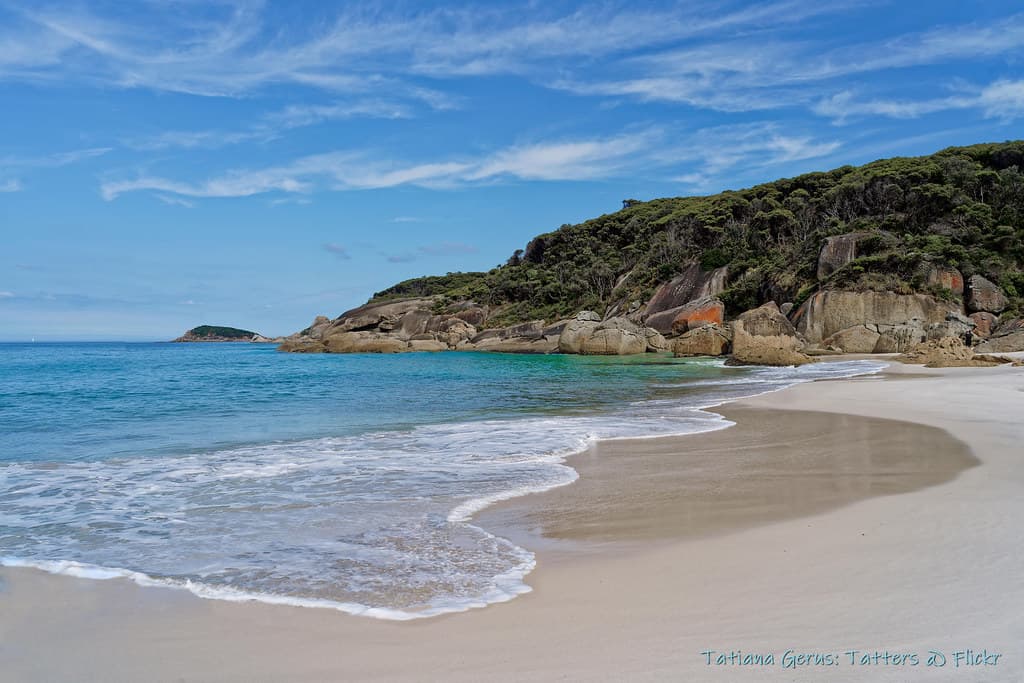
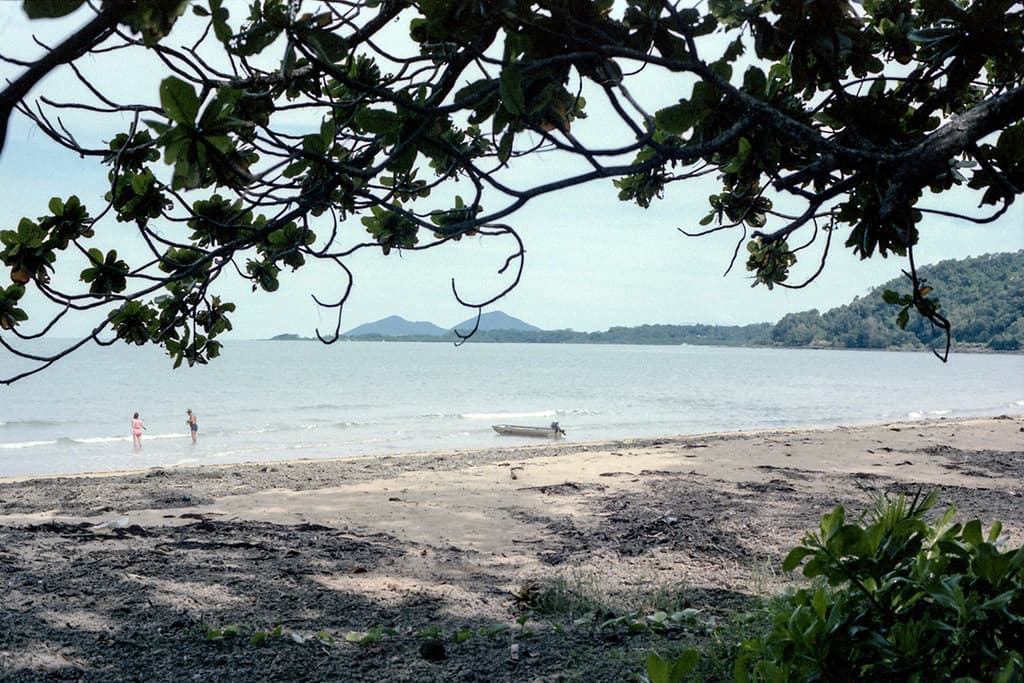
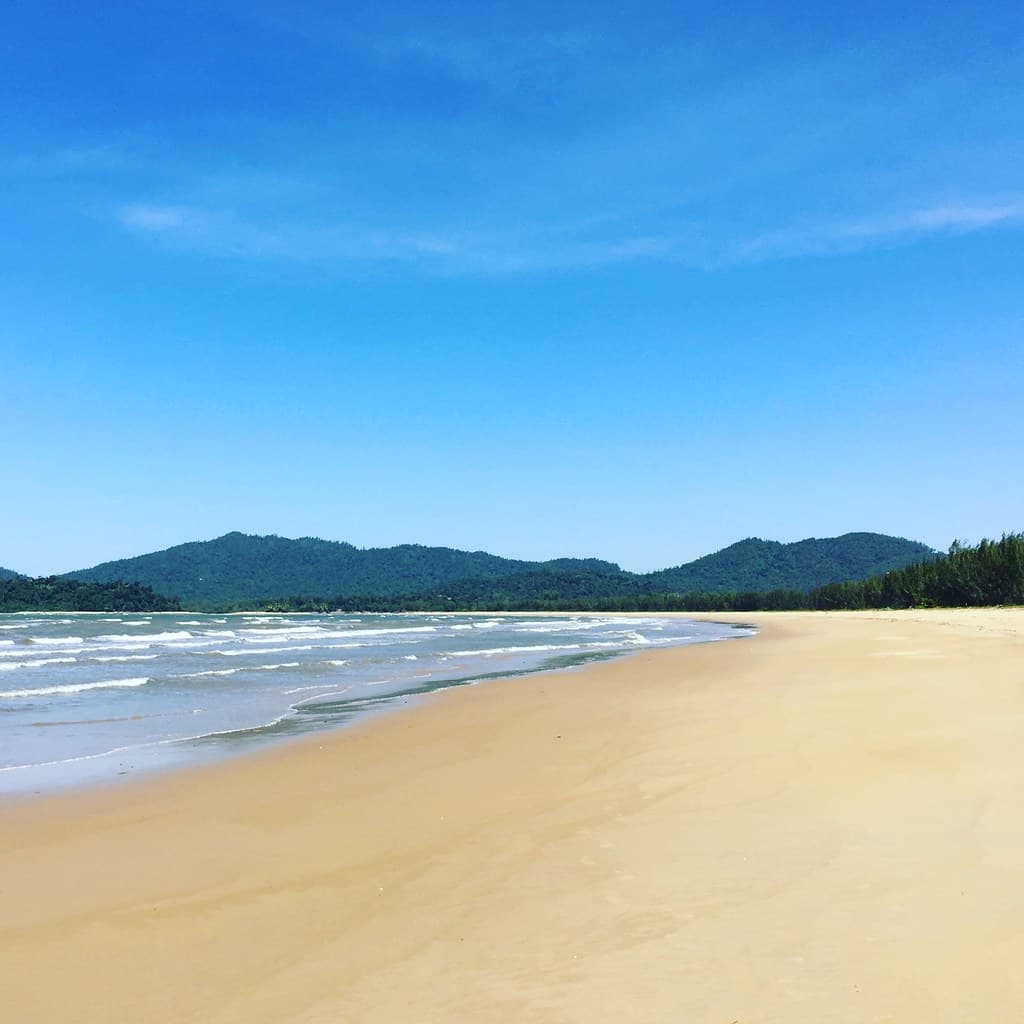
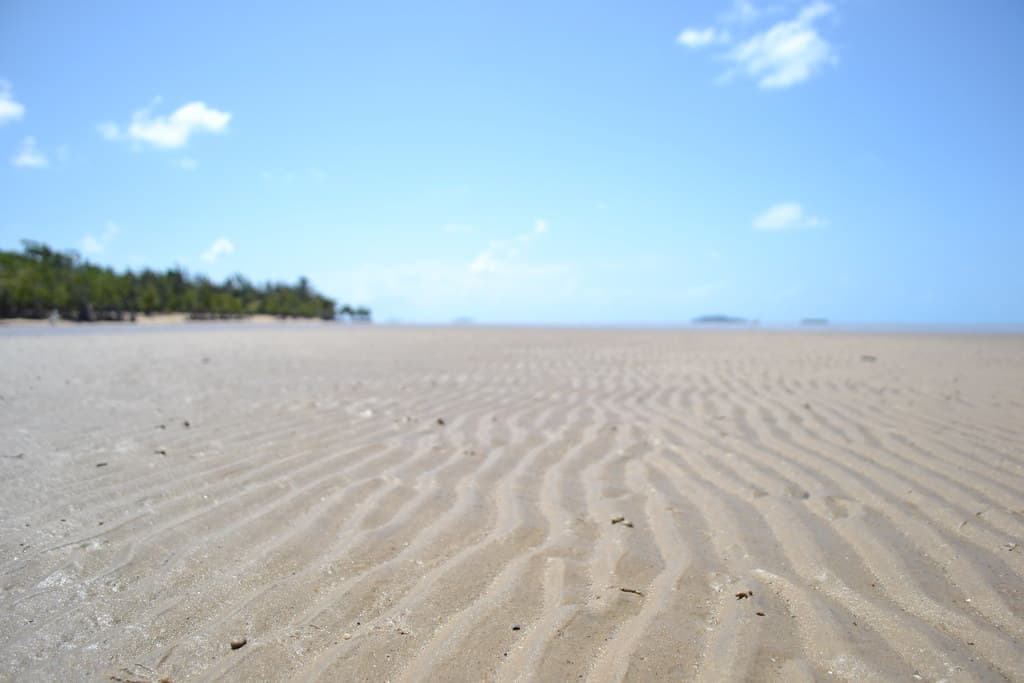
Stand at the high-tide mark and you'll notice what's missing: the crashing surf that defines most of Queensland's eastern edge. Kurrimine Beach hides behind a natural offshore reef system that transforms the Coral Sea into a broad, wadeable lagoon. During the stinger season—roughly November through May—enclosure nets cordon off designated swim zones, and lifeguards patrol the foreshore on peak weekends. The sand beneath your toes is fine and beige, compacted enough for morning jogs, soft enough that toddlers tumble without consequence. The holiday parks lining the Esplanade fill quickly during school breaks, their caravans and cabins facing a beach that rewards low tide with tidal flats perfect for crabbing and shell-hunting. You'll find families waist-deep a football field from shore, still standing comfortably. The jetty stretches seaward—a favored spot for evening fishermen casting for queenfish and trevally as the light turns amber over the Hinchinbrook Channel. Palm groves and she-oak thickets edge the sand, offering dappled shade by mid-morning. The beach curves gently southward, framed by the distant silhouette of Hinchinbrook Island's granite peaks. There's no boardwalk glamour here, no surf club façade—just a working coastline where sunscreen, esky lids, and crab pots tell the story of an Australian family summer done right.
Places, rentals, tours and events within walking and driving distance of Kurrimine Beach.
Photos
Kurrimine Beach is generally considered safe for swimming, particularly at high tide when the water is deeper. The beach is protected by the Great Barrier Reef, creating calmer conditions than many open-ocean beaches. However, it's not patrolled by lifeguards, so swim at your own risk and stay aware of conditions. During summer (November-May), marine stingers are present, so wear protective clothing. The beach features shallow, clear waters ideal for families, though low tide reveals extensive mudflats and coral, making swimming difficult until the tide returns.
Kurrimine Beach enjoys a tropical climate and can be visited year-round, with each season offering different experiences. Winter (May-October) is the dry season with warm, pleasant days, low humidity, and no marine stingers—ideal for swimming and beach activities. Summer (November-April) is the wet season, bringing higher temperatures, humidity, and afternoon storms, plus marine stingers in the water. Many visitors prefer the shoulder seasons (April-May and September-October) for comfortable weather and fewer crowds. Check tide times, as high tide offers the best swimming conditions.
Kurrimine Beach is located approximately 180km south of Cairns and 85km north of Innisfail via the Bruce Highway. From the highway, take the Kurrimine Beach turnoff and follow the sealed road for about 8km to the coast. The beach has roadside parking available along the foreshore, with easy access to the sand and facilities. There's no parking fee. The nearest major town is Innisfail, roughly 30 minutes' drive away. Most visitors arrive by car, as public transport options to this small coastal community are very limited.
Kurrimine Beach offers limited but adequate amenities for a small coastal hamlet. The main accommodation is the Kurrimine Beach Holiday Park, which provides powered and unpowered sites, cabins, and basic facilities. A few private holiday rentals are also available. For dining, the Kurrimine Beach Tavern serves pub meals and is the primary food option in the immediate area. A small general store stocks basic supplies. For more extensive shopping, restaurants, and services, visitors typically head to Innisfail (30 minutes north) or Mission Beach (40 minutes south).
Yes, Kurrimine Beach offers unique close-proximity access to the Great Barrier Reef. At low tide, you can walk across exposed reef flats and explore the shallow coral areas—one of the few mainland locations where this is possible. King Reef, part of the outer Great Barrier Reef, is accessible by boat and popular for fishing, diving, and snorkelling. Local boat ramps make it convenient for those with vessels. Always wear reef-safe shoes when walking on the reef, be mindful of tide times, and avoid touching or damaging coral.