Counting the waves…
Counting the waves…
A refined fusion of water purity, environmental stability, and communal vibrancy for Blue Lagoon Beach.
View MethodologyAnalyzed via live sensors and environmental data.
Wave height, wind, and atmospheric stability.
Live footfall and crowd balance metrics.
Community reviews and curated sentiment.
“You'll find this sheltered basin on the western shore of Moreton Island, where tides flood shallow sandbars and create a waist-deep swimming basin warmer and calmer than the open ocean. Families wade through ankle-deep…”
Limited recent visitor reports — live OBI telemetry is your best guide for current conditions.
Blue Lagoon Beach sits tucked into Moreton Island's inland-facing coast, a tidal phenomenon fed by twice-daily swells that fill a natural depression between towering dunes. The water here reads aquamarine in morning light, its depth rarely exceeding your ribcage, with a sandy floor free of rocks or sudden drop-offs. When the tide recedes, you'll navigate a labyrinth of warm pools and rivulets, their edges scalloped by wind patterns that shift the sand daily.
Reach the lagoon via four-wheel-drive track from Tangalooma or Kooringal—sealed roads don't exist here. You'll pass through banksia scrub and over ridges of pure quartz sand before the basin opens below you. Pack everything: shade, drinking water, snacks. The nearest shop is an hour's rumble away, and mobile reception flickers at best. Moreton's western beaches face the mainland, so you're watching container ships slide toward the Port of Brisbane while your feet sink into sand that squeaks underfoot.
 Credit: Unsplash
Palm trees frame a beach with ocean and distant hills
 Credit: Unsplash
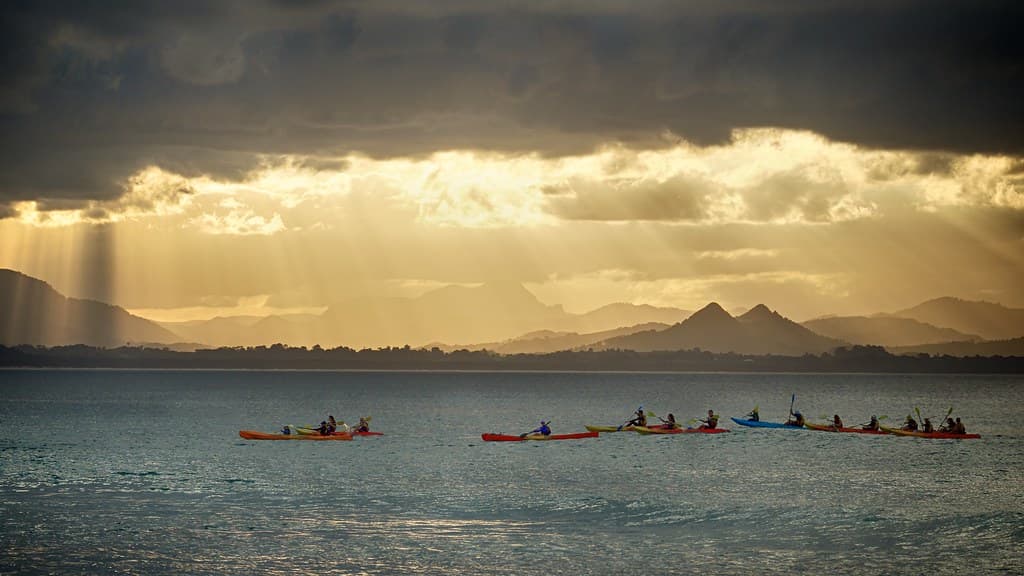
A large body of water with boats in it
Warm tidal pools, knee-deep max
Launch at high tide windows
Climb sand ridges at sunrise
Where it is
Blue Lagoon Beach
Moreton Island, Queensland, Australia
-27.252800°, 153.410600°
Weather
Loading…
Swell
—
Temp
Warm · Restorative
UV Index
Moderate
Wind
—
Tidal State
Last known
Max Sunlight
—
Ideal Shade
—
Jan - Dec (Peak)
Mar - Nov (Off-season)
Historical data suggests peak visibility and stable sea temperatures occur during the prime visitation window.
Select a category to load nearby places.
Unlock restaurants, luxury stays and curated maritime experiences within 2km
Blue Lagoon Beach is generally safe for swimming due to its protected location on the western side of Moreton Island, facing Moreton Bay. The calm, shallow waters make it ideal for families with children and snorkelers. Unlike the ocean-facing eastern beaches, there are no dangerous surf conditions or strong rip currents here. The crystal-clear lagoon offers excellent visibility for spotting marine life. However, always supervise children, watch for boat traffic in the bay, and be aware of stingers during summer months (November-May) when protective clothing is recommended.
Blue Lagoon Beach is a year-round destination with Queensland's subtropical climate providing pleasant conditions in all seasons. Winter (June-August) offers mild, dry weather with temperatures around 20-25°C, ideal for beach activities without extreme heat. Summer (December-February) is warmer (25-30°C) but can bring afternoon storms and marine stingers. Spring and autumn provide the best balance of warm weather and fewer crowds. Weekdays are generally quieter than weekends. The calm bay waters remain swimmable throughout the year, unlike the rougher ocean-side beaches.
Blue Lagoon Beach is accessible only by boat or barge, as Moreton Island has no bridge connection. Most visitors take the Micat vehicle ferry from Port of Brisbane or Tangalooma Island Resort ferry from Brisbane. Once on the island, you'll need a 4WD vehicle to navigate the sand tracks leading to Blue Lagoon. The beach itself has informal parking areas on the sand. Day-trippers can join organized tours from Brisbane that include transport and 4WD access. The journey typically takes 75 minutes by ferry, plus additional driving time on island tracks.
Blue Lagoon Beach has no commercial facilities, so visitors must bring all food, water, and supplies. The nearest amenities are at Tangalooma Island Resort (about 15 minutes by 4WD), which offers restaurants, cafes, and resort accommodation. Alternatively, Bulwer village and Kooringal camping areas provide basic facilities. Most visitors opt for camping on Moreton Island through Queensland Parks permits, with designated campgrounds offering toilet facilities. Pack everything you need for a beach day, including shade, as there are no shops or kiosks at Blue Lagoon itself.
While you cannot directly see the famous Tangalooma Wrecks from Blue Lagoon Beach, they're located relatively nearby along Moreton Island's western coastline. The wrecks are positioned off Tangalooma Resort, roughly 4-5 kilometers north of Blue Lagoon. With a 4WD vehicle, you can easily visit both locations in one day. The Tangalooma Wrecks are a cluster of 15 deliberately sunken vessels that create excellent snorkeling opportunities. Many visitors combine a peaceful swim at Blue Lagoon with wreck exploration at Tangalooma for a diverse island experience.
Photos