Counting the waves…
Counting the waves…

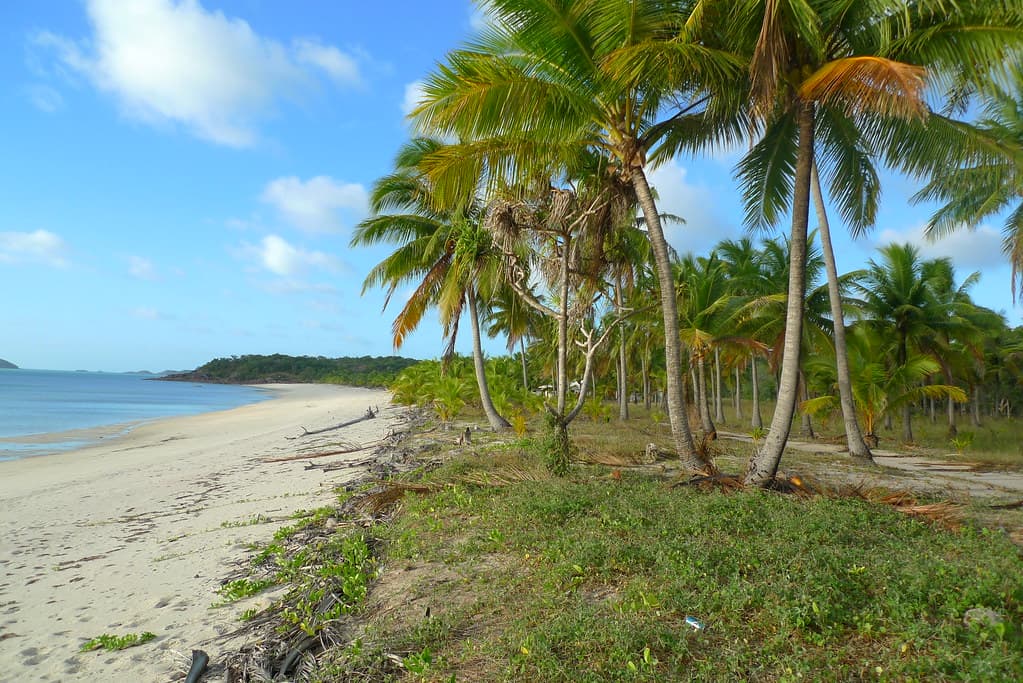
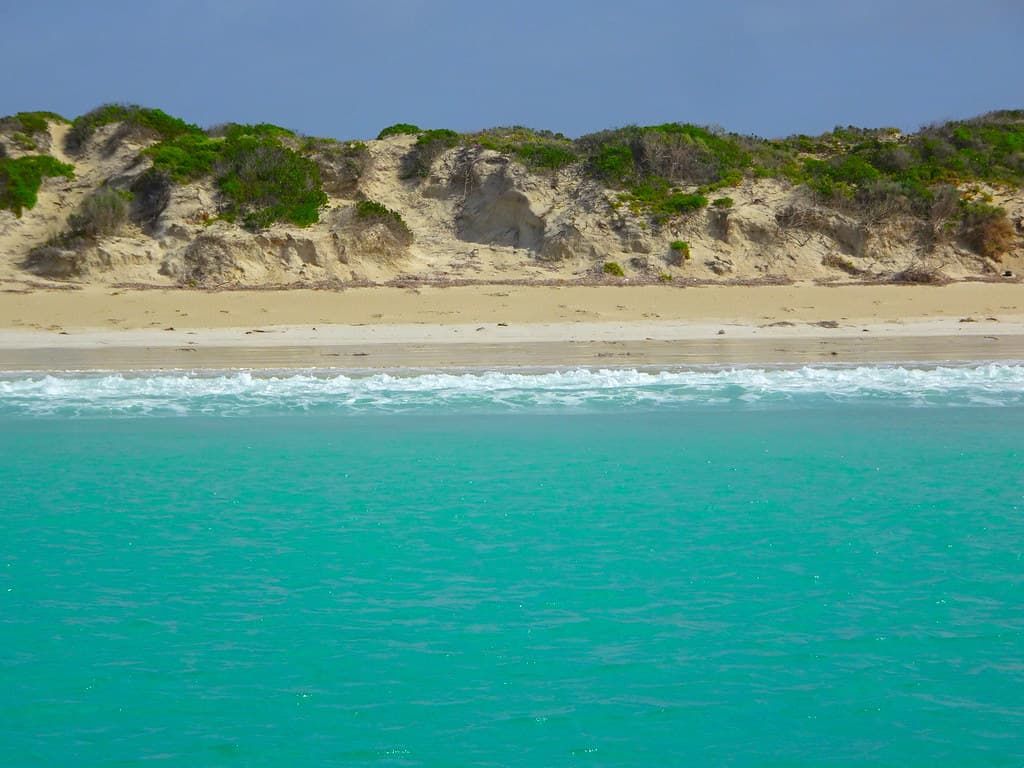
The shore unfurls in a gentle arc along Mer's eastern edge, where coconut palms lean landward and the Coral Sea laps at sand composed of countless broken shells and coral fragments. You'll notice the water shifts through bands of turquoise and navy as the seabed drops away toward the reef. Local children still splash in the shallows after school, their laughter carrying across the same stretch where generations of Meriam people have fished, gathered, and told stories under the Southern Cross. This isn't a beach shaped by tourism infrastructure or resort development. No beach bars punctuate the treeline, no jet skis disturb the morning calm. Instead, you'll find a working waterfront where dinghies rest on the sand and fishing nets dry in the sun. The cultural landscape here extends far beyond the visible: every rock outcrop, every section of reef carries names and narratives in the Meriam Mir language, a living connection between people and place that stretches back millennia. The 1992 Mabo decision, which overturned the legal fiction of terra nullius, began with Eddie Koiki Mabo's determination to secure his people's rights to this very ground beneath your feet. Walk the shoreline at low tide and you're tracing the edges of a landmark that redrew Australia's understanding of itself—a beach that proved home was never empty, never unclaimed, never waiting to be discovered.
Places, rentals, tours and events within walking and driving distance of Murray Island Beach.
Photos
Swimming conditions at Murray Island Beach vary with seasons and tides. The beach is generally suitable for swimming, but always check local conditions before entering the water. Being part of the Torres Strait, currents can be strong, and marine stingers may be present, particularly during warmer months (November to May). There are no lifeguard services or stinger nets, so swimming at your own risk is essential. Consult with locals or your accommodation provider about current conditions and safe swimming areas.
Murray Island enjoys a tropical climate with year-round warmth, making any time suitable for visiting. The dry season (May to October) offers the most comfortable conditions with lower humidity, calmer seas, and minimal rainfall—ideal for beach activities and exploring. The wet season (November to April) brings higher temperatures, humidity, and occasional tropical storms, though the island remains beautiful. Water temperatures stay warm year-round. Consider visiting during the dry season for optimal weather conditions and easier travel logistics.
Murray Island (Mer Island) is accessible only by air or sea from mainland Queensland. Regular flights operate from Cairns to Horn Island, followed by a connecting flight to Murray Island—the most common route for visitors. The total journey takes several hours with the connection. Alternatively, passenger ferry services run from Thursday Island, though schedules are limited. There are no roads connecting to the mainland and no car rental services on the island. Parking is not applicable; transportation on the island is typically by foot or arranged through local operators.
Murray Island has limited but available accommodation and dining options. Visitor accommodation primarily consists of guesthouses and homestays arranged through the local council or community tourism operators—advance booking is essential. There are small local stores for basic supplies, but no restaurants or cafes in the conventional sense. Many visitors arrange meals through their accommodation. It's advisable to bring some provisions from Cairns or Thursday Island. The island operates on a permit system for visitors, which should be arranged well before travel.
Murray Island Beach holds profound historical and cultural significance as the birthplace of Eddie Koiki Mabo, whose landmark legal case led to the 1992 Mabo Decision. This High Court ruling overturned the concept of 'terra nullius' and recognized native title rights for Indigenous Australians—a pivotal moment in Australian history. The island remains home to the Meriam people, who have inhabited it for thousands of years. Visitors can learn about this important heritage, but should respect that this is a living Indigenous community with sacred sites and cultural protocols.