Counting the waves…
Counting the waves…

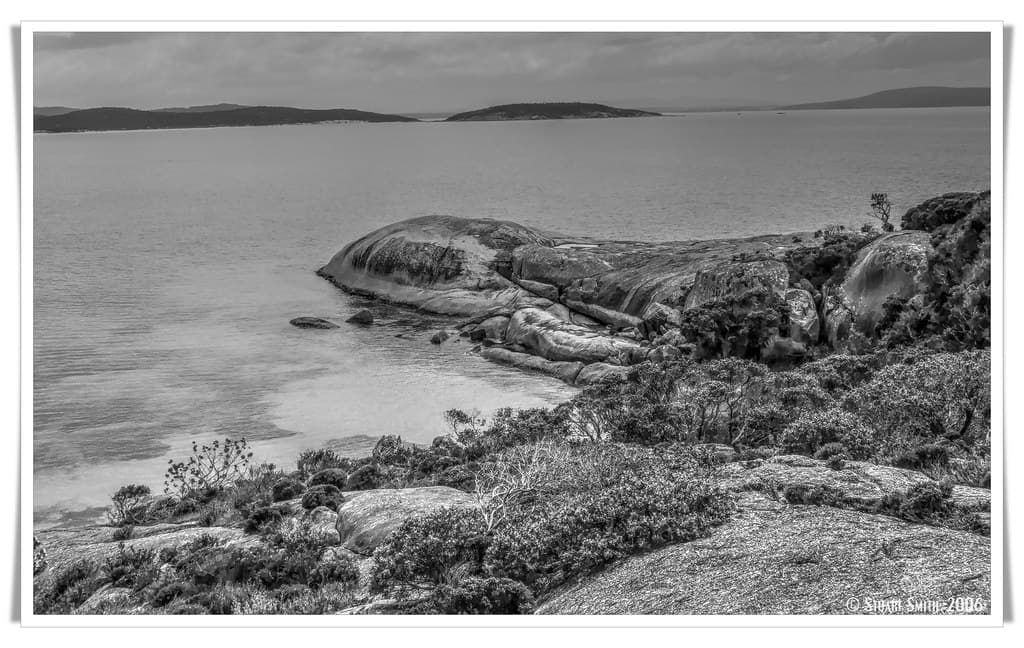
South Gorge Beach occupies a geographic loophole: the headland's eastern flank shelters it from the open Coral Sea swells that hammer Main Beach, yet it sits no more than a two-minute walk from the coach-tour lookout platforms. The result is a cove that feels discovered, even as voices drift down from the boardwalk above. At low tide, rock platforms emerge like stepping stones, their surfaces slick with kelp and dimpled with anemones. The water here layers itself—shallow turquoise over ribbed sand near shore, deepening to slate blue where the channel cuts between boulders. Mornings bring glassy conditions and the occasional loggerhead turtle cruising the kelp beds. By midday the nor'easter picks up, riffling the surface and pushing warmer water into the bay. You'll notice the tide more here than on Straddie's ocean beaches; spring highs swallow the sand entirely, pressing the shoreline against the rocks, while neap lows expose barnacled platforms and tidal pools thick with darting fish. The beach empties by late afternoon, when the angle of light turns the headland's basalt columns gold and the shadows stretch long across the sand. Gulls settle on the rocks. The tour groups have moved on to their sunset stops, and you're left with the rhythmic slap of water against stone, the particular hush of a place that has learned to hide in plain sight.
Places, rentals, tours and events within walking and driving distance of South Gorge Beach.
Photos
South Gorge Beach is generally sheltered and calmer than nearby surf beaches, making it suitable for swimming in good conditions. However, it's an unpatrolled beach, so exercise caution and never swim alone. The rocky headland provides some protection from swell, but conditions can change quickly. Check weather and tide conditions before entering the water. The beach has submerged rocks in some areas, so watch your footing. Always swim between the flags at patrolled beaches if you're uncertain about ocean conditions.
South Gorge Beach is accessible year-round, with each season offering different advantages. Winter months (June-August) bring calm seas, excellent visibility, and whale-watching opportunities from the nearby headland. Summer (December-February) offers warm water and sunny days, though it can be busier. The shoulder seasons of autumn and spring provide pleasant temperatures with fewer crowds. Morning visits often feature glassy water conditions and better lighting for photography. Arrive early regardless of season to enjoy the secluded atmosphere before day-trippers arrive.
South Gorge Beach is located at Point Lookout on North Stradbroke Island. To reach the island, take the vehicle ferry from Cleveland or water taxi from Redland Bay. Once at Point Lookout, park at the main Gorge Walk car park on Dickson Way. From there, it's a short walk along the South Gorge headland track—follow signs toward the gorge and look for the small path down to the beach. The walk takes roughly 5-10 minutes. Parking can fill quickly during weekends and holidays.
Point Lookout village, just a few minutes' walk from South Gorge Beach, offers several dining options including cafes, restaurants, and takeaway shops. You'll find everything from casual fish and chips to sit-down meals with ocean views. Accommodation ranges from holiday apartments and beach houses to hotels and camping facilities at nearby Cylinder Beach and Adder Rock. The village has a small supermarket, bottle shop, and essential services. Many visitors base themselves in Point Lookout to explore all of Straddie's eastern beaches.
South Gorge Beach is excellent for marine wildlife spotting. The rocky headland and clear waters attract diverse sea life, including tropical fish, rays, and occasionally turtles in the shallows. During winter months (June-November), migrating humpback whales pass close to shore and can often be spotted from the beach or adjacent headland walk. The nearby rock pools at low tide reveal small reef creatures. Snorkeling in calm conditions may reward you with sightings of colorful fish around the rocks, though always check conditions first.