Counting the waves…
Counting the waves…

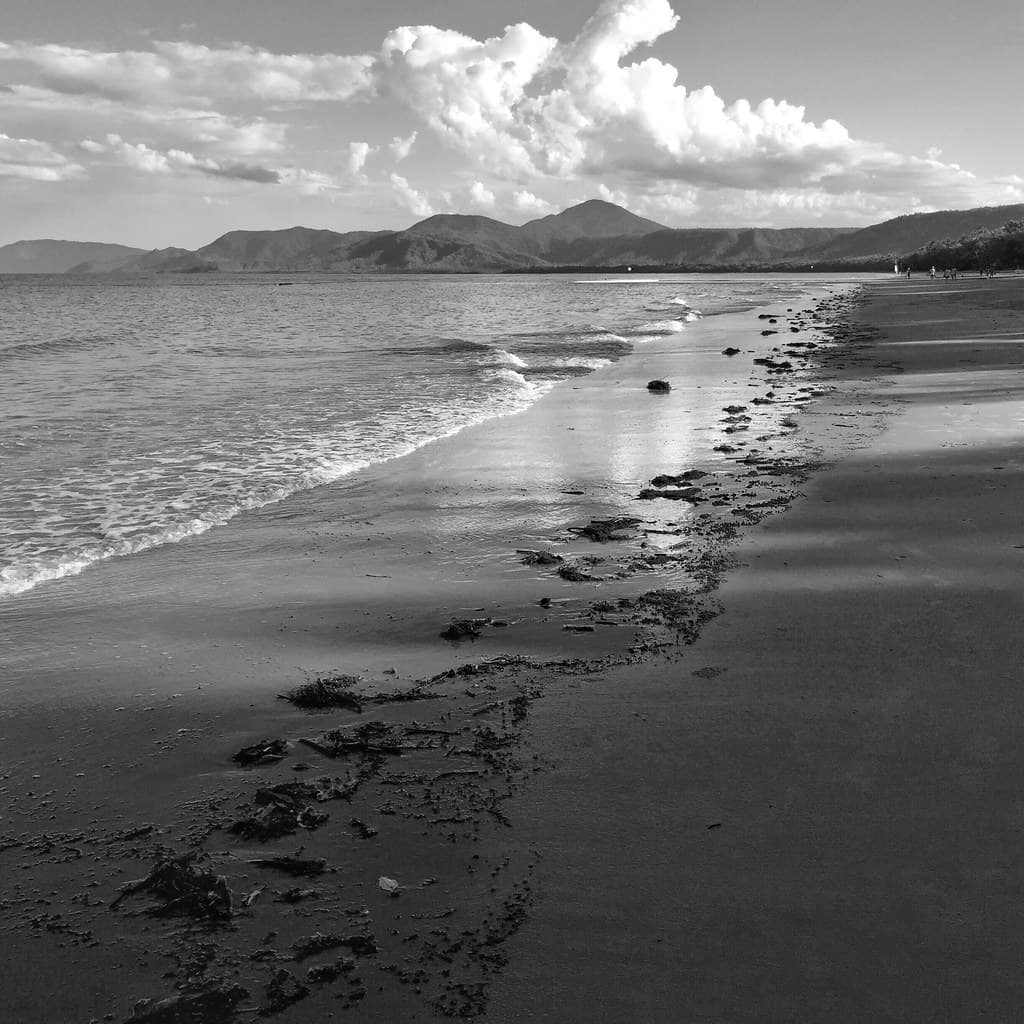
The trailhead sits unannounced at the end of Port Douglas Road, past the yacht club and the last of the resort pools. You'll cross a timber boardwalk through swamp forest, humidity thickening with each step, before the canopy breaks and the beach reveals itself in a sudden sweep of honey-colored sand. Unlike Four Mile's manicured palms and lifeguard towers, this shore belongs to the birds—bush stone-curlews call at dusk, and reef herons stalk the tidal flats. The water here runs deeper shades of turquoise than its southern neighbor, uninterrupted by swimmers or catamarans. Waves arrive with more muscle, especially during southeast trades, carving scallops into the beach face. Driftwood logs, bleached white and smooth, collect at the high-tide line beneath she-oaks that lean seaward. You might share the sand with a single fisherman or a local walking their cattle dog, but most afternoons you'll have the entire crescent to yourself. The swim requires respect—no flags, no patrols, and currents that strengthen near the rocky northern headland. But if you stay central and read the water, the reward is a body-temperature Coral Sea without the commentary of tour groups or the thrum of jet skis. Pack out everything you bring; the only facility is the forest itself, and the cassowaries who occasionally emerge from it to investigate your footprints.
Places, rentals, tours and events within walking and driving distance of Deadmans Beach.
Photos
Swimming conditions at Deadmans Beach require caution year-round. The beach has no stinger nets, lifeguards, or patrol services, unlike nearby Four Mile Beach. Marine stingers (box jellyfish and irukandji) are present in tropical waters from November to May, making protective stinger suits essential during these months. Strong currents and waves can occur depending on conditions. The beach's remote nature means emergency assistance may be delayed. Most visitors use Deadmans Beach for peaceful walks and scenery rather than swimming, saving water activities for patrolled beaches with safety infrastructure.
Deadmans Beach is accessible year-round, but May through October offers the most comfortable conditions. During the dry season (May-October), you'll enjoy warm temperatures, lower humidity, minimal rainfall, and reduced marine stinger risk. November through April brings the wet season with higher humidity, afternoon storms, and increased presence of dangerous jellyfish in the water. Early mornings throughout the year provide the best light for photography and peaceful beach walks. The beach's sheltered position and scenic appeal make it worthwhile visiting in any season, though swimming is safer during cooler months.
Deadmans Beach is located at the northern end of Four Mile Beach in Port Douglas. Access involves walking from the publicly accessible northern section of Four Mile Beach, continuing past the main swimming areas. The easiest parking is at the Four Mile Beach car park on Barrier Street or along Port Douglas Road near the Sheraton Grand Mirage Resort. From there, it's approximately a 15-20 minute walk north along the sand. The beach isn't signposted, so look for the quieter, more secluded stretch. Wear sturdy sandals as you may encounter rocky sections.
Deadmans Beach itself has no facilities, amenities, or commercial development, which contributes to its secluded character. You'll need to walk back toward central Port Douglas for all services. The nearby Sheraton Grand Mirage Resort has dining options, though primarily for guests. For public restaurants, cafes, shops, and accommodations, head to Port Douglas town center (Macrossan Street area), roughly 2-3 kilometers from the beach access point. Pack water, snacks, and sun protection for your visit. Public restrooms and showers are available at the main Four Mile Beach access points.
The origin of the name "Deadmans Beach" isn't definitively documented in historical records, and local explanations vary. Despite the ominous name, it's simply a quiet, less-developed stretch of coastline. The "hidden" aspect refers to its relative seclusion compared to the popular, easily accessible Four Mile Beach—it requires a deliberate walk to reach and lacks signage or facilities. Most Port Douglas visitors concentrate on the main beach areas, leaving Deadmans Beach quieter and more private. It offers beautiful coastal scenery and a peaceful atmosphere for those seeking an alternative to busier tourist spots.