Counting the waves…
Counting the waves…

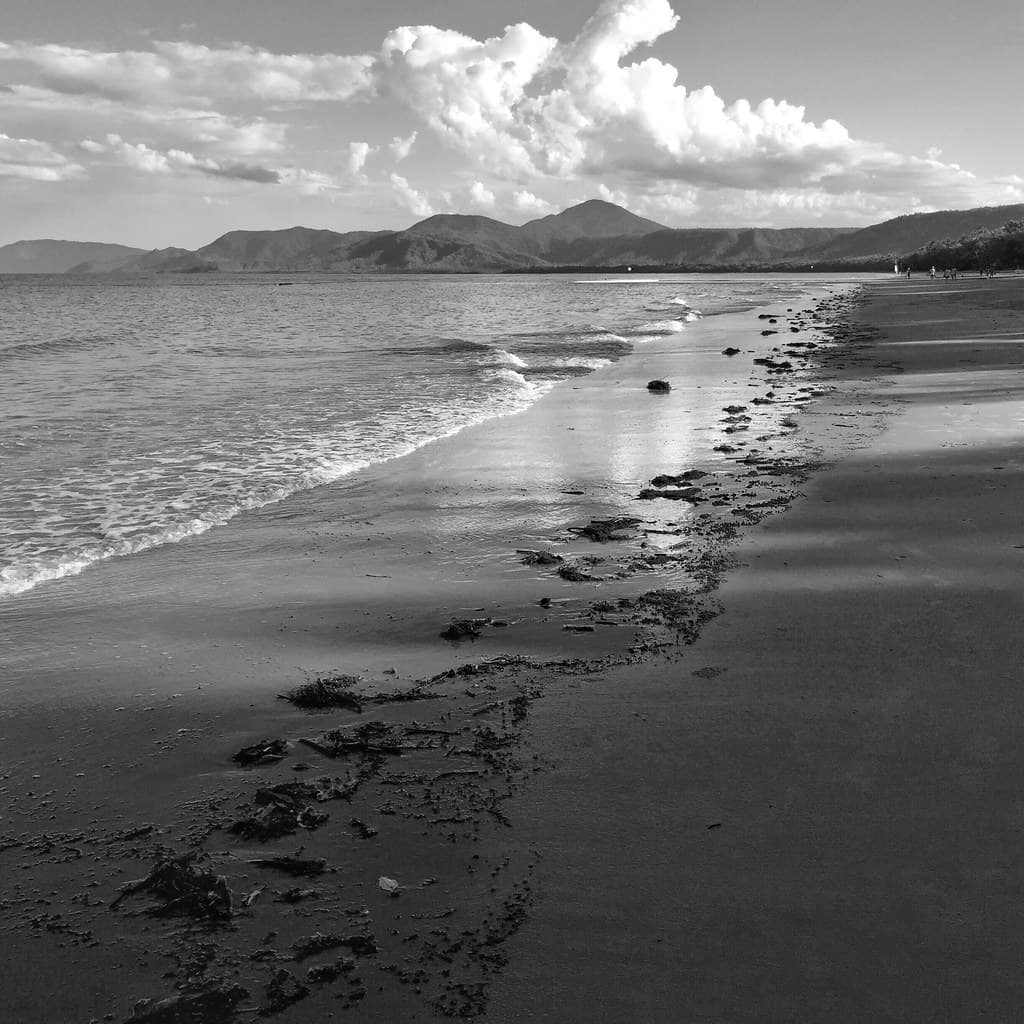
Pioneer Bay curves gently between two headlands thick with coastal scrub, its shoreline a ribbon of coarse golden sand that crunches underfoot with fragments of coral and shell. The water here sits glassy most mornings, protected from the prevailing southeast winds that whip Four Mile into a froth. Families spread out along the narrow beach, coolers planted in the shade of pandanus and she-oaks, while small children wade through water so shallow it barely reaches their knees at low tide. The bay's appeal lies in what it lacks: no lifeguard towers, no resort umbrellas lined up like soldiers, no jet skis carving figure-eights offshore. Instead, you get a tidal playground where the reef flats reveal themselves at ebb, leaving ankle-deep pools teeming with tiny fish and the occasional stingray gliding through. The northern end backs onto weathered rocks that glow ochre in afternoon light, while the southern headland offers a short scramble for those seeking elevation and a better angle on the Coral Sea's gradient of blues. Come at dawn and you'll share the sand with joggers from nearby residential streets and the occasional fisherman casting into the channel. By mid-morning, young families claim their patches, and by afternoon, the tide's return sends everyone packing. There's no café, no shower block, no attendant sweeping the sand smooth—just a bay that behaves exactly as it did before Port Douglas became a gateway town, stubborn in its refusal to perform.
Places, rentals, tours and events within walking and driving distance of Pioneer Bay Beach.
Photos
Pioneer Bay Beach is generally safe for swimming due to its protected bay location, which creates calmer waters compared to open ocean beaches. The bay's shelter reduces strong currents and wave action. However, as with all tropical Australian beaches, be aware of seasonal marine stingers (jellyfish) from November to May—wear a stinger suit during these months. The beach doesn't have lifeguard patrols, so swim during daylight hours and stay within your depth. Always check local conditions and warning signs before entering the water.
Pioneer Bay Beach can be enjoyed year-round, though different seasons offer distinct experiences. The dry season (May to October) features sunny days, low humidity, and calm seas—ideal for swimming and beach activities. The wet season (November to April) brings warmer temperatures and occasional tropical showers, but marine stingers are present during this period. Winter months (June-August) offer the most comfortable weather with temperatures around 20-26°C. For the best overall conditions, visit between May and October when rainfall is minimal and stinger risk is lowest.
Pioneer Bay Beach is located just south of Port Douglas town centre, approximately 3-4 kilometres away. You can reach it by car via Port Douglas Road, with limited street parking available near the beach access points. The beach is less developed than Four Mile Beach, so parking areas are more informal. Many visitors walk or cycle from Port Douglas if staying nearby. There's no large designated parking lot, so arriving early during peak tourist season is advisable to secure a spot close to the beach entrance.
Pioneer Bay Beach has limited on-site facilities, reflecting its more secluded nature. There are no restaurants, cafes, or shops directly at the beach, so bring your own food, water, and beach essentials. Basic facilities may include minimal shade and no public toilets immediately adjacent. However, Port Douglas town centre is just a short drive away, offering extensive dining options, supermarkets, and accommodation ranging from luxury resorts to budget hotels. Most visitors treat Pioneer Bay as a peaceful alternative to busier beaches while staying in Port Douglas proper.
Pioneer Bay Beach remains quieter than Port Douglas's main Four Mile Beach primarily because it's slightly further from the town centre and lacks the developed infrastructure that attracts large crowds. There are no nearby resorts opening directly onto the beach, limited signage, and fewer facilities, making it more appealing to locals and visitors seeking a peaceful escape. The beach's protected bay setting and scenic backdrop attract those prioritizing tranquility over convenience. Its 'hidden gem' status means fewer tourists know about it, preserving its relaxed, unspoiled atmosphere.