Counting the waves…
Counting the waves…

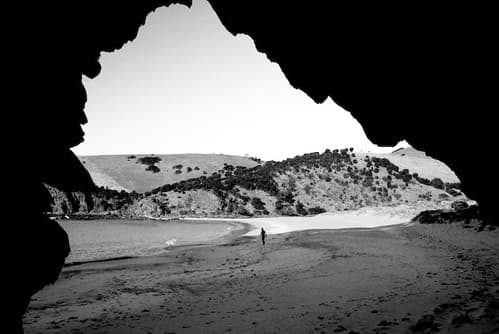
Island Beach curves along the protected northern shore of Kangaroo Island, where Eastern Cove meets Pelican Lagoon in a geography that keeps the Southern Ocean swells at bay. You'll park on grass verge and walk twenty paces to sand that stays shallow for fifty metres out—warm enough in summer that children spend hours fossicking for shells, cool enough in winter that the resident kangaroos venture down at dawn to nibble samphire at the waterline. The beach faces northeast, so mornings deliver golden light across the bay while afternoons turn languid under the shade of coastal sheoak. Pelicans drift in formation close to shore, and if you sit quietly near the rocks at the eastern end, you'll often see New Zealand fur seals hauled out on the granite, their wet backs gleaming like polished river stones. The township of American River—population fewer than three hundred—sits just inland, a cluster of fishing shacks and holiday cottages where crayfish pots still stack beside front porches. What sets this beach apart isn't drama but intimacy: the way wildlife moves through the space as if you're the visitor in their daily routine, the warm shallows that let you float on your back and watch white-bellied sea eagles ride thermals overhead, the sense that Kangaroo Island's wildness doesn't end at the high-tide mark but simply adjusts its volume.
Places, rentals, tours and events within walking and driving distance of Island Beach.
Photos
Island Beach on Kangaroo Island features calm, sheltered waters ideal for swimming, particularly for families with children. The beach is protected from strong ocean currents, making it generally safe for swimmers of all levels. However, always check local conditions before entering the water and supervise children closely. The shallow, clear waters are perfect for wading and spotting marine life. There are no lifeguard patrols, so swim at your own risk and stay aware of changing tides and weather conditions.
Island Beach is enjoyable year-round, but spring (September-November) and autumn (March-May) offer the most comfortable temperatures for beach activities, typically ranging from 18-25°C. Summer (December-February) can be warm and perfect for swimming, while winter remains mild. Early mornings are ideal for wildlife spotting, including kangaroos and various bird species. Weekdays tend to be quieter than weekends. The beach's sheltered position makes it pleasant even on breezy days, though always check weather forecasts before visiting.
Island Beach is located on Kangaroo Island, requiring a ferry from Cape Jervis (about 45 minutes) or a flight from Adelaide. Once on the island, drive to American River township; the beach is easily accessible from the town centre. Free parking is available near the beach access points. The beach is approximately 115km from Penneshaw (the main ferry terminal), about a 90-minute drive through the island. Roads are generally well-maintained, but rental cars are recommended as public transport is limited on Kangaroo Island.
American River township, adjacent to Island Beach, offers several dining options including local seafood restaurants, cafes, and a general store for supplies. The town has limited but quality accommodation options, including holiday rentals, bed and breakfasts, and camping facilities nearby. Basic beach amenities include picnic tables and barbecue facilities at some access points. It's advisable to bring your own beach essentials as there are no facilities directly on the beach. For extensive shopping or more dining variety, Kingscote is about 35 minutes away.
Island Beach is renowned for kangaroo sightings, particularly at dawn and dusk when they frequently hop along the sand and shoreline. The shallow waters attract diverse marine life including fish, rays, and occasionally dolphins offshore. Birdwatchers can spot pelicans, black swans, and various wading birds in the protected bays. Rock pools at low tide reveal crabs and small marine creatures. The peaceful, protected location makes it an excellent spot for nature observation. Remember to observe wildlife from a respectful distance and never feed native animals.