Counting the waves…
Counting the waves…

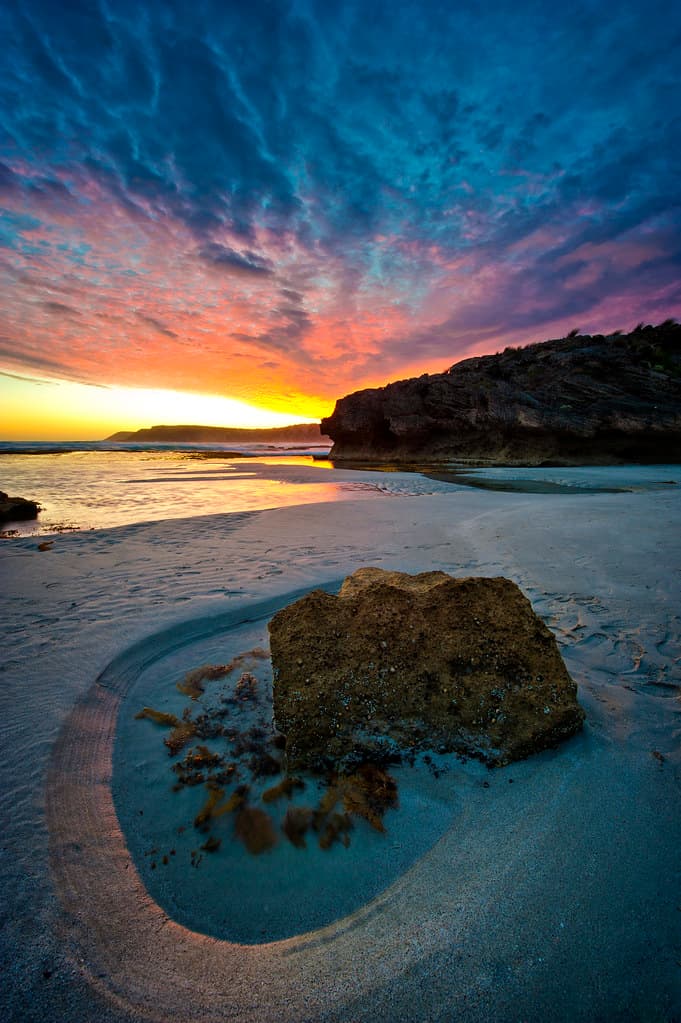
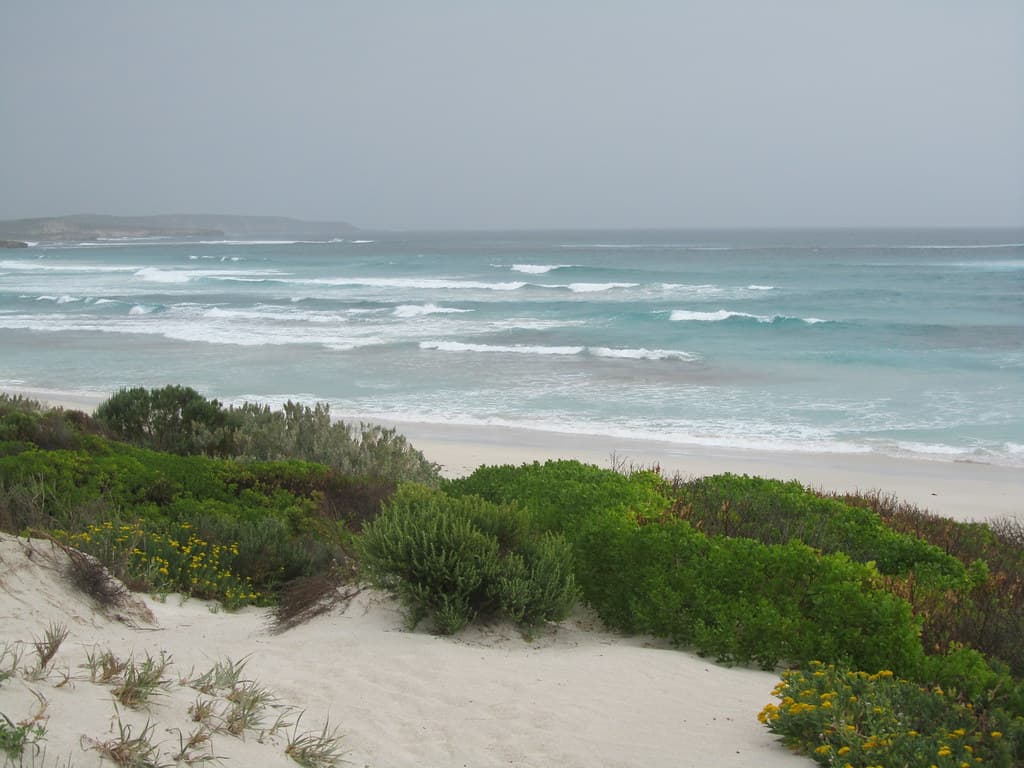
The drive from Parndana winds through farmland dotted with wool-heavy sheep before the pavement surrenders to dirt. You'll smell the ocean—salt mixing with eucalyptus—a full kilometer before you see it. When the track finally opens onto the parking area, the view stops you: a crescent of sand bookended by dark rock platforms, the Southern Ocean rolling in with metronomic precision. The surf here builds on westerly swells, drawing boardriders from Kingscote and Penneshaw who know the offshore winds that groom the faces on autumn mornings. Between sets, you might spot New Zealand fur seals surfing the same waves, their sleek bodies carving turns with enviable ease. The beach empties quickly beyond the access point; walk fifteen minutes west and you'll likely have a half-kilometer of shore to yourself, punctuated only by bleached driftwood and the occasional abalone shell. The water stays cold year-round—fourteen degrees in winter, eighteen in summer—but the isolation makes it feel warmer somehow. Kangaroo Island's southwestern exposure means weather moves fast here; you'll watch squalls march across the horizon, turning the sea from jade to gunmetal in minutes. Pack layers, bring drinking water, and don't expect mobile reception. The island operates on its own clock, and Bales Beach keeps particularly good time.
Places, rentals, tours and events within walking and driving distance of Bales Beach.
Photos
Bales Beach is primarily known for surfing rather than safe swimming. The beach experiences strong surf conditions and can have powerful currents, making it more suitable for experienced surfers than casual swimmers. There are no lifeguard patrols at this remote beach, so visitors should exercise caution. If you plan to swim, stay close to shore, never swim alone, and check local conditions before entering the water. Families with children should seek more sheltered beaches on Kangaroo Island for safer swimming options.
Bales Beach can be visited year-round, with each season offering different experiences. Summer (December-February) provides warmer weather ideal for beach activities, though it's the busiest period. Autumn and spring offer milder temperatures and fewer crowds, making them excellent for scenic walks and photography. Winter (June-August) brings consistent swells that attract surfers, though ocean temperatures are cooler. The beach's scenic beauty remains constant throughout the year, so the best time depends on whether you're seeking surf, solitude, or comfortable weather.
Bales Beach is located on Kangaroo Island's south coast, approximately 20 kilometres south of Parndana. Access requires a vehicle, preferably a 4WD, as the final approach involves unsealed roads that can be rough. From Parndana, follow South Coast Road and watch for signage. Basic parking is available near the beach access point. Note that Kangaroo Island itself is reached via ferry from Cape Jervis or flights to Kingscote. The beach's remote location means limited facilities, so plan accordingly with supplies and fuel.
Bales Beach is a remote, undeveloped beach with no onsite facilities, restaurants, or accommodation. The nearest town is Parndana, about 20 kilometres away, where you'll find basic services including a general store and limited dining options. For broader accommodation choices and restaurants, Kingscote or American River are better bases, though further away. Visitors should bring their own food, water, and supplies. There are no toilets, showers, or shops at the beach itself, so come prepared for a wilderness beach experience.
Bales Beach stands out for its reliable surf breaks and dramatic coastal scenery characteristic of Kangaroo Island's wild south coast. Unlike the island's more sheltered northern beaches, Bales faces the Southern Ocean, delivering consistent swells that attract surfers. The beach offers a more rugged, remote experience compared to popular spots like Emu Bay or Stokes Bay. Its relative isolation means fewer visitors, providing a sense of wilderness. The combination of scenic beauty, powerful surf, and untouched natural surroundings makes it distinctive among the island's numerous beaches.