Counting the waves…
Counting the waves…

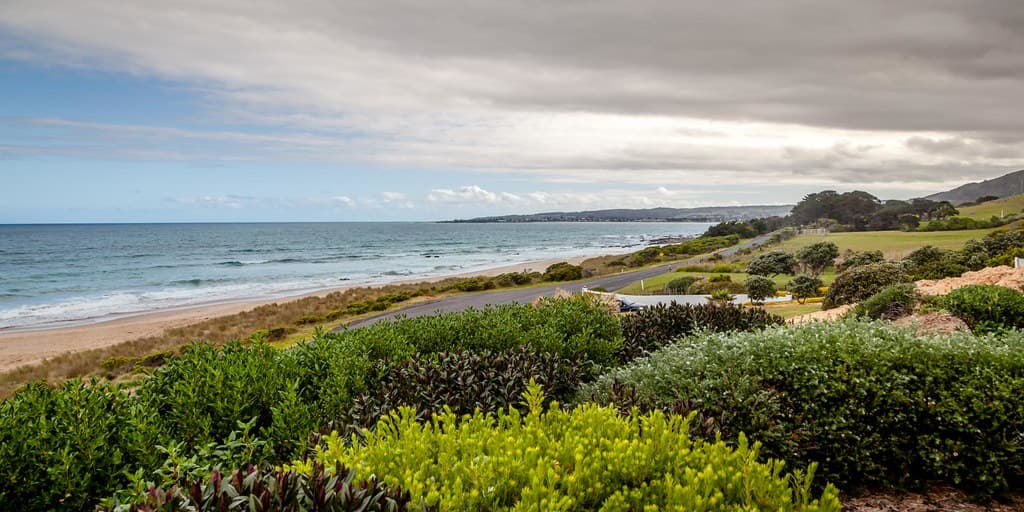
The car park sits above the beach, giving you a full view of what you're getting into: thick wedges of white water collapsing onto charcoal sand, a rip current tearing seaward, and if you're lucky, a pod of dolphins threading through the line-up. The walk down is steep, your calves tightening as loose sand gives way beneath your feet. This isn't a beach for tentative wading—the shore break pounds hard enough to knock the breath from your chest. Paddling out, you feel the cold Southern Ocean even through 4/3 millimeter neoprene. The take-off is punchy, the wave faces steep and fast, closing out in sections that demand commitment. Between sets, you sit in the channel watching swells march in from Antarctica, unbroken for thousands of miles until they meet this ragged Victorian coastline. Seabirds wheel overhead; behind you, the Otway Ranges rise in folds of eucalyptus and tree fern. Back on shore, sand sticks to wet neoprene as you peel your suit to the waist. The wind hasn't let up. A few other surfers linger by their cars, steam rising from thermoses of black coffee. No one's in a hurry to leave—there's a particular satisfaction in having surfed something this raw, this far from the groomed beaches that line much of the coast.
Places, rentals, tours and events within walking and driving distance of Johanna Beach.
Photos
Johanna Beach is not patrolled and swimming is generally not recommended due to strong rips, powerful surf, and unpredictable currents. The beach is primarily known as a surf break rather than a swimming destination. If you do enter the water, stay in shallow areas, never swim alone, and be extremely cautious. The conditions can change rapidly. Surfers should have experience with beach breaks and be confident in their ability to handle strong waves and currents.
Johanna Beach can be visited year-round, with each season offering different appeal. Summer (December-February) brings warmer weather ideal for beach walks and picnics, though surf can be smaller. Autumn and winter (March-August) typically deliver the most consistent swells for surfing. Spring offers moderate temperatures and fewer crowds. The beach faces southwest, so it picks up swell throughout the year. Weather can be changeable along this coast, so bring layers regardless of season.
Johanna Beach is located approximately 20 kilometers west of Lavers Hill along the Great Ocean Road. From Apollo Bay, drive west on the Great Ocean Road, then turn south onto Johanna Beach Road. The drive takes about 45 minutes from Apollo Bay. There is a free parking area at the beach with adequate space for cars and campervans. The final section involves a winding, partially unsealed road, so drive carefully and watch for wildlife, especially at dawn and dusk.
Johanna Beach has limited facilities—there are toilets and picnic tables but no shops, cafes, or restaurants at the beach itself. The nearest towns with food and supplies are Lavers Hill (20km) and Apollo Bay (35km), so bring provisions with you. The Johanna Beach campground offers basic camping facilities nearby. For more accommodation options, Apollo Bay provides a range of hotels, motels, and holiday rentals, making it a convenient base for day trips to Johanna Beach.
Johanna Beach is renowned among surfers for its consistent, powerful beach break that works in almost all swell directions. The southwest-facing beach captures Southern Ocean swells year-round, often producing hollow, fast waves suited to intermediate and advanced surfers. The relatively remote location means it's less crowded than other Great Ocean Road surf spots. The dramatic coastal scenery, with cliffs and pristine wilderness surroundings, adds to its appeal as a rugged, authentic Australian surfing destination.