Counting the waves…
Counting the waves…

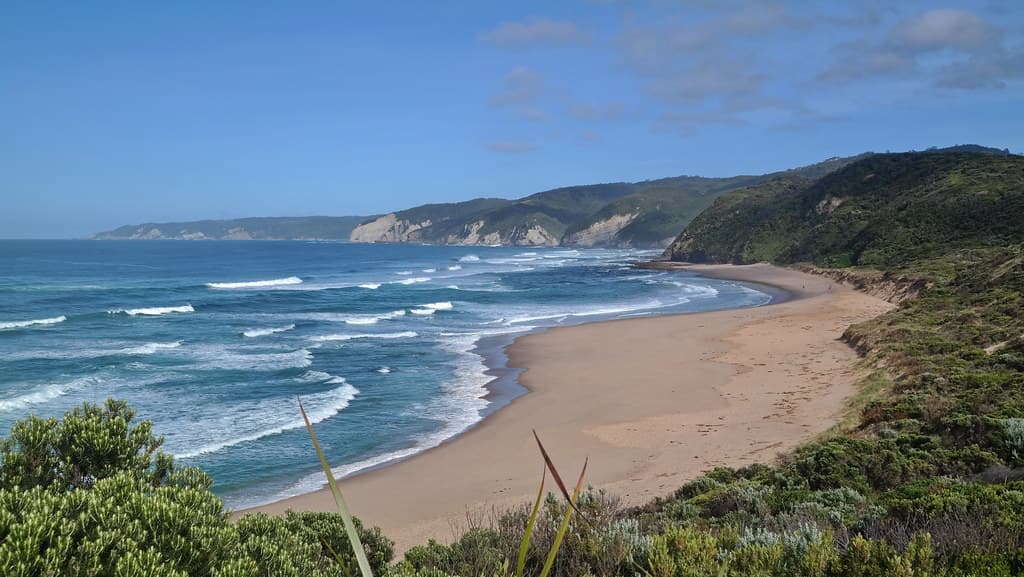
Most visitors to Apollo Bay never leave the main beach, which means you'll likely share Shelly Beach with only a handful of families crouched over tide pools and the occasional dog chasing wavelets. The compact cove sits cradled between two rocky points, their dark basalt flanks streaked with orange lichen and topped with coastal scrub that shivers in the onshore breeze. At low tide, the water retreats to reveal a natural aquarium: anemones pulsing in shallow basins, tiny crabs skittering beneath bladder kelp, and if you're patient, the occasional blue-ringed octopus ghosting across the sand. The beach takes its name seriously. You'll pocket smooth pebbles worn round by centuries of swell, fragments of abalone shell that catch the light like opal, and the occasional cowrie still wearing its glossy enamel. Children work the rock platforms with buckets while parents stretch out on towels, lulled by the rhythmic slap of water against stone. The cliffs behind you filter the wind, creating a microclimate several degrees warmer than the exposed shoreline just minutes away. Come prepared with reef shoes—the platforms can be slippery—and check tide charts before you descend. High tide swallows most of the sand, transforming this family-friendly haven into a narrow strip better suited to watching waves explode against the headlands. But catch it right, and you'll understand why locals guard this spot like a secret.
Places, rentals, tours and events within walking and driving distance of Shelly Beach.
Photos
Shelly Beach is generally calmer than the main Apollo Bay beach due to its more sheltered position, making it safer for families with young children. However, it's an unpatrolled beach, so swimmers should exercise caution and stay within their depth. Rock pools form at low tide, which are excellent for children to explore safely. Check local conditions before entering the water, as ocean conditions can change. The beach's protected cove setting typically means gentler waves, but always supervise children closely and avoid swimming alone.
Shelly Beach is enjoyable year-round, with each season offering something different. Summer (December-February) brings warm weather ideal for swimming and rock pool exploration. Autumn and spring offer milder temperatures perfect for beachcombing and scenic walks with fewer crowds. Winter can be dramatic with powerful waves and potential whale watching opportunities offshore. For rock pool exploration, visit during low tide regardless of season. Early mornings provide the most peaceful experience and best photography light, while the beach's sheltered position offers some wind protection throughout the year.
Shelly Beach is located at the western end of Apollo Bay, accessed via a walking track from the Great Ocean Road. The most common access point is from the car park near the Mariners Lookout turn-off. From there, a short walking track leads down to the beach. Limited street parking is available along the Great Ocean Road near the access point. The walk takes approximately 5-10 minutes and involves some steps and uneven terrain, so wear appropriate footwear. It's well-signposted from Apollo Bay's main township area.
Shelly Beach itself has no facilities, but Apollo Bay township is within walking distance and offers comprehensive amenities. The town center, less than 2 kilometers away, features numerous cafes, restaurants, bakeries, and fish and chip shops serving fresh local seafood. Accommodation options range from caravan parks and budget motels to boutique guesthouses and holiday rentals. Several hotels and cafes offer ocean views. The main shopping precinct includes supermarkets and convenience stores for picnic supplies. Bring all necessities to the beach as there are no kiosks or facilities on-site.
Shelly Beach's rock pools are renowned for their rich marine life and accessibility, making them ideal for families and nature enthusiasts. At low tide, the pools reveal diverse ecosystems including sea stars, crabs, small fish, anemones, and various shellfish. The pools are generally shallow and calm, perfect for children to safely explore under supervision. The rock platform also provides excellent beachcombing opportunities, with interesting shells and geological formations to discover. These natural aquariums offer an educational experience and are particularly good for introducing young children to marine environments in a safe, controlled setting.