
Counting the waves…
Counting the waves…

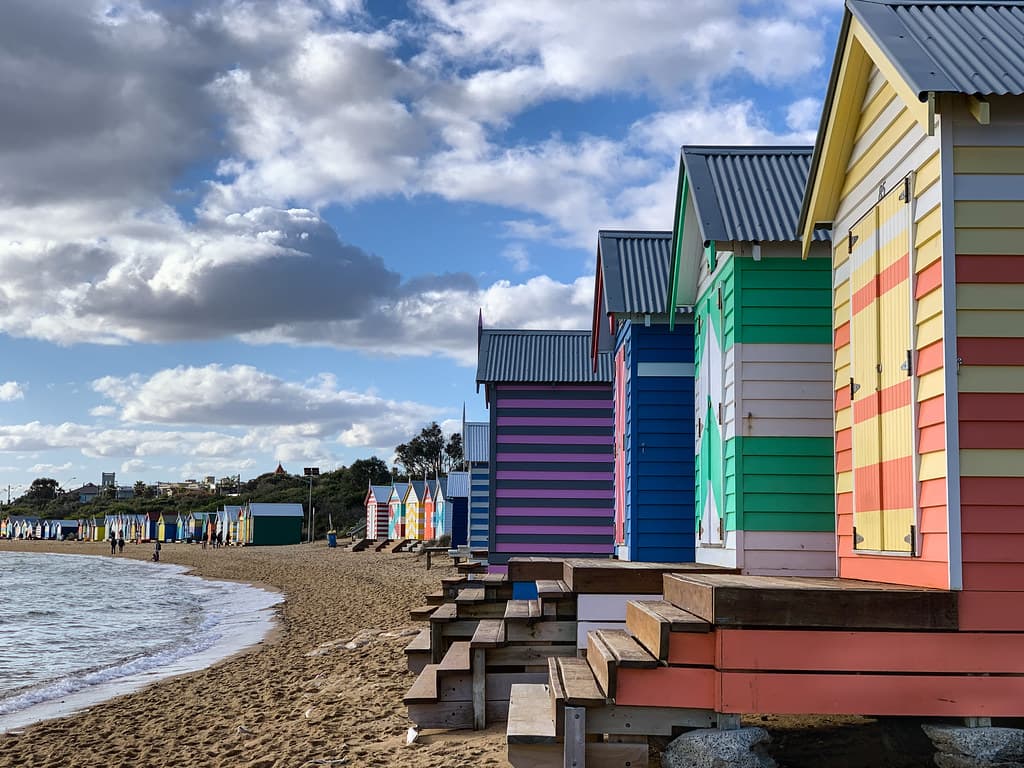
Black Rock Beach sits in the shadow of its nameslier namesake—the dark volcanic outcrop that gives this stretch its name—but the beach itself rewards those who venture beyond Brighton's bathing boxes just minutes north. The shore curves gently between timber groynes that trap golden sand, creating natural swimming bays where the water remains shallow for thirty meters out. Families claim their territory early on weekends, staking umbrellas into sand still cool from the night before. The beach faces northwest across Port Phillip Bay, offering protection from the southerly winds that buffet Melbourne's ocean beaches. You'll wade into water that barely reaches your waist, the sandy bottom firm underfoot, visibility extending down to your toes on calm days. The foreshore reserve behind the beach provides shade beneath Norfolk Island pines, their canopies filtering the afternoon light into dappled patterns across the grass where locals spread their towels when the sand grows too hot. Black Rock Beach operates on a quieter frequency than its coastal neighbors. Morning swimmers arrive before seven, leaving wet footprints on the concrete path. By mid-afternoon, the western sun slants across the bay, turning the water bronze. Parents gather their sandy-kneed children as the temperature drops, and the beach empties except for the occasional dog walker tracing the tideline, the city skyline a faint sketch on the northern horizon.
Places, rentals, tours and events within walking and driving distance of Black Rock Beach.
Photos
Black Rock Beach is generally calm and suitable for swimming, particularly during summer months when conditions are more settled. The beach is sheltered within Port Phillip Bay, making it safer than ocean beaches with milder waves and currents. However, there are no lifeguard patrols, so swimmers should exercise caution and stay within their comfort zone. The iconic HMVS Cerberus shipwreck offshore can create uneven underwater conditions. Always check local weather and water conditions before entering, and supervise children closely as waves can pick up on windier days.
Black Rock Beach is enjoyable year-round due to Melbourne's temperate climate, though each season offers something different. Summer (December-February) is ideal for swimming and sunbathing, with warm temperatures averaging 20-26°C. Autumn and spring provide pleasant weather for walking and photography with fewer crowds. Winter can be brisk but beautiful for peaceful beach strolls. Weekday visits are quieter than weekends. Sunrise and sunset are particularly stunning times to visit, offering excellent photography opportunities with the historic Cerberus wreck silhouetted against colourful skies.
Black Rock Beach is located approximately 20km south of Melbourne's CBD. By car, take Beach Road south through Brighton and Sandringham; street parking is available along Beach Road and nearby residential streets, though it can be competitive on sunny weekends. Public transport is convenient via train to Sandringham Station (Sandringham line), followed by a 15-minute walk or connecting bus. The 219 bus route runs along Beach Road. Cycling is popular along the Bay Trail coastal path. Arrive early on warm days to secure parking closer to the beach.
Black Rock Beach has essential amenities including public toilets and change rooms near the foreshore. The adjacent Black Rock Village, just a short walk from the beach, offers excellent cafes, restaurants, bakeries and takeaway options along Beach Road and Bluff Road. Popular spots include local coffee shops and fish-and-chip outlets perfect for beachside picnics. There's a children's playground near the beach and picnic facilities with barbecues. While there's no surf club on this beach, shops in the village provide supplies. No accommodation directly beachfront, but nearby suburbs offer various lodging options.
The HMVS Cerberus is Black Rock Beach's most distinctive feature – a colonial-era warship wreck visible offshore. Built in 1868, this former Victorian Navy monitor was deliberately scuttled in 1926 to serve as a breakwater. Today, its rusted remains create a haunting silhouette and popular photography subject, particularly at sunset. The wreck is gradually deteriorating and partially submerged depending on tides. While tempting, climbing on the structure is dangerous and discouraged. It's best viewed and photographed from shore. The Cerberus is historically significant as one of Australia's oldest warship relics.