Counting the waves…
Counting the waves…

Half Moon Bay unfolds in a gentle arc along Black Rock's coastline, its eastern and western arms pinned by rock breakwaters that tame Port Phillip's already docile moods. You'll notice families claiming patches of coarse sand early, spreading blankets near the timber change sheds painted in fading nautical stripes. The water temperature here runs warmer than the ocean beaches—no frigid Bass Strait currents to shock your system—and the bay's protection means you can actually hear conversations twenty meters offshore instead of battling surf roar. The beach reaches its stride in the golden hours before dusk. Dog walkers trace the tide line while paddleboarders glide over seagrass beds visible through the shallows. A concrete path hugs the dunes, linking Half Moon to neighboring beaches in both directions, and cyclists coast past carrying takeaway from the kiosks perched above the sand. You'll want to linger on the grassy reserve as the sun descends, watching light glint off downtown Melbourne's glass towers across twenty kilometers of flat water. The sand itself is more grey than blonde, studded with shell fragments that crunch underfoot. Low tide exposes dark rocks slick with algae—watch your footing if you're wading near the breakwaters. But the reliable calm, the lack of rips and dumping waves, makes this a beach where you can stop scanning the horizon for danger and simply float on your back, staring up at the Norfolk pines that have stood sentinel here for generations.
Places, rentals, tours and events within walking and driving distance of Half Moon Bay.
Photos
Half Moon Bay is one of Melbourne's safest swimming beaches, protected by the curved bay which creates calm, shallow waters ideal for families with young children. The beach is patrolled during summer months, and the gentle slope makes it perfect for paddling. However, always swim between the flags when lifeguards are on duty and supervise children closely. The sheltered location means minimal waves and currents, making it significantly safer than ocean-facing beaches along Victoria's coast.
Half Moon Bay can be visited year-round, though summer (December-February) offers the warmest weather for swimming with temperatures reaching 20-25°C. Autumn and spring provide mild conditions perfect for walking and picnicking with fewer crowds. Winter visits are ideal for coastal walks and dramatic sunsets. The beach faces west, making any time of year excellent for sunset viewing, typically between 5-8pm depending on season. Weekdays are quieter than weekends throughout the year.
Half Moon Bay is located in Black Rock, approximately 20km south of Melbourne CBD. By car, take Beach Road or Nepean Highway; parking is available in a large foreshore car park adjacent to the beach, which fills quickly on summer weekends. Public transport options include taking a train to Sandringham station, then bus 216 or 219. Cycling along the Bay Trail is popular, with bike paths connecting to nearby suburbs and beaches along Port Phillip Bay.
The foreshore features public toilets, BBQ facilities, picnic tables, and a children's playground. The popular Half Moon Bay Cafe operates beachfront, offering breakfast, lunch, and coffee. Black Rock village, a short walk away, has various cafes, restaurants, and shops. For accommodation, nearby suburbs like Beaumaris and Brighton offer hotels and holiday rentals. The beach also has changing facilities and showers. During summer, a mobile food vendor sometimes operates from the car park on weekends.
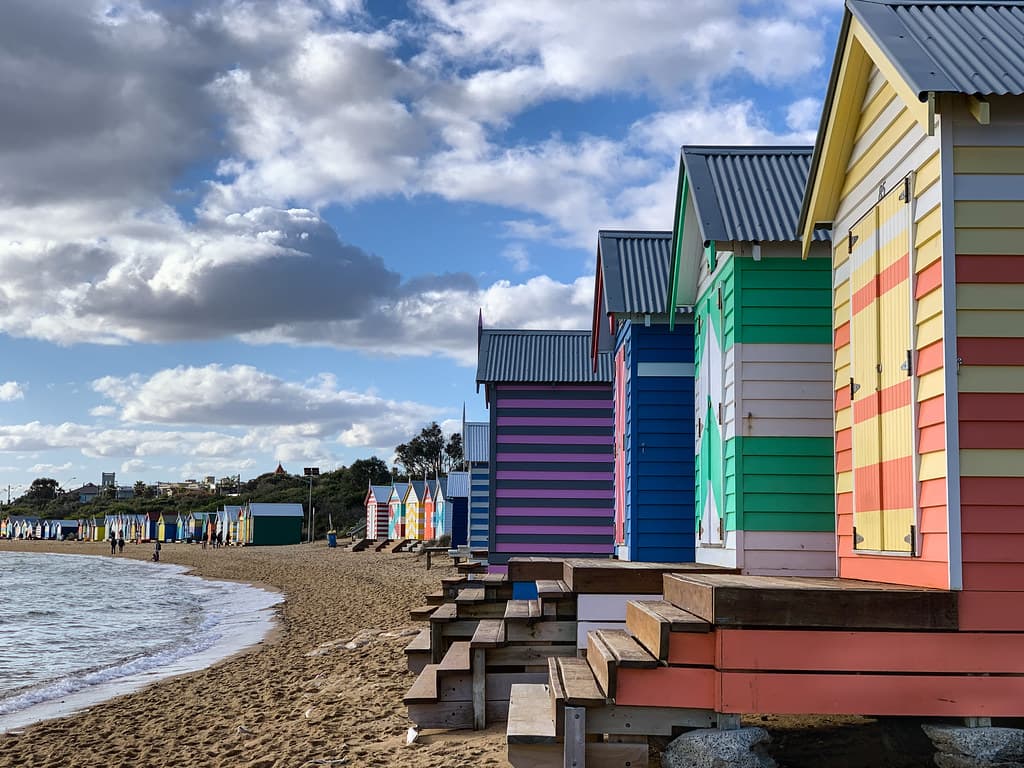
Half Moon Bay features a row of historic bathing boxes, colourful beach huts that are iconic to Melbourne's bayside beaches. These privately-owned structures date back to the Victorian era and are heritage-listed. They cannot be rented for day use as they're permanent private property, often passed down through families and occasionally sold for significant sums. However, they create a picturesque backdrop for photos and represent an important part of Melbourne's beach culture and social history.