Counting the waves…
Counting the waves…
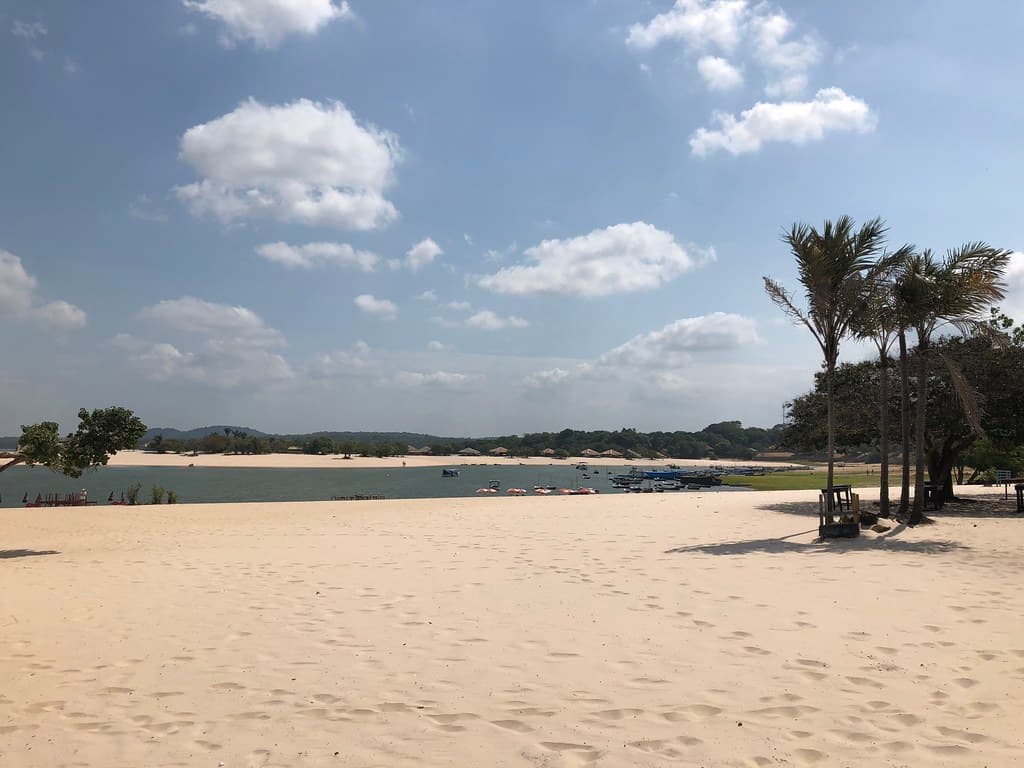
Caripi unfolds without drama—no cliffs, no rock formations, just a generous sweep of tan sand sloping so gradually into the Tapajós that children can wade out until their parents become nervous specks on shore. The water temperature hovers in the high seventies year-round, warm enough that you'll stay in for hours without noticing time passing. Beach vendors pace the sand selling coconut water and fried fish, their coolers strapped to modified bicycles. Families colonize the sand with geometric precision: coolers staked at cardinal points, sarongs spread just so, children's floaties inflated and ready. You'll hear Portuguese and laughter mixing with the small waves' whisper, portable speakers playing sertanejo at volumes that somehow never quite clash. The vibe runs friendly and unhurried—strangers share shade, offer sunscreen, include newcomers in beach soccer when teams run short a player. As afternoon softens toward evening, the beach empties in stages. Families with young children depart first, then teenagers, until only couples and solo visitors remain to watch the light change. The river turns from blue to bronze, and the far shore—kilometers away—becomes a dark line between water and sky. You'll understand why locals call this their decompression chamber, the place they come when city noise becomes too much.
Places, rentals, tours and events within walking and driving distance of Praia do Caripi.
Photos
Yes, Praia do Caripi is known for its calm waters, making it particularly suitable for families with children. The beach's protected location results in gentle waves and minimal currents. However, always supervise children near water and be aware that conditions can vary with tides and weather. The sandy bottom and gradual depth make entry into the water comfortable. As with any natural water body, it's wise to check local conditions upon arrival and swim during daylight hours when other visitors are present.
The best weather for visiting Praia do Caripi typically occurs during the dry season in the Amazon region, which generally runs from June to November. During these months, you'll experience less rainfall, more sunshine, and calmer waters. The wet season from December to May brings frequent rain and higher water levels in nearby rivers, which can affect beach conditions. Weekdays tend to be quieter than weekends. For optimal relaxation in the calm environment this beach is known for, plan your visit during dry season mornings or late afternoons.
Praia do Caripi is accessible from Santarém, though specific transportation options depend on the beach's exact location along the Pará coast. Generally, visitors can reach beaches near Santarém by car, taxi, or local bus services. The journey may involve a combination of paved and unpaved roads typical of the region. Consider hiring a local taxi or arranging transportation through your accommodation, as they'll know current road conditions. If renting a car, ensure it's suitable for potentially rough terrain and always ask locals for directions and current access information.
Food and lodging options near Praia do Caripi are typically more limited than at major resort beaches. You may find small beachside vendors selling snacks, fresh coconut water, and simple regional dishes, especially on weekends. For more substantial meals and accommodation, Santarém offers a wider range of hotels, guesthouses, and restaurants. Many visitors choose to stay in the city and make a day trip to the beach. If planning an extended stay, consider bringing snacks and drinks, and inquire locally about any small pousadas or rental options in nearby communities.
Praia do Caripi stands out for its exceptionally calm waters and peaceful, family-friendly atmosphere. Unlike beaches known for surfing or active water sports, Caripi offers a tranquil environment ideal for pure relaxation and unwinding. The beach's calm conditions make it particularly welcoming for those seeking a stress-free experience away from crowds. Its location near Santarém provides access to the unique meeting of river and coastal ecosystems characteristic of Pará. The beach maintains an authentic, low-key vibe that attracts visitors looking for genuine relaxation rather than bustling tourist amenities.