Counting the wavesβ¦
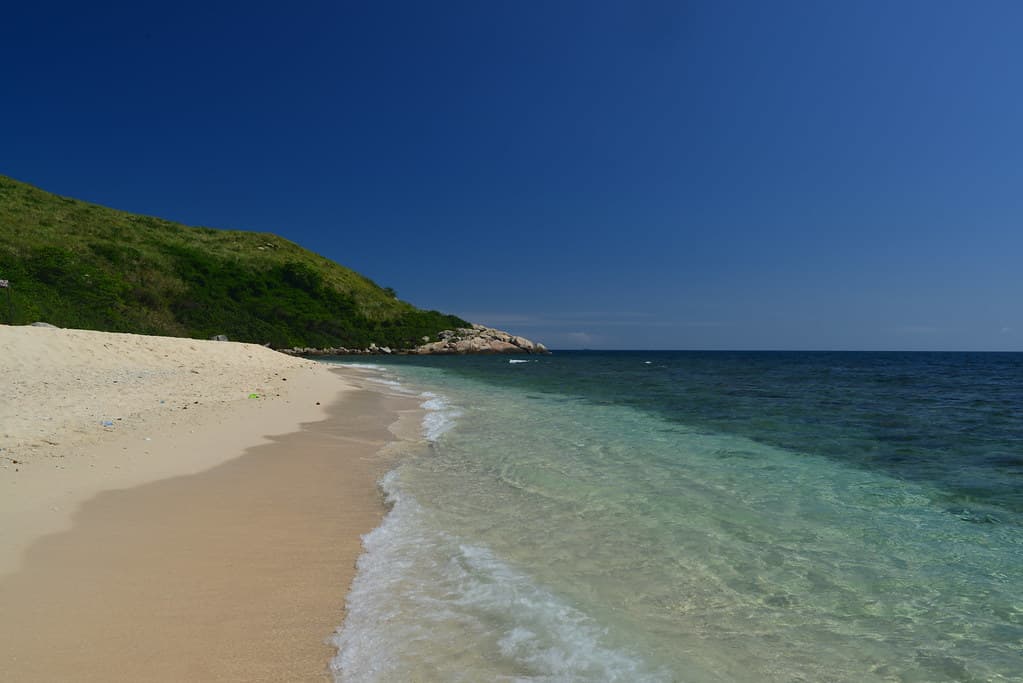
The road narrows to packed dirt before you reach Jiaji Beach, winding past papaya orchards and weathered fishing boats propped on cinderblocks. You'll park in the shade of coconut palms whose fronds click together in the offshore breeze, the only persistent sound besides the gentle lap of water on volcanic rock. The beach itself stretches perhaps two hundred meters, bordered at each end by lichen-covered boulders that anchor the bay in place. Water the color of faded denim spreads before you, its surface so undisturbed you can watch your reflection while you wade. The rocky bottom massages your feetβsmooth stones worn down by centuries of wave action now stilled by the protective headlands. Seagrass sways in the shallows, and occasionally a needle-nosed garfish glides past, barely disturbing the surface tension. The temperature hovers at blood-warm year-round, requiring no acclimatization. A handful of local families maintain weekend cottages behind the tree line, painted in peeling blues and yellows that blend with the faded beach umbrellas they plant in the sand. You might see an elderly woman collecting shells at dawn or a fisherman checking nets strung between rocks, but mostly the beach keeps its own company. The air smells of dried kelp and the sweet rot of fallen coconuts, and if you arrive after rain, the scent of wet earth mingles with salt.
Places, rentals, tours and events within walking and driving distance of Jiaji Beach.
Photos
Jiaji Beach's rocky nature means swimming conditions vary significantly. The beach is generally calm, making it safer than some coastal areas, but rocky underwater terrain requires caution. Water shoes are essential to protect feet from sharp rocks. Check conditions before entering as tides can change water depth and expose more rocks. The private, peaceful atmosphere means fewer lifeguards may be present, so never swim alone. The calm waters are suitable for wading and gentle swimming, but always assess conditions upon arrival.
Jiaji Beach is best visited during Hainan's dry season from November through April when weather conditions are most favorable. This period offers comfortable temperatures, lower humidity, and minimal rainfall, ideal for relaxation. Early morning and late afternoon visits provide the most peaceful atmosphere and pleasant temperatures. Avoid typhoon season (July-September) when weather can be unpredictable. Weekdays are preferable for those seeking privacy and tranquility, as this beach's appeal lies in its peaceful, uncrowded environment.
Jiaji Beach is located in Wanning's Jiaji town area. From Haikou, the journey takes approximately 1.5-2 hours by car via the eastern expressway. From Sanya, expect about 1.5 hours driving time. Renting a car provides the most flexibility for accessing this relatively private beach. Alternatively, take the high-speed train to Wanning Station, then arrange a local taxi or ride-sharing service. Public bus routes may serve Jiaji town, but specific beach access might require additional local transport.
Given Jiaji Beach's private and peaceful nature, accommodation options nearby tend to be smaller guesthouses, boutique hotels, or vacation rentals rather than large resorts. Jiaji town offers local hotels and homestays with basic to comfortable amenities. For dining, expect local restaurants serving Hainanese cuisine and fresh seafood. The area is less commercialized than major tourist beaches, so options focus on authentic local experiences. Wanning city center, a short drive away, provides additional hotel and restaurant choices.
Jiaji Beach's private, peaceful atmosphere creates an ideal sanctuary away from crowded tourist beaches. Its relatively undiscovered status means fewer visitors and a more intimate connection with nature. The calm waters and rocky setting provide soothing natural sounds without the noise of water sports and beach parties. The lack of commercial development preserves the beach's tranquil vibes. Visitors can enjoy uninterrupted contemplation, reading, or simply watching the ocean. The uncrowded environment allows for genuine relaxation and mental restoration.