Counting the waves…
Counting the waves…
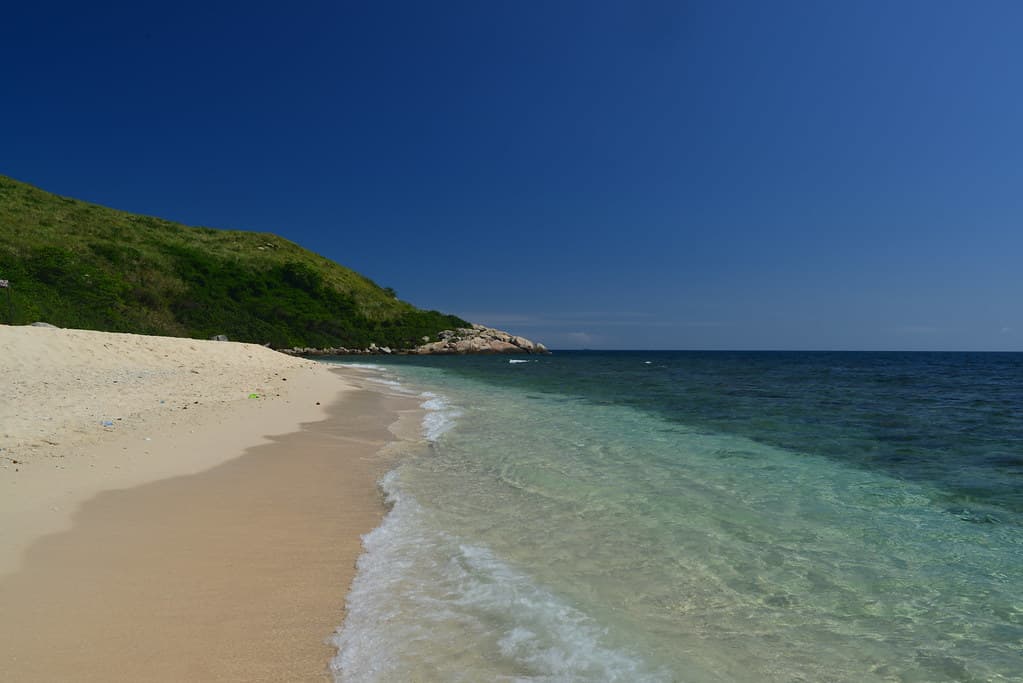
You'll need to ask twice for directions in Wanning. Rong Beach lacks signage, hiding at the end of a rutted road that winds through banana plantations and past concrete houses where chickens scatter at your approach. The reward appears suddenly: a hundred-meter crescent of dark pebbles framed by jagged volcanic outcrops that jut into the South China Sea like broken teeth. The stones range from marble-sized to melon-sized, their surfaces polished to a dull sheen in shades of charcoal, rust, and occasionally jade-green where mineral deposits have oxidized. The best photography happens during the two hours surrounding low tide. You'll discover tide pools trapped in rock basins, their surfaces mirror-still, reflecting the sky while hermit crabs navigate the perimeters. Larger boulders have been sculpted by wave action into forms that suggest faces, animals, and abstract shapes—your companions will argue about whether that formation resembles a dragon or a submarine. The sound is particular: waves don't crash here so much as rattle, the pebbles grinding against each other with each surge and retreat, creating a constant percussive whisper. Swimming requires caution and thick-soled water shoes. The larger rocks continue underwater, creating channels where the current accelerates. Local fishermen work the deeper zones in the early morning, casting nets from the northern point, and they'll warn you about the rip current that develops near the southern rocks during spring tides. The beach attracts virtually no tourists—on weekdays you might share the cove with a single photographer or a Hainanese family collecting periwinkles from the tide pools.
Places, rentals, tours and events within walking and driving distance of Rong Beach.
Photos
Swimming at Rong Beach requires caution due to its pebble and rocky composition. The beach terrain can be uneven with sharp rocks, making water entry challenging. Conditions vary with tides and weather, so check local conditions before entering the water. Water shoes are highly recommended for protection. The beach is more suitable for wading and photography rather than extended swimming sessions. Always observe wave patterns and avoid swimming alone at this relatively isolated location.
Rong Beach is best visited during off-peak seasons, typically spring (March-May) and autumn (September-November), when crowds are minimal. This hidden gem's appeal lies in its solitude, so weekdays are preferable to weekends. Early morning or late afternoon offers the best lighting for photography enthusiasts. Avoid summer holidays and Chinese national holidays when domestic tourism peaks. Weather during spring and autumn is generally pleasant with comfortable temperatures for exploring the rocky landscape.
Rong Beach is located in Wanning city, accessible via Hainan's eastern coastal highway. From Haikou, it's approximately a 2-hour drive; from Sanya, about 1.5 hours. Public transportation options are limited given its hidden nature, so renting a car or hiring a private driver is recommended. Taxi services from Wanning city center can reach the area. Look for local signage or use Chinese GPS apps like Baidu Maps, as international apps may have limited coverage in this region.
Accommodation near Rong Beach is limited due to its remote, hidden location. Your best options are in Wanning city center, approximately 20-30 minutes away, where you'll find hotels ranging from budget to mid-range. For dining, pack snacks and water as beach facilities are minimal. Wanning city offers local Hainanese cuisine including fresh seafood. Some guesthouses and small restaurants can be found in nearby fishing villages, serving authentic local dishes at reasonable prices.
Rong Beach's distinctive rocky and pebble landscape creates dramatic compositions unlike typical sandy beaches. The rugged coastline, natural rock formations, and relatively untouched environment offer authentic, Instagram-worthy shots without crowds. Golden hour produces stunning contrasts between dark rocks and glowing water. The beach's hidden status means pristine scenery without modern development in the background. Bring wide-angle lenses for landscape shots and be prepared to explore different vantage points among the rocks for unique perspectives.