
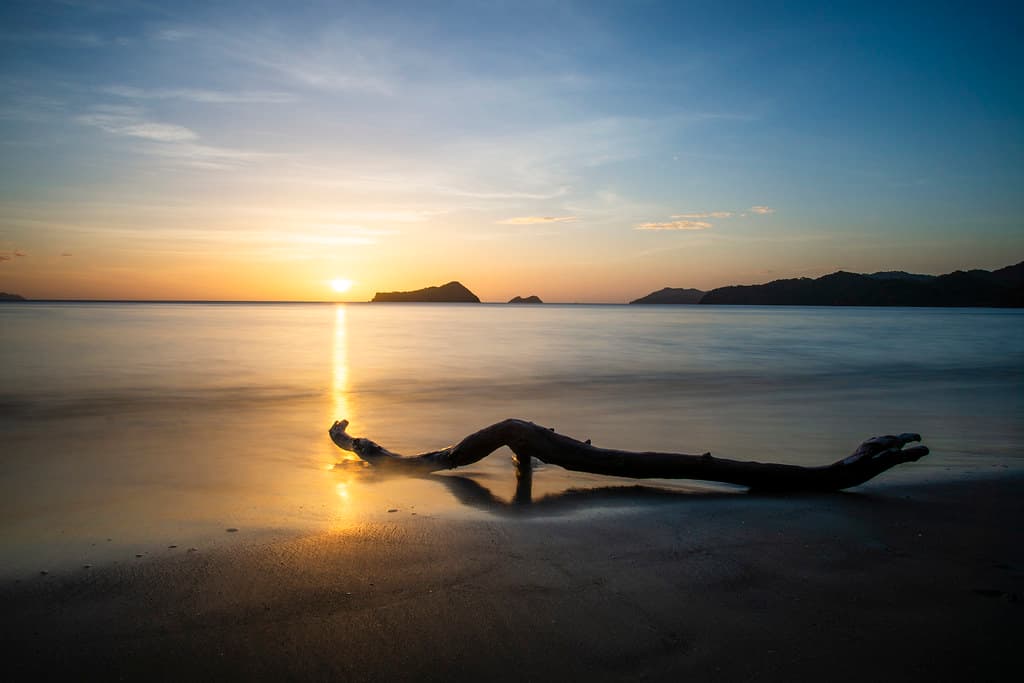
Playa Junquillal unfurls in a tight crescent where Santa Rosa's coastal sector meets the ocean, its volcanic sand dark as graphite and fine enough to sift between your fingers. The forest presses close here—white-faced capuchins rustle the canopy overhead, and coatis nose through driftwood piles searching for crabs, undisturbed by your presence. This beach sits within national park boundaries, a designation that keeps development at bay and leaves the strand feeling elemental, shaped only by tides and the north Pacific's rhythms.
“National park protections guarantee this bay's wild character persists, offering a glimpse of Pacific Guanacaste's pre-development coastal ecosystem.”
 Credit: Flickr
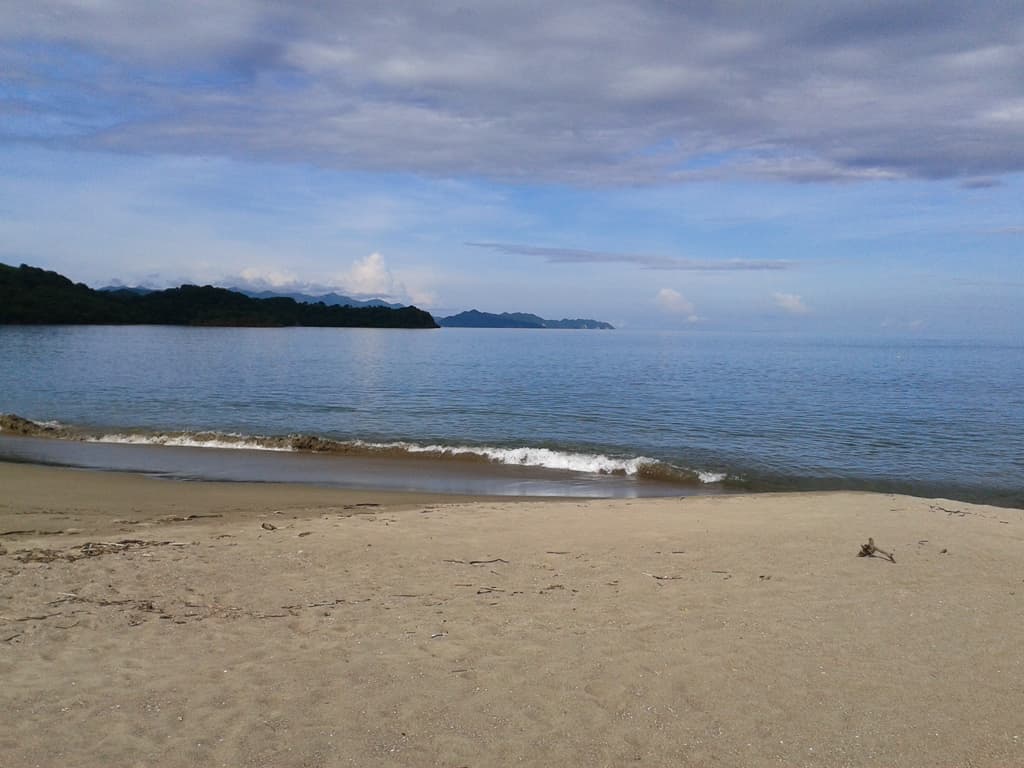
Playa Junquillal — photo by MarioMelendez
Wade into water that reflects the sky's mood—glassy pewter on calm mornings, churned jade when afternoon winds kick up—and feel the sand slope away beneath your feet in gentle increments. The bay's embrace mutes the ocean's wildest impulses; waves arrive as polite swells that unfurl across the shorebreak without violence. Behind you, trails snake inland toward ranger stations and remote surf breaks, but most visitors anchor themselves here, content with the horseshoe's symmetry and the knowledge that the nearest road requires commitment.
As afternoon bleeds toward dusk, frigatebirds congregate above the western headland, their silhouettes stark against bands of salmon and plum. You'll hear howler monkeys warming up for their evening chorus, a guttural sound that carries across the bay, and if you linger past sunset, ghost crabs emerge to scuttle across cooling sand, their pale shells ghostly in the last light.


