Counting the waves…
Counting the waves…

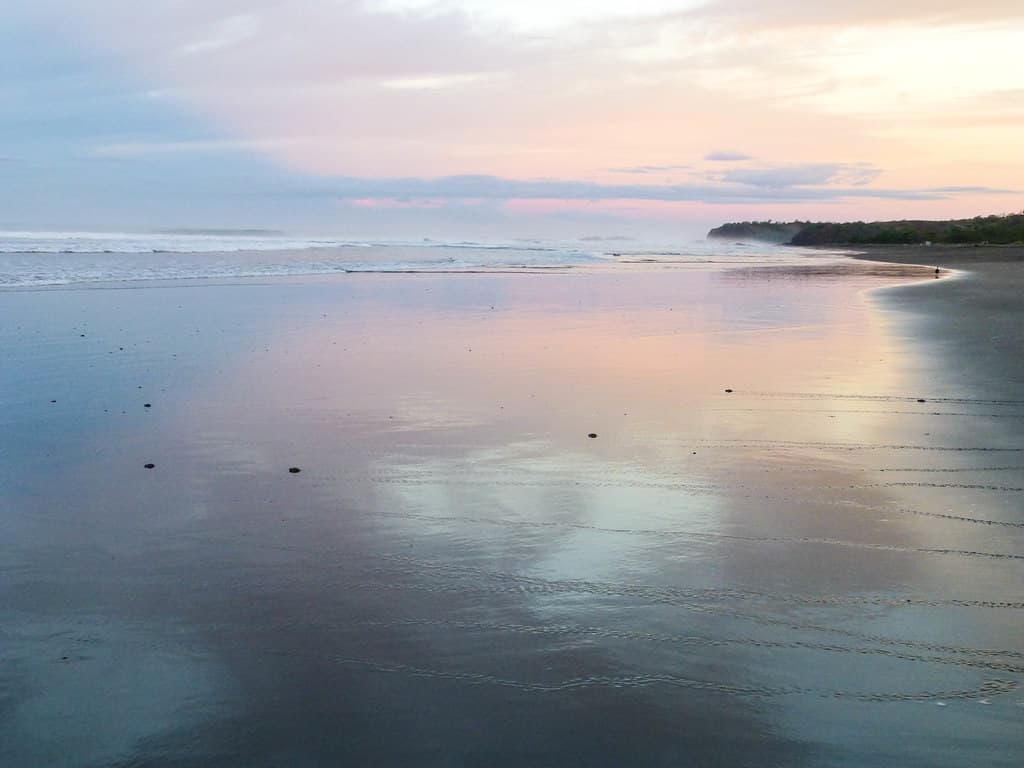
The approach tells you everything: ruts deep enough to scrape your undercarriage, river crossings that run axle-deep during the wet months, and enough dust in the dry season to coat your windshield opaque. When you finally reach the beach, the emptiness makes sense—most people turn back before they get this far. The sand stretches north in a gray-brown ribbon, bordered by scrub vegetation and the occasional cluster of palms. Volcanic boulders jut from the surf zone, dark and sharp-edged, forcing the swells to wrap and bend around the point. The waves here break with more power than the mellow beach breaks farther south. When the swell direction is right—southwest to west—the point serves up long, hollow lefts that peel across the inside section before tapering into deep water. You'll surf it alone most days, or with one or two other travelers who heard about it from someone in Nosara and decided to investigate. The paddle out requires threading between rocks; the takeoff zone sits over a reef shelf that shows itself at low tide, barnacled and unforgiving. Onshore, there's nothing—no palapa, no fresh water, no vendors. Bring what you need and expect to be self-sufficient. Howler monkeys bellow from the forest canopy between sets. Pelicans cruise the lineup, occasionally folding into kamikaze dives when baitfish move shallow. By mid-afternoon, if the wind hasn't blown out the surf, you'll have ridden more waves than you would in a week at the popular breaks, simply because there's no one to share them with.
Places, rentals, tours and events within walking and driving distance of Playa Marbella.
Photos
Playa Marbella is a remote surf beach that attracts adventurous surfers seeking uncrowded waves. Conditions vary by season, with the best swells typically during the May-November period when southwesterly swells are more consistent. The beach can produce quality waves but is less predictable than nearby established surf spots. Strong currents and the isolated location mean this is better suited to intermediate and advanced surfers comfortable in remote settings. Always check conditions with locals first, and surf with a buddy given the limited rescue resources in this remote area.
The green season (May-November) often brings better surf swells to Playa Marbella, though afternoon rains are common. The dry season (December-April) offers more sunshine and easier road access, but surf can be less consistent. For fewer crowds and maximum solitude, visit on weekdays year-round—this remote location rarely sees crowds even during peak travel periods. Early morning generally provides the best surf conditions and wind. The beach maintains its adventurous, off-the-beaten-path vibe regardless of season due to difficult access.
Reaching Playa Marbella requires a capable 4x4 vehicle and local knowledge, as it's located north of the main Ostional-Nosara area on rough, unpaved roads. The access route can become extremely challenging or impassable during heavy rains. From Ostional, head north on coastal tracks—travel time varies widely based on conditions, typically 30-60 minutes. GPS coordinates are helpful, but asking locals for current road status is essential. The remote location and difficult access are part of its appeal for adventurous travelers but require preparation and appropriate transportation.
Playa Marbella is extremely remote with essentially no facilities, restaurants, or accommodations at the beach itself. This is true wilderness beach territory where you must be completely self-sufficient. Visitors typically base in Nosara or Ostional and make day trips, bringing all food, water, and supplies. The nearest services are at least 30-45 minutes away over rough roads. Some adventurous travelers camp informally, but there are no official campgrounds or amenities. Plan as if visiting a backcountry location—pack everything you need and leave no trace.
Playa Marbella rewards adventurous surf travelers with uncrowded waves and pristine, undeveloped coastline that represents Costa Rica's wild side. While better-known breaks like Guiones and Mal Pais see crowds, Marbella often offers near-private surf sessions for those willing to make the effort. The remote setting and stunning natural scenery create a true adventure atmosphere. The beach embodies the explorer's mindset—it's not about luxury or convenience but about discovering hidden surf and connecting with Costa Rica's raw coastal beauty away from development and tourism infrastructure.