
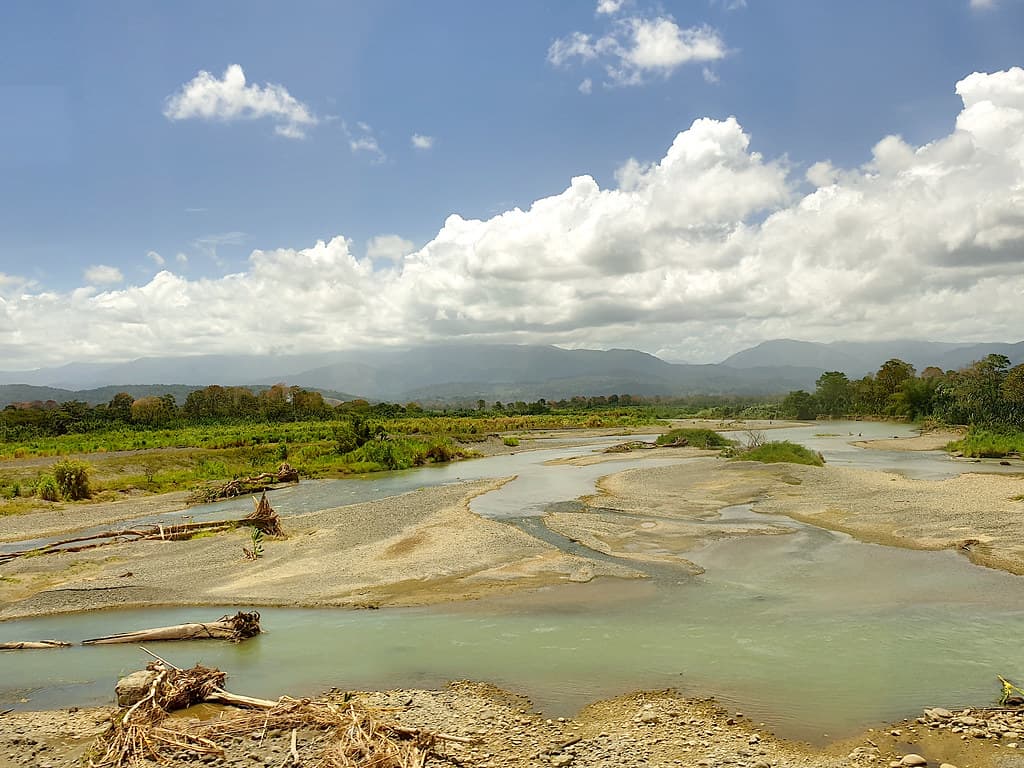
The sand at Playa Matina carries a rust tint from the mineral-rich rivers that empty here, staining the shoreline a color somewhere between amber and ochre. You'll walk for half an hour without encountering another soul, passing driftwood logs the size of station wagons and tide pools alive with hermit crabs clicking across volcanic pebbles. The waves arrive in long-interval sets, their glassy faces holding form for a breath before collapsing in thunderous barrels that scatter spindrift across the upper beach.
“One of the few Caribbean beaches where rust-tinted river sediment stains the sand a distinctive amber hue.”
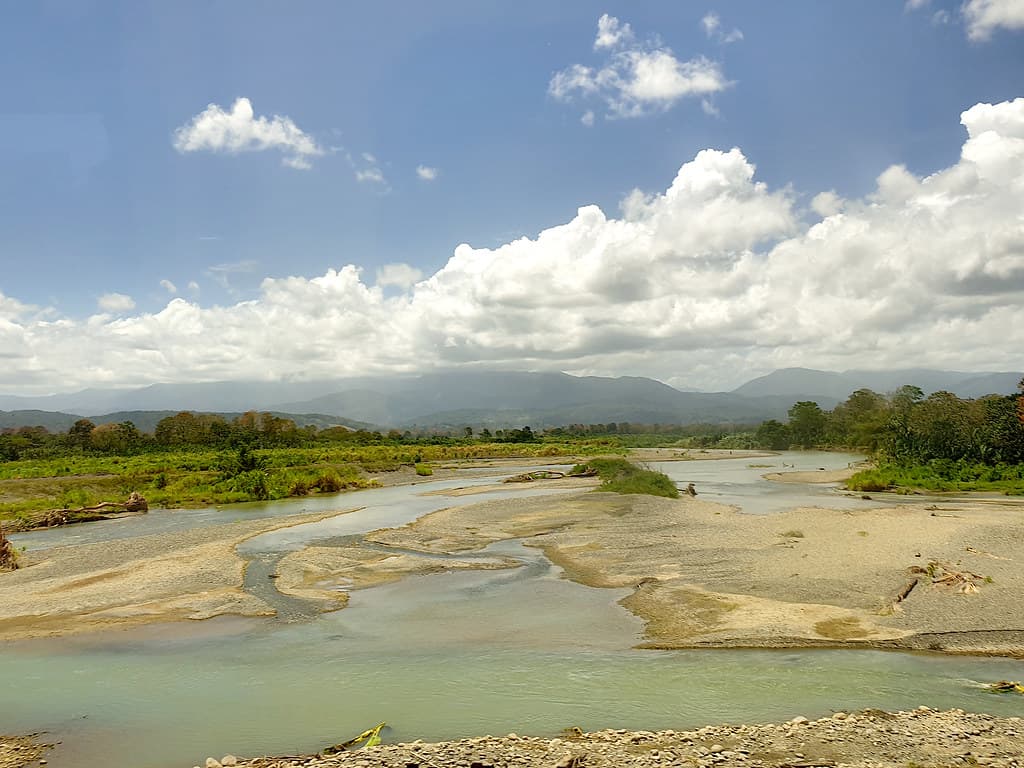 Credit: Flickr
Playa Matina — photo by Juhele_CZ
Palm fronds rattle in the offshore breeze while frigatebirds wheel overhead, their forked tails silhouetted against cumulus towers building inland. Local fishermen mend nets beneath the shade of sea-grape trees, their pangas painted in fading blues and greens. The air tastes of salt and overripe breadfruit.
You'll feel the beach's solitude most acutely at dawn, when the only sounds are the rhythmic crash of shorebreak and the distant bark of howler monkeys in the coastal forest. The horizon stretches unbroken to the east, a seam where Caribbean blue meets cloud-heavy sky. This is Costa Rica's Atlantic edge at its most unvarnished—no vendors, no umbrellas, just sand and sea and the occasional heron stalking the wrack line.


