Counting the waves…
Counting the waves…
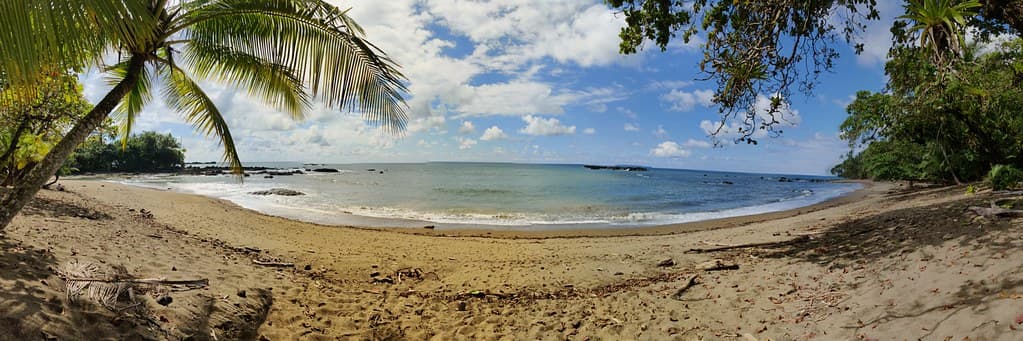
Playa Caletas exists at the edge of effort, far enough from Drake's central hub that only the determined arrive. The boat approach offers glimpses of the cove through gaps in the coastline, the beach appearing and disappearing until your captain cuts the engine and lets momentum carry you toward shore. Stepping into knee-deep water, you'll immediately notice the sand's finer texture compared to the main bay—lighter in color, softer underfoot, less littered with the functional debris of a working waterfront. The cove runs perhaps two hundred meters end to end, bookended by rocky points where the Pacific has sculpted the volcanic stone into tide pools and natural benches. The jungle here doesn't stop at a polite distance—it surges right to the high-tide mark, strangler figs and ceiba trees leaning out over the sand as if curious about the ocean. Howler monkeys crash through the canopy directly overhead, their territorial roars so loud you'll feel them in your sternum. Three-wattled bellbirds produce their namesake sound from somewhere invisible, a metallic bonk that echoes across the cove. The snorkeling along the northern rocks reveals parrotfish grinding coral into sand, sergeant majors defending their egg patches with furious territoriality, and the occasional whitetip reef shark dozing in the shallows, too lethargic to care about your presence. Couples arrive here via lodge-arranged boats, claiming the beach for hours-long interludes of swimming, reading, and the particular kind of conversation that happens when you've removed all distractions except each other and the sea. The water stays warm and relatively clear, protected from the river silt that clouds the main bay. Sunset paints the western sky in layers—salmon, then amber, then a violet that seems to rise from the water itself rather than the sky.
Places, rentals, tours and events within walking and driving distance of Playa Caletas.
Photos
Swimming conditions at Playa Caletas vary significantly with tides and seasons. The cove setting can provide protection from larger swells, creating calmer conditions than exposed beaches, especially during dry season. However, rocky areas require caution when entering and exiting the water. No lifeguards patrol this remote beach, so swimmers must assess conditions independently and never swim alone. Snorkeling near rocks can reveal marine life but watch for sharp surfaces and sea urchins. Currents can strengthen near headlands. Check with local guides about current conditions before visiting. The small beach size means limited swimming area at high tide.
December through April provides the best weather for Playa Caletas with sunny skies, calmer seas, and easier boat access. During these months, visibility for snorkeling improves and trails remain drier for hiking. May through November brings rain (heaviest September-October), creating lush scenery but potential access challenges and rougher seas. For photography and scenic beauty, morning light is optimal. Visit during weekdays or shoulder seasons (May-June, November) for maximum solitude. Wildlife viewing remains excellent year-round in surrounding rainforest. Low tide expands beach area and improves coastal trail access. Since boat conditions matter, consult local operators about sea state before planning your visit.
Playa Caletas is reached primarily by boat from Drake Bay or via coastal hiking trail, as no roads exist. Boat rides take 10-20 minutes from Drake Bay village; arrange through local tour operators or lodges. The coastal trail from Playa Drake offers a scenic but moderately challenging hike requiring 1-2 hours, passing through rainforest and over rocky sections. Sturdy hiking shoes and reasonable fitness are necessary. Low tide makes trail sections easier to navigate. Some visitors combine the beach with snorkeling tours or Corcovado trips that stop along the coast. Water taxis can be arranged for pickup at designated times. Always inform someone of hiking plans.
Playa Caletas has virtually no facilities or services, maintaining its remote, natural character. No restaurants, shops, bathrooms, or freshwater sources exist on the beach itself. Visitors must bring all supplies including drinking water, food, sun protection, and any equipment needed. A few eco-lodges operate in the surrounding area but aren't directly on this small cove beach. Most people visit as a day trip from Drake Bay accommodations. Cell phone service is unreliable or nonexistent. The absence of development means pristine nature but requires self-sufficiency. Pack out all trash. Consider bringing snorkeling gear if you own it, though some tours provide equipment.
Couples are drawn to Playa Caletas for its exceptional seclusion and romantic natural setting. The small cove beach surrounded by rainforest-covered rocks creates an intimate, private atmosphere rarely found at more accessible beaches. Its hidden location requires effort to reach, ensuring minimal crowds and often complete privacy. The scenic beauty—turquoise waters, lush jungle, and rocky formations—provides a stunning backdrop for romantic moments and photography. The adventure of reaching it by boat or coastal hike adds shared experience. Snorkeling together in clear waters or simply enjoying undisturbed beach time appeals to couples seeking authentic nature connection away from tourist crowds and commercial development.