
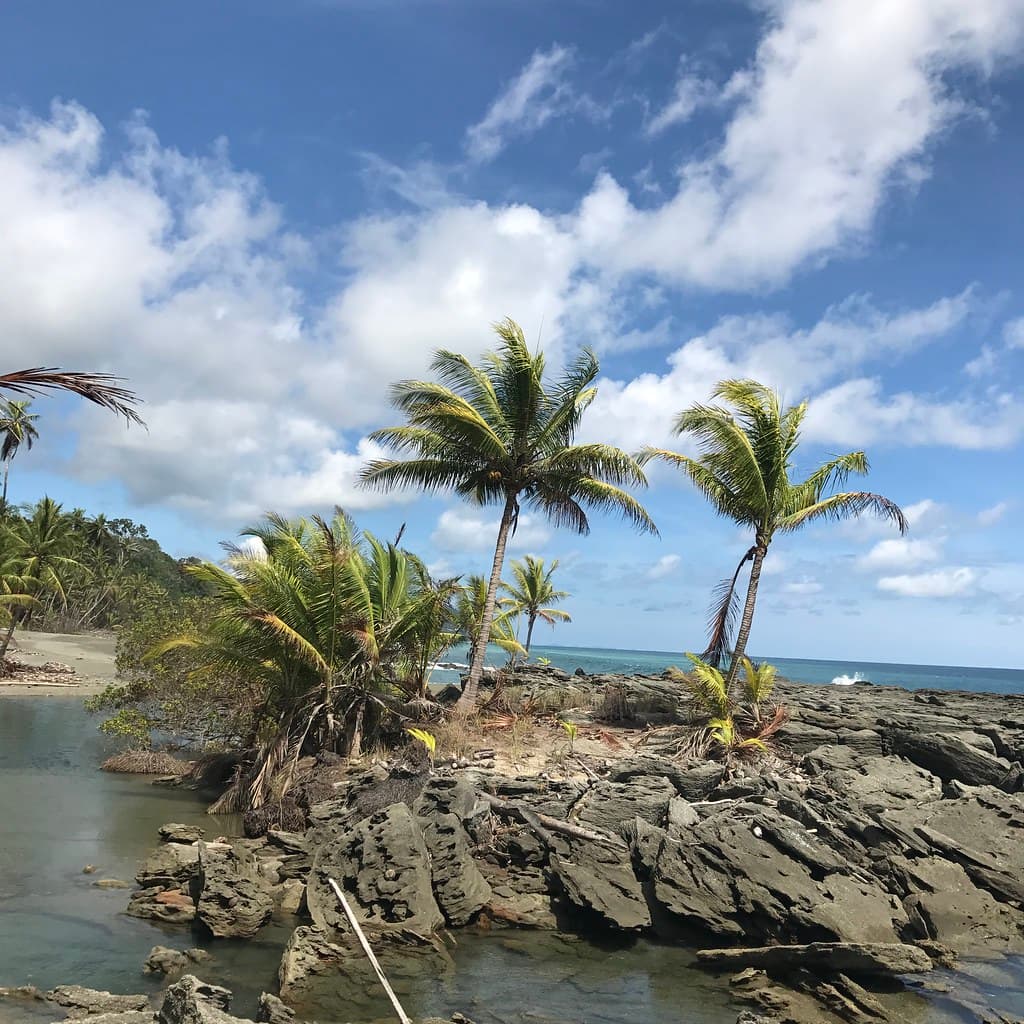
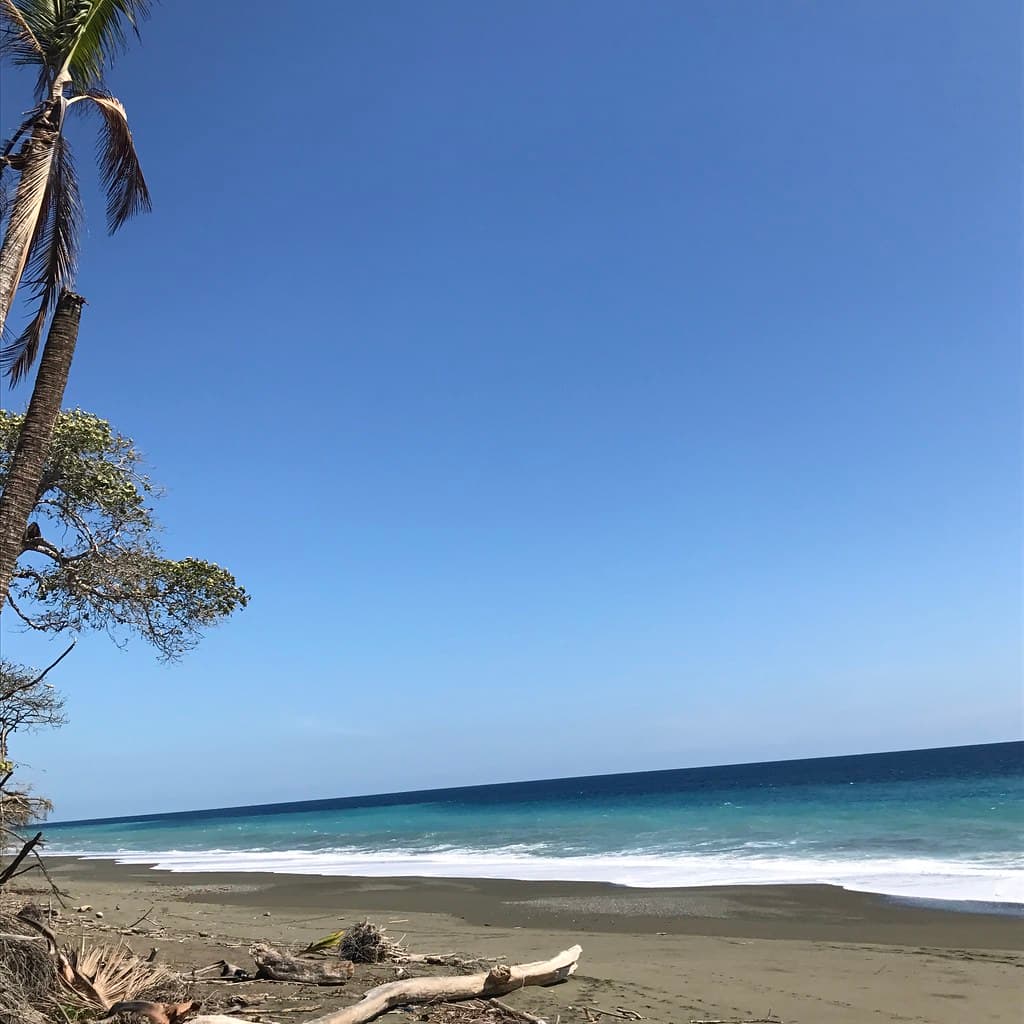
Playa Piro unfolds in a long, unbroken arc south of Carate, where the Osa Peninsula's jungle meets the Pacific without compromise. The sand is coarse, studded with water-smoothed pebbles and fragments of petrified wood; the wrack line is a museum of natural debris—tangled mangrove roots, whole coconuts still in their husks, sponges dried into sculptures by the sun. Scarlet macaws fly the beach twice daily, commuting between roosting sites and fruiting trees, their calls carrying over the surf.
“A true frontier beach where tapirs, macaws, and whales outnumber humans, accessible only to those willing to hike or boat into one of Costa Rica's wildest coastlines.”
 Credit: Flickr
Playa Piro — photo by Reinaldo Aguilar
This is a wildlife beach first, a swimming beach second. Tapir tracks dimple the wet sand at dawn, leading from the forest to the water and back again; researchers believe they come here to cool off and ingest salt. Coatis travel in gangs along the high-tide mark, flipping debris with their noses. Whales breach offshore during the migration months, close enough that you can hear the slap when they hit the water.
Reaching Playa Piro requires either a hike from Carate's tiny airstrip—luggage and all—or a boat ride from Puerto Jiménez that lands you directly on the sand. There are no facilities, no trails inland except game paths, no cell signal. The nearest lodge is a long walk back toward Carate. It's a beach for self-sufficient travelers who measure wealth in solitude and animal sightings rather than amenities and shade structures.


