
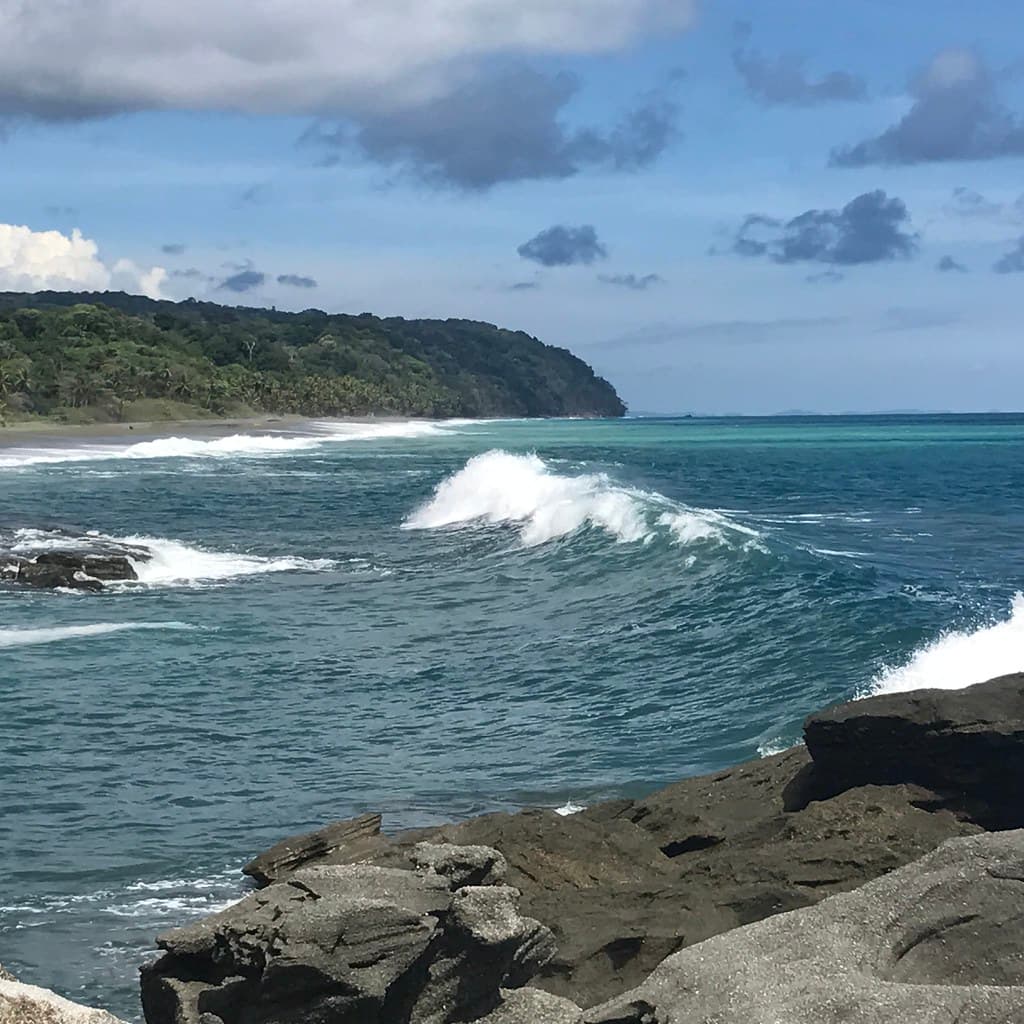
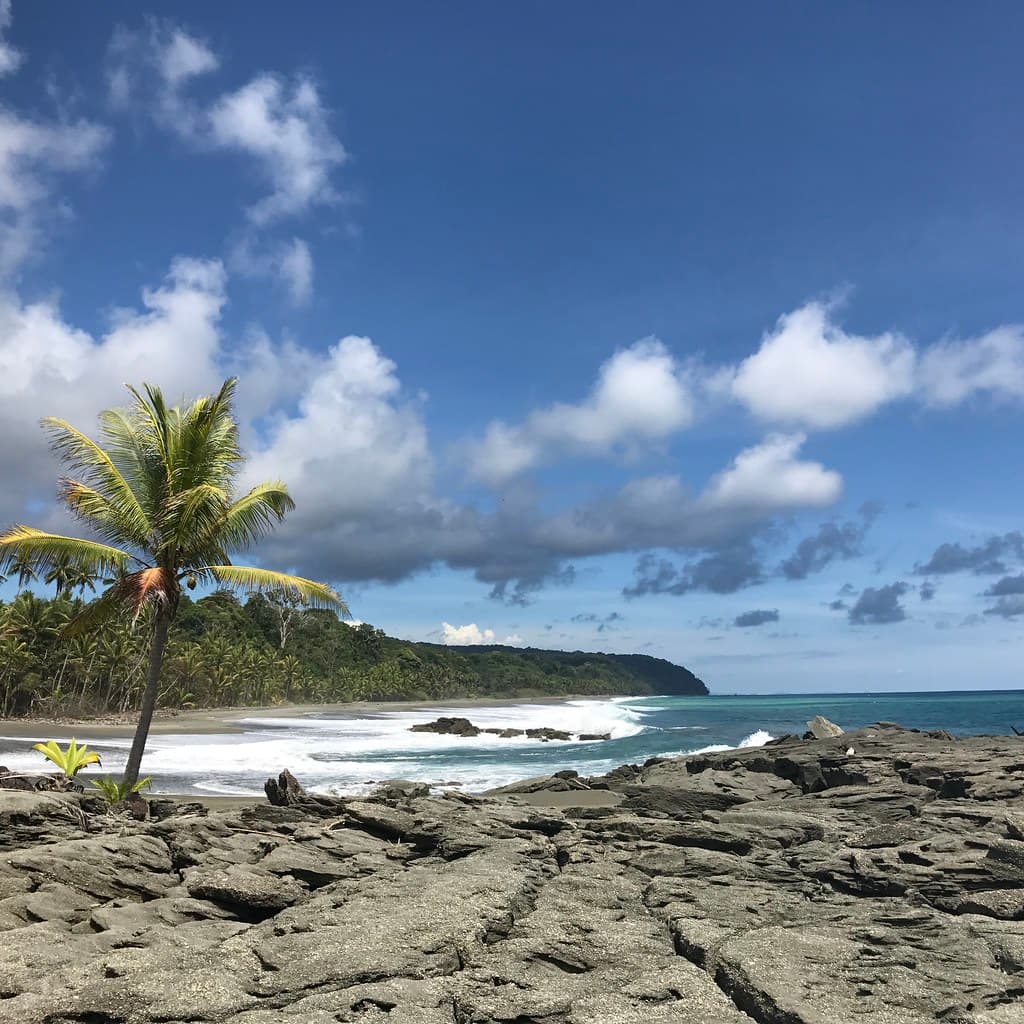
You step from the panga onto sand the color of wet slate, and the jungle closes in so tightly that vines dangle within arm's reach of the tide line. Playa Sombrero earns its anonymity—no trail signs, no vendors hawking coconuts, just the slap of wavelets and the chatter of scarlet macaws overhead. The beach curves for perhaps two hundred meters, hemmed by almond trees whose roots grip boulders smoothed by centuries of surge.
“This nameless-looking crescent delivers the Osa's most theatrical sunsets without a single other footprint in the sand.”
 Credit: Flickr
Playa Sombrero — photo by Reinaldo Aguilar
Mid-afternoon light filters green through the canopy, dappling tide pools where hermit crabs scuttle over volcanic cobbles. You wade into bathwater-warm shallows, scanning for needlefish that dart like silver needles. When the sun drops, the entire bay ignites—burnt orange bleeding into violet, silhouetting the offshore rocks where frigatebirds roost. Guides throttle their outboards and drift, letting clients drink in the spectacle without commentary.
By nightfall the stars punch through with equatorial intensity, and bioluminescent plankton spark green under your fingertips if you're brave enough for a moonlight swim. The return journey skims past Carate's lonely lights, your clothes damp with salt and the faint perfume of night-blooming jasmine trailing from the forest.


