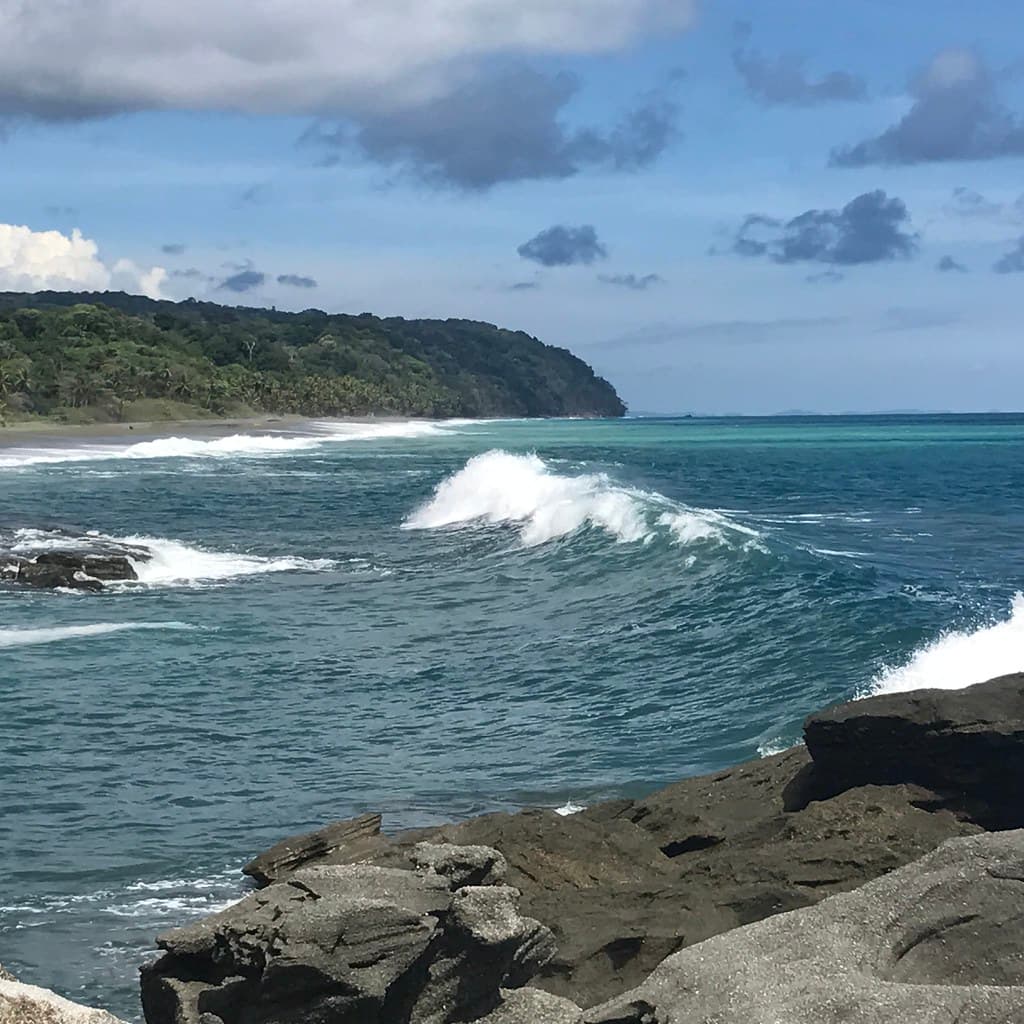
Counting the waves…
Counting the waves…
Carate marks the end of the line. Beyond the small landing strip and handful of eco-lodges, vehicular ambition yields to trails that penetrate Corcovado National Park. Playa Tamales stretches north from this threshold, a length of charcoal-grey sand pounded by swells that have crossed the Pacific uninterrupted. The beach runs wide at low tide, narrowing to a ribbon when high water pushes against the palm groves and dense coastal scrub. Driftwood logs—bleached silver by sun and salt—lie scattered like the bones of ancient vessels. You'll walk this beach alone more often than not, scanning the wrack line for the prints of jaguars, tapirs, or the distinctive three-toed scratch of a scarlet macaw. Offshore, humpback whales breach between July and October, their exhalations audible even over the surf's constant rumble. The sunsets pour molten copper across the horizon, silhouetting the Osa's mountainous spine and turning the wet sand into a mirror that reflects every gradient from amber to violet. There's no infrastructure here, no palapas or beach bars, no cellular signal to interrupt the analog beauty. The few who visit are either staying at the rustic lodges near the airstrip or trekking the coastal route toward La Leona ranger station. Provisions come by boat or small plane; electricity is solar or absent. Tamales exists in a liminal zone between the mapped world and the wild—close enough to reach, far enough to feel like discovery.
Places, rentals, tours and events within walking and driving distance of Playa Tamales.
Photos
Swimming at Playa Tamales requires caution due to typical Pacific coast conditions including strong currents, waves, and potential rip tides. This remote beach has no lifeguards or safety services. The beach is exposed to open ocean swells that can be powerful and unpredictable. Wildlife considerations include watching for crocodiles near any freshwater outlets. Most visitors enjoy wading and beachcombing rather than swimming. If you do enter the water, stay in shallow areas, never swim alone, and assess conditions carefully first.
The dry season from December through April offers the best weather with consistent sunshine and more manageable ocean conditions. February and March provide excellent conditions with fewer crowds than holiday periods. The wet season (May-November) brings afternoon rains and rougher seas but also lush landscapes and potential wildlife sightings. September and October are wettest with challenging access roads. Early mornings year-round offer the calmest conditions and best wildlife viewing opportunities. Sunsets are spectacular throughout the year at this west-facing beach.
Access Playa Tamales by first reaching Carate from Puerto Jiménez—approximately 2 hours by 4WD vehicle or collective taxi on a rough, sometimes challenging road (impassable in heavy rain). From Carate, Playa Tamales is a short distance along the coast toward Cabo Matapalo, accessible by walking along the beach or coastal paths. The area lacks clear signage, so asking locals in Carate for directions is helpful. Some visitors arrange boat access from Puerto Jiménez. The remote location requires planning and flexibility.
Playa Tamales has no direct development. Carate, nearby, offers a few very rustic eco-lodges and basic camping options with minimal amenities. These typically require advance booking and include meals, as no restaurants or stores exist in the immediate area. Most visitors exploring this beach stay in Puerto Jiménez and visit as a day trip, or they're trekking to/from Corcovado. Bring all necessary food, water, and supplies. The area is genuinely off-grid with no electricity in many spots and no commercial services.
Playa Tamales exemplifies the wild, undeveloped character of the Osa Peninsula's remote coastline. Its position between Carate and the Cabo Matapalo area means it sees very few visitors—mainly adventurous travelers and those accessing Corcovado trails. The beach serves as a transition zone where the coastal wilderness leading to Corcovado meets the slightly more accessible Matapalo area. Sunset views are exceptional, and the sense of isolation is profound. It offers genuine solitude for those willing to navigate challenging access and basic conditions.