
This is the beach that conservation built—a coastline where access is rationed, visitor numbers capped, and the primacy of wildlife over human convenience is law. You'll register at the park entrance, pay the fee, and either trek the inland trail from Sirena or arrive by panga from Drake Bay, the boat grounding in shin-deep surf. The beach stretches north and south in a long, gently curving sweep, backed by coconut palms planted decades ago and now towering above the understory.
“The only long sandy beach entirely within Corcovado National Park, where wildlife sightings outnumber human encounters and access is strictly controlled.”
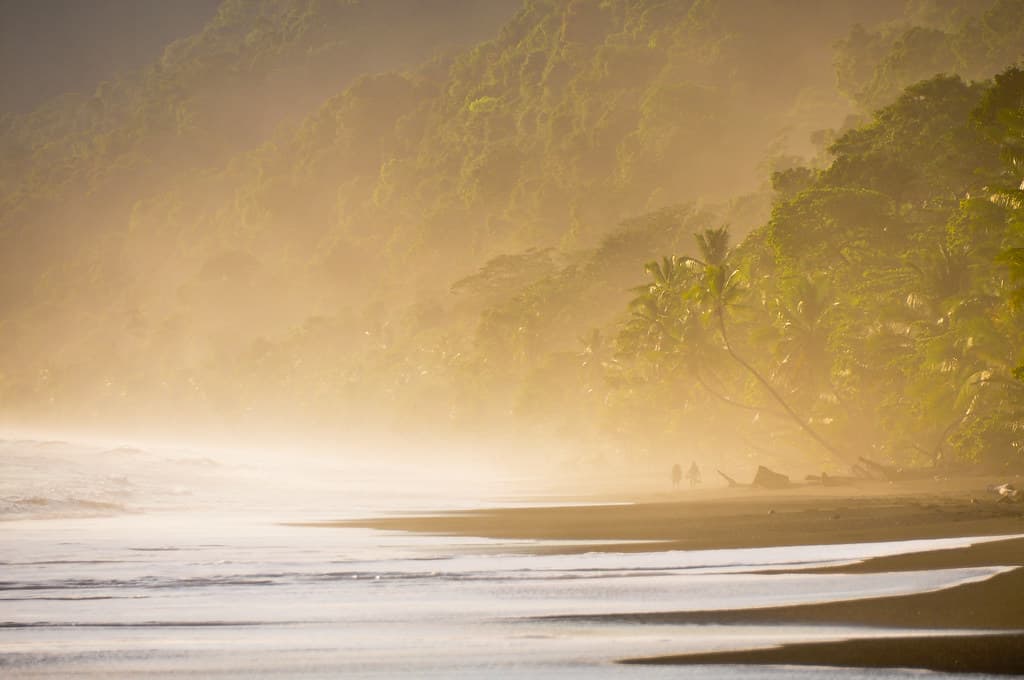 Credit: Flickr
Playa Corcovado — photo by Jonohey
The sand is littered with the evidence of the forest's proximity: fallen palm fronds, green coconuts gnawed open by agoutis, the five-toed prints of a white-nosed coati. Scan the tree line at dawn and you might catch a tapir moving between the shadows, or a troop of squirrel monkeys cartwheeling through the canopy. The surf is steady but not rideable, rolling shorebreak that collapses in a hiss of foam and retreating gravel.
You cannot stay the night without a permit and a reservation at Sirena station, where bunks are basic and meals are communal. By late afternoon, the handful of day visitors reboard their boats or shoulder their packs for the hike out. The beach empties. Scarlet macaws settle into the palms. The sun drops behind the offshore seamount, and for a few minutes the entire coastline glows the color of burnt sienna before night erases everything but the sound of waves and howler monkeys calling from deep in the park.


