
Playa El Coco curves inward, a pocket of sand embraced by low, forested points. The water here barely moves, sheltered from gulf currents and afternoon winds. You can swim without thinking about tides or chop, just slide into the warm shallows and float on your back, staring up through the canopy of beach almonds and figs. Butterflies—bright blue morphos, yellow sulfurs—drift across the sand, landing briefly on driftwood before lifting off again.
“This sheltered cove provides emotional respite and physical calm after visiting San Lucas's infamous prison ruins.”
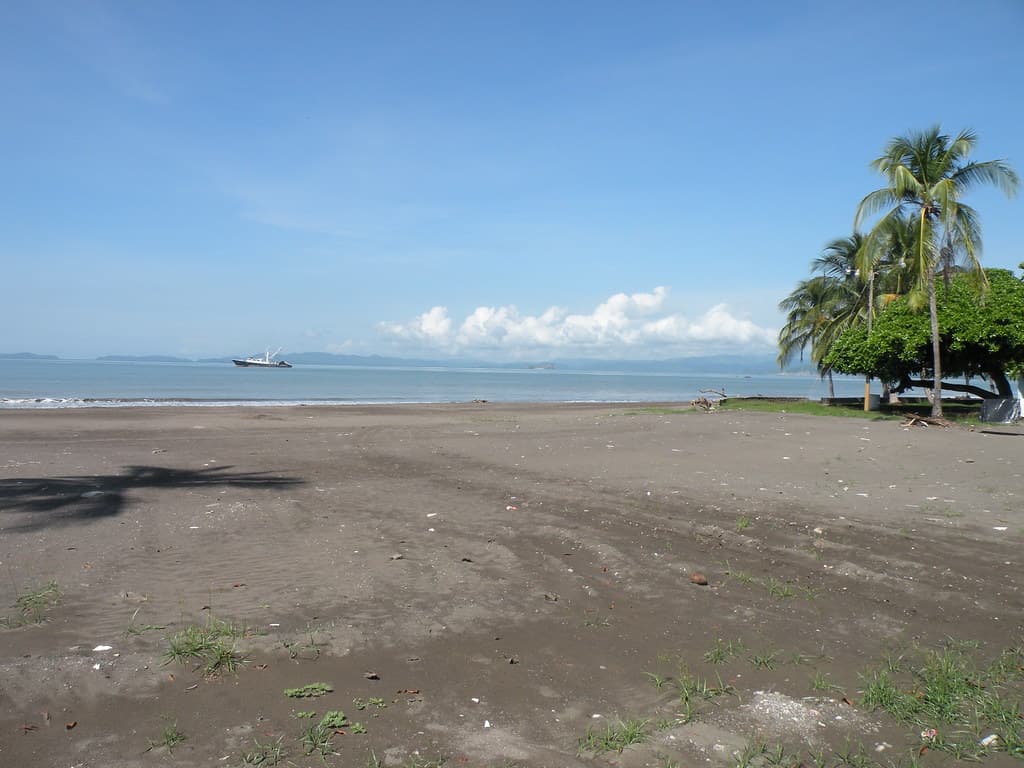 Credit: Flickr
Playa El Coco — photo by steve-stevens
The cove's intimacy makes it feel private even when you're not alone. A couple might wade in the shallows at one end while you rest in the shade at the other, and the space absorbs you both without crowding. The sand is fine and pale, mixed with fragments of coral and shell that catch the light. Behind the beach, the forest is thick and alive—iguanas bask on low branches, and you'll hear the rustle of crabs in the leaf litter.
Most visitors to San Lucas come for the abandoned prison, its cellblocks and solitary confinement holes a grim window into Costa Rica's penal past. Playa El Coco offers a different narrative—one of renewal and peace. After walking those haunted corridors, the cove's gentle water and dappled shade feel like absolution. You sit, you swim, you let the place settle your thoughts. The contrast is intentional; the island contains both stories, and this beach is where you process the darker one.


