
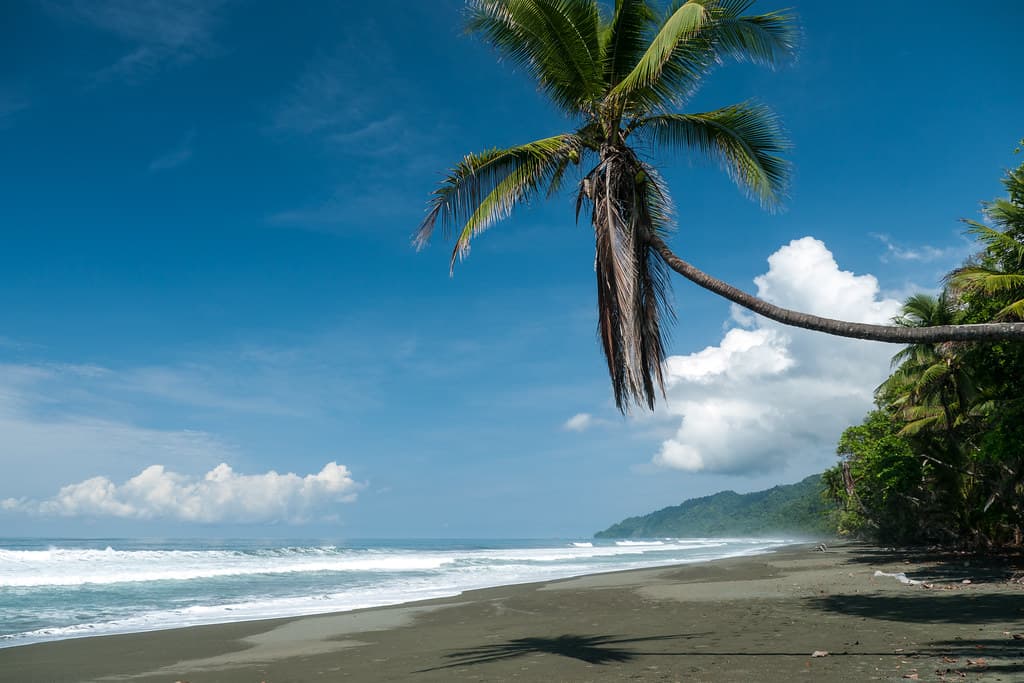
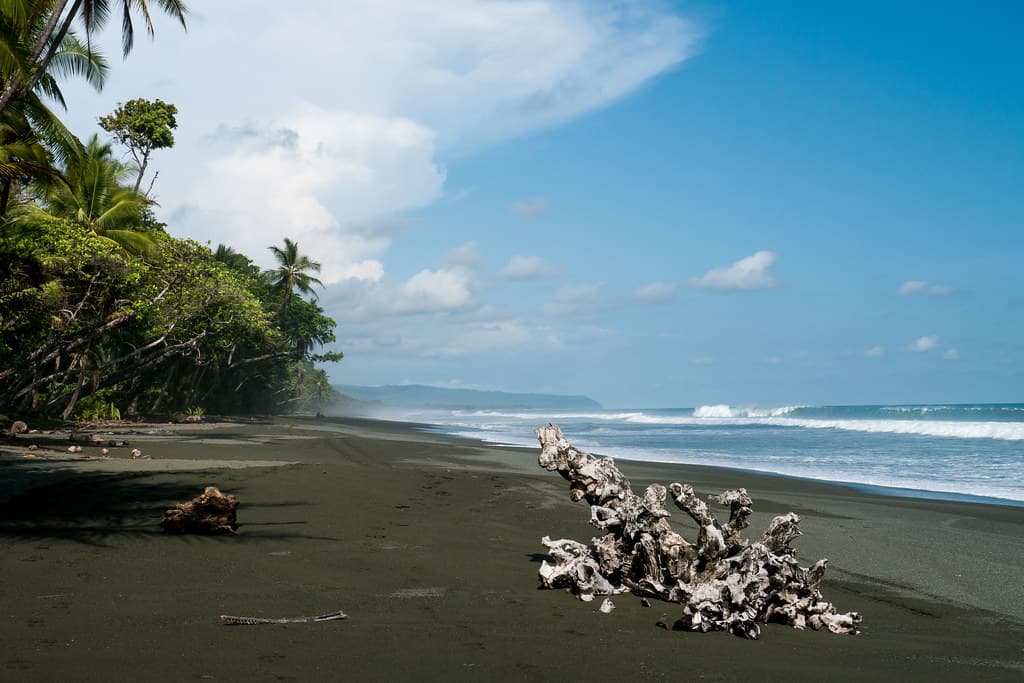
Playa La Leona marks a threshold. To the south, the forested ridge of Corcovado rises like a green wall; to the north, the beach unfurls in a long, uninterrupted arc toward Cabo Matapalo. The sand is dense and dark when wet, pale and loose above the tide line, and scattered with driftwood logs the size of canoes. You'll hear howler monkeys in the canopy before you see them, their calls rolling out over the surf like distant thunder.
“The only beach where you can stand with one foot in accessible sand and the other pointed toward Corcovado's protected wilderness.”
 Credit: Flickr
Playa La Leona — photo by koalie
This is a beach walked by hikers more than sunbathers. Most people arrive at La Leona as a starting or ending point for the coastal trail into Corcovado, boots slung over shoulders, packs heavy with water and permits. But even if you're not trekking into the park, the shoreline itself rewards exploration—river mouths cut through the sand, creating shallow lagoons where herons hunt, and the tide leaves behind moon snail shells and fragments of coral.
The feeling here is less vacation than expedition. The nearest services are back in Carate—a cluster of lodges and a landing strip—and the beach itself offers no shade, no facilities, no softening of the wild. You come to La Leona to stand at the edge of something larger than yourself, where the jungle's breath is thick with salt and the only footprints are yours and the raccoons'.


