Counting the waves…
Counting the waves…
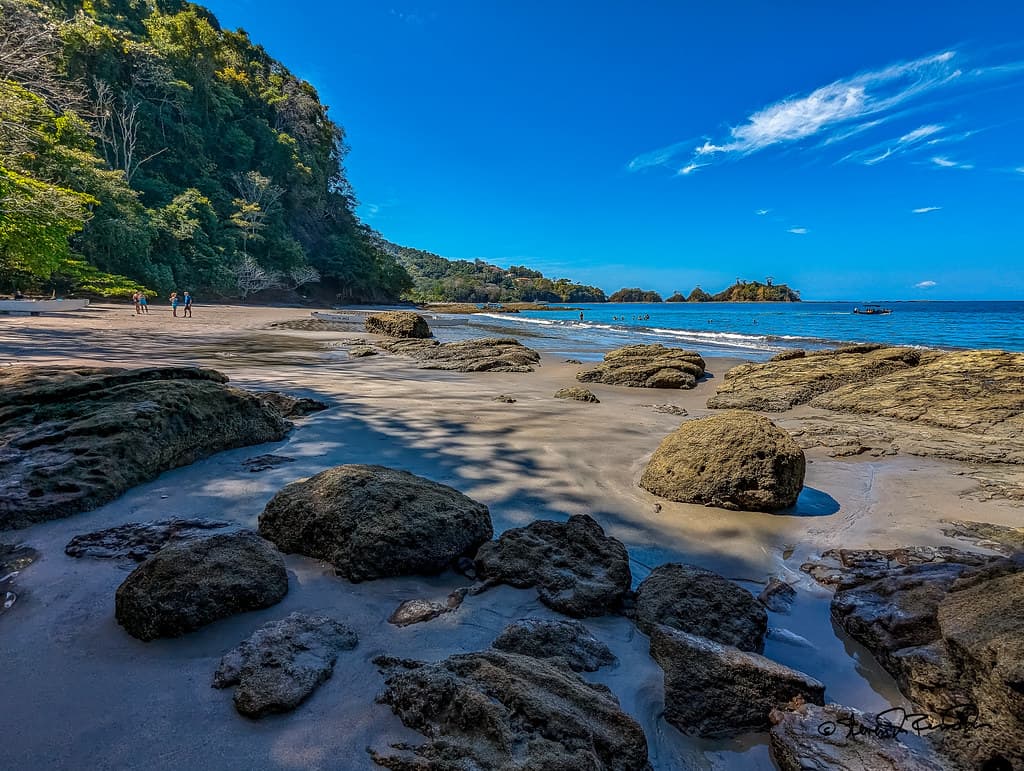
The Río Tárcoles meets the Pacific here in a wide estuary mouth where frigatebirds ride thermals above mangrove roots and fishermen mend nets under corrugated-tin lean-tos. You'll share the sand with local families who arrive on weekends with coolers of cerveza and portable speakers, not tour groups clutching selfie sticks. The beach stretches north from the river mouth in a broad, unmanicured arc, littered with driftwood logs bleached white by sun and salt. Wave-smoothed stones mix with coarse sand that crunches underfoot. Tide pools collect in the volcanic rock outcrops at the southern end, warming in the afternoon sun until they're bathtub-hot. Children chase hermit crabs while their parents grill whole snapper over driftwood fires, smoke curling into the humid air. You won't find umbrellas for rent or anyone selling coconut water from a cooler. Sunset paints the sky in gradients of tangerine and magenta, silhouetting the fishing fleet as it returns with the evening catch. Pelicans plunge into the breaking waves, emerging with silvery baitfish. The air smells of salt, fish, and woodsmoke. This is Costa Rica before the resorts arrived—unpolished, lived-in, real.
Places, rentals, tours and events within walking and driving distance of Playa Azul.
Photos
Swimming conditions at Playa Azul vary depending on tides and season. The Pacific waters here can have moderate waves and currents typical of Costa Rica's central Pacific coast. Always check local conditions before entering the water, as there are generally no lifeguards on duty. The beach's location near the Tárcoles River mouth means you should be aware of potential wildlife, though the village setting offers good visibility. Ask locals about current conditions and avoid swimming alone or during rough surf.
The dry season from December through April offers the best weather with sunny skies and calmer seas. This period is ideal for beach activities and sunset viewing. For budget travelers, the green season (May through November) brings lower accommodation rates and fewer tourists, though afternoon rains are common. The shoulder months of November and early December can offer good value with improving weather. Mornings typically offer the calmest conditions year-round, while late afternoons showcase beautiful Pacific sunsets.
Playa Azul is located in the small village of Tárcoles, about 90 minutes south of San José and 20 minutes north of Jacó along the coastal highway. If driving, take Route 34 (Costanera Sur) and watch for signs to Tárcoles village. Public buses running between San José and Jacó stop in Tárcoles; ask the driver for the beach area. From Jacó, you can take a taxi or local bus northward. The beach is accessible from the village center via local roads, which are generally passable by standard vehicles.
Tárcoles is a small fishing village with authentic local character and budget-friendly options. You'll find local sodas (small Costa Rican restaurants) serving traditional casados, fresh seafood, and ceviche at reasonable prices. Accommodations range from basic cabinas to small guesthouses, generally more affordable than nearby resort areas. The village offers a genuine local experience with limited tourist infrastructure. For more dining and lodging variety, Jacó is about 20 minutes south, while the famous crocodile bridge restaurant viewing area is nearby.
Playa Azul's main distinction is its authentic village atmosphere away from the developed resort zones of Jacó and Herradura. This beach offers a genuine glimpse into local coastal life, with fishing boats and a community-oriented environment. The proximity to the Tárcoles River, famous for its crocodile population, adds unique wildlife-viewing opportunities nearby. The beach itself is less crowded and more budget-friendly than neighboring tourist destinations, making it ideal for travelers seeking an off-the-beaten-path experience while still being accessible to central Pacific coast attractions.