Counting the waves…
Counting the waves…
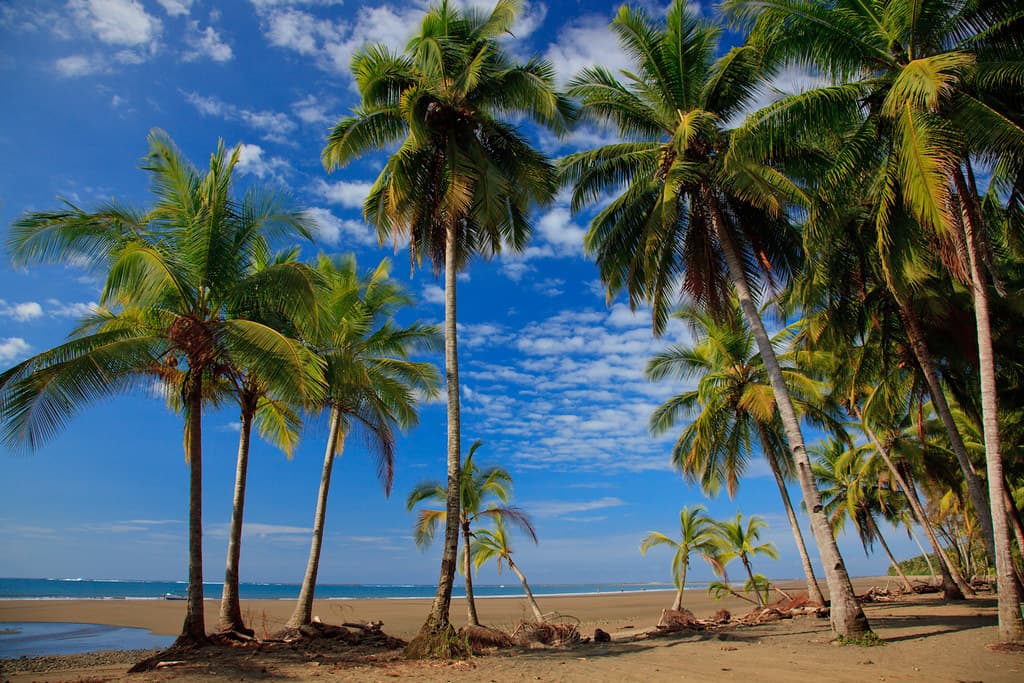
You'll arrive at the park entrance, pay your fee, and follow the trail through humid coastal forest until it opens onto beach. The sand stretches wide and tan, littered with driftwood logs bleached white by sun and salt. Look left and the whale tail extends into the surf—two symmetrical curves of sand that emerge only when the tide drops below a meter. Frigatebirds and brown pelicans work the shorebreak, diving for sardines. The water changes character depending on tide and season. During whale season—July through October, then December through March—you might spot humpback flukes breaking the surface or hear the percussive exhale of a breach. The beach itself stays relatively calm inside the marine park's protection, though the outer edges catch enough swell to bodysurf. Families spread under the almond trees, iguanas sun themselves on the logs, and park rangers patrol for turtle nests buried above the high-tide line. The famous aerial view—the one flooding Instagram—requires a hike up the coastal hills or a drone, but from sand level the tombolo impresses differently. You can walk its narrow spine at low tide, water on both sides, feeling the Pacific tug at your ankles. By the time the tide turns, the formation disappears beneath the waves, and the beach returns to its ordinary beauty: green mountains, gray sand, and the possibility of whales just beyond the break.
Places, rentals, tours and events within walking and driving distance of Playa Uvita.
Photos
Playa Uvita generally offers safe swimming conditions, especially during low tide when the famous whale tail formation creates calm pools ideal for families. During high tide, waves can be stronger and currents more noticeable, so exercise caution. The beach is part of Marino Ballena National Park, which provides some oversight, though lifeguards aren't always present. The sandy bottom and gradual entry make it family-friendly. Always supervise children and check tidal conditions before swimming. The protected areas around the whale tail are particularly good for young children. Respect posted warnings and local advice about ocean conditions.
The iconic whale tail sand formation is best visible during low tide, so check tide charts before your visit. For weather, the dry season (December to April) offers sunny skies and calm seas, perfect for beach activities and photography. However, if you want to see humpback whales offshore, visit during migration seasons: December to April or July to November. The green season brings afternoon rains but fewer crowds and lower prices. Early morning visits often provide the best light for photos and quieter beaches. Plan your trip around low tide during daylight hours for the full whale tail experience.
From San José, Playa Uvita is about 4 hours by car via the Costanera Sur highway through Dominical. The road is paved and well-maintained. Public buses run from San José (Terminal Tracopa) to Uvita several times daily. From Dominical, it's just 20 minutes south by car or local bus. Uvita is well-marked along the Costanera, with clear signage to Marino Ballena National Park. The park entrance requires a small fee. Parking is available near the beach. Many visitors rent cars for flexibility, but public transportation and shuttles also serve the area well.
Uvita offers diverse lodging options from budget hostels and eco-lodges to upscale boutique hotels and vacation rentals, many with ocean or jungle views. The town has grown to serve tourists while maintaining charm. Restaurants range from local sodas serving casados to international cuisine, seafood, healthy cafés, and beachfront bars. Most accommodations and restaurants are along the main coastal highway or on roads leading to the beach. Book ahead during high season and whale-watching periods. Several options exist within walking distance of Playa Uvita and Marino Ballena National Park, while others are scattered in the surrounding hills.
Playa Uvita is world-famous for its natural whale tail (cola de ballena) sand formation, visible at low tide when a tombolo connects the mainland to a small island, creating the iconic shape. This geological feature is rare and highly photogenic, making it one of Costa Rica's most Instagrammable beaches. The beach is the gateway to Marino Ballena National Park, Costa Rica's first marine national park, protecting coral reefs and serving as a vital humpback whale breeding ground. The combination of the whale tail formation, actual whale watching opportunities, and protected marine ecosystems makes Uvita truly special and distinct from other Pacific coast beaches.