Counting the waves…
Counting the waves…
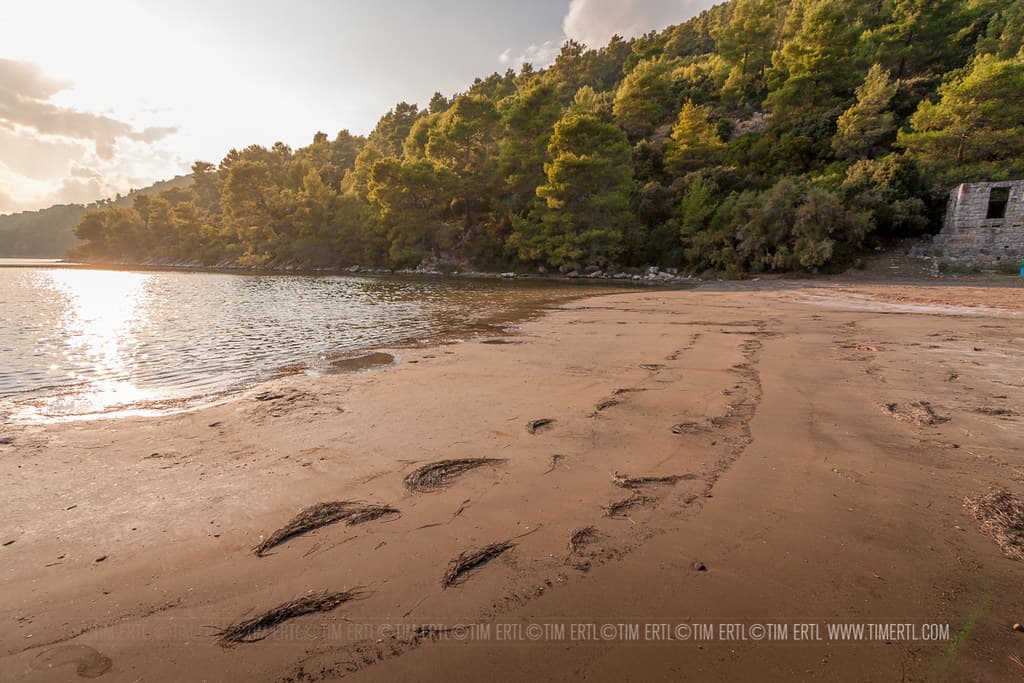
You descend through terraced rows of pošip vines, the gravel path releasing the scent of wild fennel and rosemary crushed underfoot. At the bottom, Bačva opens as a crescent of smooth stone, the kind that clicks and shifts as you wade in. The water here is colder than Korčula's north coast—currents from the open channel see to that—and so transparent you count individual sea urchins lodged in limestone fissures three meters down. Pine trees lean out from the low cliffs, their shade pooling over the eastern third of the beach by late afternoon. A handful of wooden fishing boats rest on the stones, paint peeling in long ribbons, their owners long since moved to fiberglass. You'll find no concession stand, no rows of loungers. A few flat rocks near the water's edge serve as makeshift tables for bread, cheese, and whatever wine made the walk down. The snorkeling runs along the western arm, where the seabed drops and schools of damselfish dart through meadows of posidonia. By four o'clock, the few families pack up, leaving you the sound of cicadas and the rhythmic scrape of pebbles in the surf. Most visitors spend a single day on Korčula before the ferry moves them along; Bačva rewards those who linger.
Places, rentals, tours and events within walking and driving distance of Bačva Beach.
Photos
Bačva Beach is generally safe for swimming, with calm, clear waters typical of Korčula's south coast. The cove's protected position shields swimmers from strong currents and winds, though no lifeguards are present. Snorkeling conditions are excellent, with good underwater visibility revealing marine life and rocky seabeds. The beach is undeveloped, so bring appropriate footwear for rocky entry points. Water depth increases gradually in most areas. As always in Croatia, check weather forecasts and sea conditions before swimming. The tranquil setting makes it suitable for relaxed swimming rather than high-energy water sports or young children requiring constant supervision.
Bačva Beach shines during late spring (May-June) and early autumn (September) when weather remains excellent but crowds thin considerably. These shoulder months offer warm swimming temperatures, clear skies, and the tranquility that makes this hidden cove special. July and August provide peak weather conditions with warmest water, though visitor numbers increase slightly—though never reaching mass-tourism levels. The beach's location near Smokvica means it's often overlooked by quick island itineraries, ensuring relative peace even in high season. Weekday visits guarantee more solitude than weekends when locals may visit.
Reaching Bačva Beach requires a vehicle, as it's located on Korčula's less-traveled south coast near Smokvica village. From Korčula Town, drive west then south following signs toward Smokvica, approximately 20 kilometers total. From Vela Luka, head east along the island's interior roads. Roads become narrower approaching the coast; follow local signage or GPS coordinates to find the beach access. Parking is informal and limited near the cove. The journey passes through scenic vineyard countryside characteristic of this wine-producing region. Public transportation doesn't serve this remote location, making rental cars or scooters essential.
Bačva Beach is completely undeveloped with no facilities, restaurants, sunbed rentals, or shops. Visitors must bring everything needed including water, food, shade equipment, and snorkeling gear. The nearest services are in Smokvica village, a few kilometers inland, where a small shop and traditional konoba serve local specialties and wine—this region is known for quality production. Accommodation near the beach is limited to private apartments and rural houses; most visitors stay in Korčula Town, Vela Luka, or other established areas and day-trip to Bačva. The isolation is precisely what attracts those seeking authentic, uncommercial beach experiences.
Bačva Beach rewards travelers who venture beyond standard island itineraries with an authentic slice of unspoiled Korčula. Its location on the quieter south coast means fewer visitors discover it, preserving the tranquil, hidden character that appeals to couples and solitude seekers. The surrounding landscape showcases natural Mediterranean beauty without development, while excellent snorkeling reveals diverse underwater environments. The drive through Smokvica's wine country adds cultural dimension to the visit. Unlike crowded northern beaches, Bačva offers space, silence, and connection with nature—ideal for travelers seeking Croatia's hidden gems rather than tourist hotspots.